Distinctive Brand Assets
Definition
Distinctive brand assets (DBAs) are the sensory and stylistic elements, beyond the brand name itself, that consumers use to identify a brand. These include logos, colors, shapes, packaging, sounds, characters, taglines, and rituals. Developed by Jenni Romaniuk at the Ehrenberg-Bass Institute, the framework argues that brands grow by being easier to recognize and recall, not by proving functional superiority.
Quick Answer: distinctive brand assets definition
Distinctive brand assets are the non-brand-name elements that trigger brand identification in a consumer's mind. These include colors (T-Mobile's magenta), shapes (Toblerone's triangle), sounds (the Intel chime), characters (the GEICO Gecko), and rituals (Corona with a lime). Developed by Jenni Romaniuk at the Ehrenberg-Bass Institute, the concept argues that brands win not by proving they are uniquely better, but by being easier to notice, recall, and recognize. Distinctiveness works on System 1 thinking, providing automatic mental shortcuts that help consumers identify a brand without conscious evaluation.
Distinctiveness vs. Differentiation
For decades, marketing textbooks taught that every brand needs a Unique Selling Proposition. Find the feature that sets you apart, communicate it clearly, and consumers will choose you over the competition. The problem is that in most categories, true functional uniqueness is rare. Ask a room of CMOs what makes their brand different and you hear the same answers: quality, customer service, "we care more." None of it sticks because none of it is distinctive. As Les Binet puts it: "Standing out and being different is important for any brand. But don't confuse saying something different with saying something in a different way. Difference is less important than distinctiveness." Patrick Gilbert explains this distinction in Never Always, Never Never. Differentiation requires consumers to process, compare, and evaluate product features. That is System 2 thinking, the slow, deliberate cognition that rarely happens during real purchasing decisions. Distinctiveness works on System 1. It gives people easy cues to remember you by. Not necessarily because you are the only brand with that feature, but because you have made it yours in memory. Byron Sharp and colleagues at the Ehrenberg-Bass Institute have shown that most brands in a category are look-alikes offering broadly similar products at broadly similar quality levels. Consumers do not experience fine distinctions nearly as much as marketers wish they did.
The Green Beanie Effect
Patrick Gilbert illustrates distinctive assets through the story of Isaac Rudansky's Google Ads course on Udemy. The course was the platform's best-selling digital marketing course of all time, adopted by Tesla, Nasdaq, Lyft, and Hanes for their marketing teams. But Gilbert argues that quality alone did not explain the course's extraordinary reach. What transformed it from a bestseller into a global phenomenon was a simple wardrobe choice: a green beanie that Isaac wore in every lecture. The beanie became a memory hook. When marketers recommended the course to colleagues, they often could not remember the course name or the instructor's name. But they could say: "Search for the Google Ads course where the guy is wearing a green beanie. You'll know it when you see it." A personal recommendation is the strongest form of marketing. But in quick conversations, at a coffee shop or in a hallway, people rarely remember brand names or URLs. They reach for whatever is easiest to recall. The green beanie gave people a shortcut that carried the course from one marketer to the next. Strangers recognized Isaac in restaurants. Fans presented him with a custom green beanie at a conference. What started as a throwaway wardrobe choice became the distinctive asset that made him instantly recognizable.
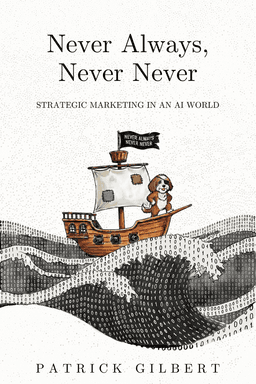
Enjoying this? Never Always, Never Never goes much deeper into the mental models and decision frameworks that shape how we think.
Types of Distinctive Brand Assets
Distinctive assets come in many forms, and the best brands build a portfolio of assets rather than relying on a single one. Colors are among the most powerful. T-Mobile's magenta and Tiffany's robin-egg blue are so strongly associated with their brands that they are legally protected. When you see that specific shade, you think of the brand before you read a word of text. Shapes and packaging create physical recognition. Toblerone's triangular bar and Pringles' cylindrical can are identifiable from across a store aisle. The shape itself becomes the brand signal. Sounds build recognition through a different sense entirely. The Kars4Kids jingle, the Intel chime, and Dennis Haysbert's distinctive voice in Allstate ads create auditory shortcuts that work across radio, television, podcasts, and video. Characters give brands a personality that text and logos cannot. Flo from Progressive, the GEICO Gecko, and the Energizer Bunny are cultural artifacts that carry brand meaning far beyond any advertising campaign. Rituals attach the brand to a specific behavior. Corona with its lime wedge and Wendy's fries dipped into a Frosty create participatory associations that consumers share with each other, generating organic word-of-mouth.
Creativity matters, but without consistency, creativity doesn't compound.
Patrick Gilbert, Never Always, Never Never
The Discipline of Consistency
The real challenge with distinctive assets is not creating them. It is sticking with them. An asset only becomes powerful when it is repeated over time, across channels, until it is burned into memory. That requires discipline, not constant reinvention. Guinness understood this. After David Ogilvy's original oyster campaign in the 1950s, they did not abandon their cues. They layered on more: the harp, the toucan balancing a pint on its beak, slogans like "Lovely Day for a Guinness" and "Guinness is Good for You." Decade after decade, these signals built on each other, so that even now, a single toucan illustration or harp silhouette instantly brings the brand to mind. Too many brands sabotage themselves. After a new agency or CMO arrives, they launch a new logo, swap out taglines, or overhaul the visual identity. They blame stagnation, when in reality they are often just bored. Each change resets the clock, diluting recognition instead of strengthening it. The brand pays the cost of rebuilding memory structures that took years to establish. Lucky Strike's "It's Toasted" campaign, made famous in Mad Men, captures this principle. Every tobacco brand toasted their product. Lucky Strike did not claim a unique feature. They claimed ownership of something ordinary and repeated it until it was burned into memory. Consumers did not remember health claims or product attributes. They remembered "It's Toasted."
Related Terms
Frequently Asked Questions
What are distinctive brand assets?
Distinctive brand assets are the non-brand-name elements that trigger brand identification. These include colors, logos, shapes, packaging, sounds, characters, taglines, and rituals. Developed by Jenni Romaniuk at the Ehrenberg-Bass Institute, the concept holds that brands grow by being easier to recognize and recall, not by proving they are functionally superior.
Why is distinctiveness more important than differentiation?
Differentiation requires consumers to consciously compare product features, a type of deliberate thinking that rarely occurs during actual purchases. Distinctiveness works on automatic recognition. It provides mental shortcuts that help consumers identify and recall a brand without conscious evaluation. In most categories, products are more similar than marketers admit.
How do you build distinctive brand assets?
Start by identifying or creating sensory elements that are unique to your brand: a specific color palette, visual style, character, sound, or ritual. Then commit to using them consistently across every touchpoint over an extended period. The key is repetition and discipline. An asset only becomes distinctive through sustained, consistent exposure.
What is the difference between brand assets and category entry points?
Brand assets are the recognition cues: colors, shapes, slogans, characters. Category entry points are the buying situations, needs, or emotions that trigger category consideration. The golden arches are the asset. "I need food on the go" is the entry point. When you pair the two, you create salience.
Can small brands build distinctive assets?
Yes. Isaac Rudansky's green beanie became one of the most recognizable assets in digital marketing education, built without any formal branding budget. Small brands can establish distinctive assets through consistent use of visual, auditory, or behavioral cues across their marketing. The investment is discipline, not money.
Why do brands keep changing their assets?
Often because new leadership or agencies want to make their mark, or because internal teams get bored with their own branding. Each change resets the recognition clock and dilutes the memory structures that took years to build. The most effective brands resist the temptation to reinvent and instead layer new creative work on top of established assets.
From the Book
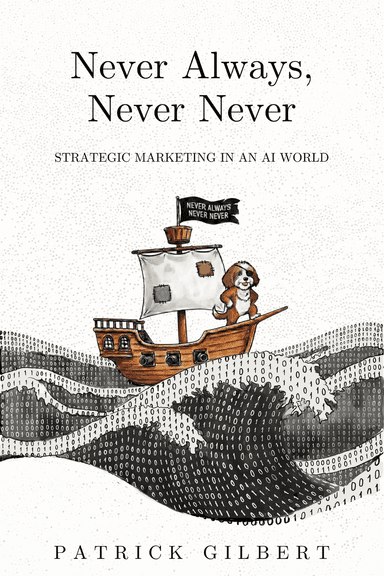
Chapter 14 traces distinctive brand assets from Ogilvy's Guinness campaign through Isaac Rudansky's green beanie to Lucky Strike's 'It's Toasted,' showing why brands win by being recognizable rather than by claiming superiority.
This is just a glimpse. The book explores dozens of cognitive biases and decision-making frameworks that change how you think, decide, and act.
Want to go deeper on this topic?
Chat with the AI companion to explore these concepts with the full context of the book.
Chat about this topicRelated Reading
Distinctive Brand Assets: How to Build Mental Shortcuts That Drive Brand Recognition
Learn how distinctive brand assets create mental shortcuts for brand recognition. Jenni Romaniuk's framework for brand distinctiveness over differentiation.
conceptMental Availability Marketing: How Brands Win the Battle for Memory
Mental availability marketing builds brand recall through category entry points. Learn how McDonald's, Disney & others dominate consumer memory structures.
glossaryBrand Salience: The Key to Mental Availability in Marketing
Brand salience is your brand's propensity to come to mind when customers have a need. Learn how it drives mental availability and purchase decisions.
glossaryCategory Entry Points: The Mental Triggers That Drive Brand Choice
Learn how Category Entry Points trigger brand recall in buying moments. Jenni Romaniuk's framework for building mental availability explained.
glossaryBrand Equity: The Commercial Value of Brand Recognition and Recall
Brand equity is the commercial value derived from consumer recognition and memory. Learn how distinctiveness builds brand equity more than differentiation.
BlogMental Availability: The Marketing Concept Most Digital Marketers Ignore
Mental availability is the single most important driver of brand growth. Most digital marketers have never heard of it. Here's why that matters.