Distinctive Brand Assets: How to Build Mental Shortcuts That Drive Brand Recognition
Quick Answer: distinctive brand assets
Distinctive brand assets are memory cues like colors, shapes, sounds, or characters that make brands easier to notice, recall, and recognize. According to Jenni Romaniuk from the Ehrenberg-Bass Institute, these assets work as mental shortcuts that help brands stand out through distinctiveness rather than differentiation. Examples include T-Mobile's magenta, Tiffany's robin-egg blue, or the GEICO Gecko. The key is consistency over time, as assets only become powerful when repeated across channels until they're burned into memory. Rather than trying to prove unique product benefits, successful brands focus on being easier to remember through these distinctive cues.
Definition
Distinctive brand assets are recognizable cues like colors, shapes, sounds, characters, or taglines that serve as mental shortcuts, making brands easier to notice, recall, and recognize in buying situations.
The Guinness and Oyster Revolution
When David Ogilvy took on Guinness as his first client in 1950, he faced a seemingly impossible challenge. The jet-black Irish stout looked completely out of place in an American market dominated by light lagers like Budweiser. Rather than trying to convince Americans that Guinness tasted better than their preferred beers, Ogilvy made a brilliant strategic choice. He traveled to Ireland, immersed himself in the culture, and discovered something remarkable: Guinness to the Irish was what oysters were to New Yorkers. Both were social glues, both carried reputations for being 'good for you,' and both transcended social class.
Ogilvy's breakthrough campaign wasn't about beer at all. 'The Guinness Guide to Oysters' was laid out like an elegant food chart, profiling different oyster varieties with a single pint of Guinness anchored at the bottom and the line: 'All oysters taste their best when washed down with drafts of Guinness.' This wasn't clever copy. It was strategic genius. By linking Guinness to oysters, Ogilvy created a Category Entry Point and planted Guinness in consumers' minds for a specific, memorable occasion.
Ogilvy didn't try to differentiate Guinness from American beer. He made it distinctive by creating a mental shortcut between the brand and a specific consumption occasion.
Distinctiveness Beats Differentiation
For decades, marketers have obsessed over the Unique Selling Proposition (USP), believing every product needs some unique feature that compels purchase. The reality is that in most categories, true uniqueness is rare. Ask a room full of CMOs what makes their brand different, and you'll get the same tired answers: quality, customer service, 'we care more.' None of it sticks because none of it is truly distinctive.
Standing out and being different is important for any brand. But don't confuse saying something different with saying something in a different way. Difference is less important than distinctiveness.
Les Binet
This distinction is crucial. Differentiation requires consumers to process, compare, and evaluate product features through System 2 thinking that rarely happens in real-world buying situations. Distinctiveness works on System 1, giving people easy cues to remember you by. Not because you're the only brand with that feature, but because you've made it yours in memory.
As Patrick Gilbert argues in Never Always, Never Never, Byron Sharp and his colleagues at the Ehrenberg-Bass Institute have demonstrated that most brands in a category are look-alikes offering broadly similar products at similar quality levels. Consumers don't experience the fine distinctions marketers wish they did.
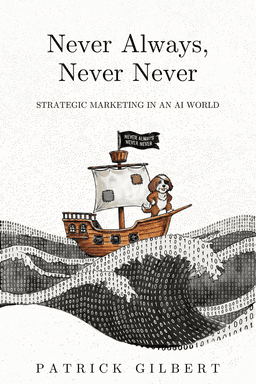
Enjoying this? Never Always, Never Never goes much deeper into the mental models and decision frameworks that shape how we think.
The Science Behind Distinctive Assets
Jenni Romaniuk from the Ehrenberg-Bass Institute takes this research further with her work on Distinctive Brand Assets. According to Romaniuk, brands don't win by persuading consumers their product is uniquely better. They win by being easier to recognize and recall through mental shortcuts that make a brand feel familiar in buying situations.
- Colors: T-Mobile's magenta, Tiffany's robin-egg blue
- Shapes and packaging: Toblerone's triangular bar, Pringles' cylindrical can
- Sounds: The Kars4Kids jingle, Dennis Haysbert's voice in Allstate ads
- Characters: Flo from Progressive, the GEICO Gecko
- Rituals: Corona with lime wedge, Wendy's fries dipped in Frosty
Each distinctive asset works as a memory hook, giving people shorthand they can recall instantly even when they can't remember brand names or product details. The more consistently you repeat these assets, the stronger the hooks become. This requires discipline and consistency, not constant reinvention.
The Green Beanie Effect
A perfect example of distinctive assets in action comes from Isaac Rudansky at AdVenture Media. In 2015, Isaac created a Google Ads course for Udemy that became the platform's best-selling digital marketing course of all time, reaching over 300,000 students across 195 countries. The course was exceptional, but what made it truly memorable wasn't just the content. It was a simple wardrobe choice: a green beanie Isaac wore in every lecture.
This seemingly trivial detail became the difference between a successful course and a global phenomenon. When marketers recommended the course to colleagues, they often forgot the exact title but remembered one thing: 'Look for the Google Ads course where the guy wears a green beanie.' That distinctive asset became a shortcut that carried word-of-mouth recommendations and made Isaac instantly recognizable at industry events.
A personal recommendation is the strongest form of marketing, but in quick conversations, people rarely remember brand names. They reach for whatever's easiest to recall.
Building and Maintaining Distinctive Assets
The real challenge with distinctive assets isn't creating them but sticking with them. An asset only becomes powerful when repeated over time, across channels, until it's burned into memory. Guinness understood this principle perfectly. After the oyster campaign, they didn't abandon their cues. They layered on more: the harp, the toucan balancing a pint on its beak, slogans like 'Lovely Day for a Guinness' and 'Guinness is Good for You.' Decade after decade, these signals built on each other.
Too many brands sabotage themselves through constant change. After introducing a new agency or CMO, they launch new logos, swap taglines, or overhaul their 'look and feel,' blaming stagnation when they're often just bored. Each change resets the clock, diluting salience instead of strengthening it. Creativity matters, but without consistency, creativity doesn't compound.
Category Entry Points and Mental Availability
Distinctive assets work hand-in-hand with Category Entry Points (CEPs). While assets are the cues (colors, shapes, characters), CEPs are the occasions and needs. McDonald's golden arches are the asset. 'I need food on the go' is the entry point. When you pair the two, you create salience that scales across multiple contexts.
McDonald's doesn't own just one CEP. It has dozens: morning coffee rituals, Happy Meal toys for kids, birthday party venues, reliable highway stops. Each reinforces the brand's mental availability in different situations. This explains why 5-hour Energy grew so quickly by claiming the overlooked CEP of 'That 2:30 Feeling' when coffee and energy drinks were already linked to morning routines.
It's Toasted didn't make Lucky Strike different. It made them memorable.
Patrick Gilbert, Never Always, Never Never
Key People & Works
Researchers & Authors
- Jenni Romaniuk
- Byron Sharp
- David Ogilvy
- Les Binet
Key Works
- Distinctive Brand Assets research by Jenni Romaniuk
Practical Applications
- Create consistent visual cues across all brand touchpoints
- Develop memorable characters or mascots that embody brand personality
- Establish distinctive color combinations that competitors don't use
- Build rituals or usage occasions that become associated with your brand
- Use consistent audio signatures in advertising and customer interactions
Frequently Asked Questions
What are distinctive brand assets according to Jenni Romaniuk?
According to Jenni Romaniuk from the Ehrenberg-Bass Institute, distinctive brand assets are recognizable cues like colors, shapes, sounds, characters, or taglines that serve as mental shortcuts. They help brands win not by proving they're uniquely better, but by being easier to recognize and recall in buying situations.
How do distinctive assets differ from product differentiation?
Distinctive assets focus on being memorable rather than proving superiority. Differentiation requires consumers to process and compare product features through System 2 thinking, while distinctive assets work on System 1 as easy recall cues. Assets make you easier to remember, differentiation tries to make you logically better.
Why did David Ogilvy pair Guinness with oysters in his advertising?
Ogilvy discovered that Guinness in Ireland served the same cultural role as oysters in New York: both were social glues that transcended class and carried 'good for you' reputations. By pairing them, he created a Category Entry Point that gave Guinness a memorable occasion rather than competing directly with American lagers.
What makes a distinctive brand asset effective?
Effective distinctive assets require consistency over time across all channels until they're burned into memory. They work as mental shortcuts that people can recall instantly, even when they can't remember brand names. The key is discipline and repetition, not constant reinvention.
How do distinctive assets relate to mental availability?
Distinctive assets increase mental availability by making brands easier to recall when buying situations arise. They work with Category Entry Points to create multiple memory pathways. The more contexts where your distinctive assets appear, the more likely your brand comes to mind across different needs and occasions.
Can you give examples of successful distinctive brand assets?
Classic examples include T-Mobile's magenta color, Tiffany's robin-egg blue, the GEICO Gecko character, Progressive's Flo, Corona's lime ritual, and Toblerone's triangular packaging. Each serves as an instant memory cue that makes the brand easier to recognize and recall than competitors.
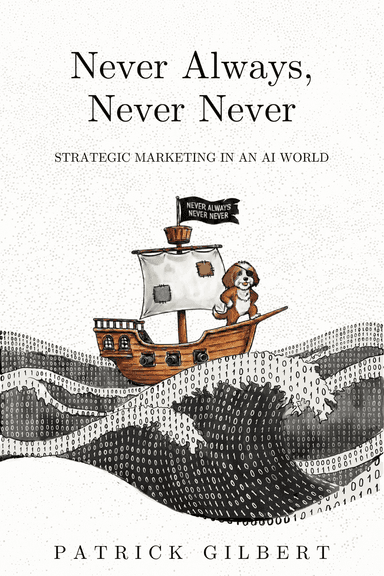
From the Book
Chapter 14 reveals why the most successful brands focus on being distinctive rather than different, exploring how mental shortcuts like colors, characters, and rituals create lasting competitive advantages that transcend product features.
This is just a glimpse. The book explores dozens of cognitive biases and decision-making frameworks that change how you think, decide, and act.
Want to go deeper on this topic?
Chat with the AI companion to explore these concepts with the full context of the book.
Chat about this topicRelated Reading
Emotional Advertising Effectiveness: Why Feelings Beat Logic in Marketing
Discover why emotional advertising outperforms rational appeals. Research from Binet & Field plus proven examples from Campbell's, Duolingo & more.
conceptMental Availability Marketing: How Brands Win the Battle for Memory
Mental availability marketing builds brand recall through category entry points. Learn how McDonald's, Disney & others dominate consumer memory structures.
conceptThe 60/40 Rule in Marketing: Why Brand and Performance Must Work Together
Discover why the traditional 60/40 brand-to-performance budget split is outdated and how integrated campaigns drive better results.
conceptThe Halo Effect in Marketing: How Brand Advertising Lifts All Performance
Learn how the halo effect in marketing creates brand lift across all channels. Research-backed strategies from Patrick Gilbert's Never Always, Never Never.
BlogMental Availability: The Marketing Concept Most Digital Marketers Ignore
Mental availability is the single most important driver of brand growth. Most digital marketers have never heard of it. Here's why that matters.