The Halo Effect in Marketing: How Brand Advertising Lifts All Performance
Quick Answer: halo effect marketing
The halo effect in marketing occurs when brand advertising creates positive lift across all marketing channels, making consumers more likely to notice ads, click through, and convert. This happens because only 5% of potential customers are actively buying at any given time, while 95% are out-of-market. Emotional brand campaigns reach this 95% and build positive associations that compound over time. Research by Les Binet and Peter Field shows emotional campaigns are nearly twice as likely to achieve significant profit growth compared to rational campaigns, with effects lasting years rather than months.
Definition
The halo effect in marketing is when brand advertising creates positive lift across all marketing channels by building emotional connections with out-of-market consumers, making them more likely to notice, engage with, and convert from future advertisements.
What Is the Halo Effect in Marketing?
The halo effect in marketing describes how brand advertising creates positive lift across all your marketing channels. When you build emotional connections with consumers before they're ready to buy, those positive associations make them more likely to notice your ads, click through, and ultimately convert when they do enter the market. As Patrick Gilbert argues in Never Always, Never Never, this effect is invisible to most marketers because they're obsessing over bottom-funnel metrics while missing the compound benefits happening upstream.
Walt Disney understood this principle intuitively. He famously said, 'I would rather entertain and hope that people learned something than educate people and hope they were entertained.' For generations, Disney has built emotional connections through stories that move us, creating a brand halo that extends across movies, theme parks, merchandise, and streaming services. The emotional investment audiences make in Disney characters translates into business results across every touchpoint.
The Science Behind Emotional Advertising
Research by Les Binet and Peter Field provides concrete evidence for why the halo effect works. Their analysis of the IPA Databank, covering hundreds of brands and campaigns, reveals that emotionally-driven campaigns are dramatically more effective at building long-term, profitable growth compared to rational, hard-sell tactics. This research is sometimes cited as 'the single most important study in modern marketing effectiveness.'
Emotional campaigns produce bigger and more numerous business effects than rational campaigns, in part because of the power of emotional priming. Emotional campaigns' effects last longer than rational ones and so build more strongly over time: this is especially true of profitability, because of the multiplier effects of emotional campaigns, on both volume and pricing.
Les Binet and Peter Field, The Long And The Short Of It
The numbers are striking. Emotional campaigns are nearly twice as likely to achieve significant profit growth as rational campaigns, and they are more than twice as efficient. While rational campaigns might show better immediate results, emotional campaigns almost double the odds of top-tier profit growth after 12-24 months. The key insight: feelings towards brands outlast memories of facts and figures about the brand.
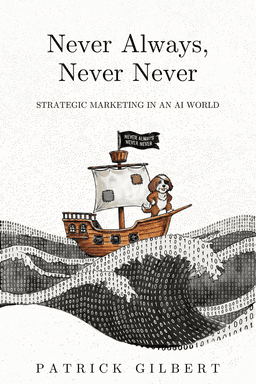
Enjoying this? Never Always, Never Never goes much deeper into the mental models and decision frameworks that shape how we think.
The 95/5 Rule: Why Most Marketing Misses the Mark
The halo effect becomes crucial when you understand market reality. According to research by John Dawes and the Ehrenberg-Bass Institute, only about 5% of your potential audience is actively in-market for your products or services at any given moment. This means 95% of people aren't buying from anyone in your category right now.
Most marketing competition focuses on the same 5% of in-market buyers, driving up costs and limiting growth potential. The real opportunity lies in building connections with the 95% who will become buyers in the future.
This dynamic explains why Google Search costs and other bottom-funnel channels have skyrocketed. Everyone is bidding on the same small audience of ready buyers. But the 95/5 rule is also dynamic. People constantly move between out-of-market and in-market status, often without warning. Someone who doesn't care about your category today might become a buyer tomorrow due to a job change, a move, or simply running out of toothpaste.
When your brand is already familiar, trusted, and liked by the time someone enters the market, you're the one they'll notice and choose. This is the halo effect in action: emotional resonance built over time translates into performance when it matters most.
Real-World Halo Effect Examples
The halo effect shows up clearly in performance advertising costs. According to Nik Sharma, CEO of Sharma Brands, a celebrity-backed makeup brand with a $50 average order value might acquire customers for $3-10 on Meta. A nearly identical, non-celebrity makeup brand with a $35 AOV pays $30-50. Similarly, a well-known activewear brand selling $120 leggings might see cost-per-acquisitions of $12, while a brand new activewear brand with $130 leggings pays closer to $85.
This isn't due to better audience targeting or unique campaign structure. It's the halo effect at work: awareness and cultural presence make performance ads more efficient. A brand people already know gets the benefit of the doubt. The emotional connection built through brand advertising translates directly into lower acquisition costs and higher conversion rates.
Balancing Brand and Performance Investment
The challenge for most brands is finding the right balance between brand-building and performance marketing. Nik Sharma recommends putting at least 15% of spend toward brand activity to earn downstream efficiencies. However, Binet and Field's research suggests a more aggressive split: roughly 60% brand building, 40% short-term activation based on decades of effectiveness data across industries.
- 15% brand minimum: Sharma's recommendation for DTC brands to see immediate performance lift
- 60/40 split: Binet and Field's optimal ratio for long-term profitable growth
- Category dependent: B2B, luxury, and high-consideration categories may need higher brand investment
- Stage dependent: Established brands can lean more heavily into brand building than startups
Never always, never never. The right balance depends on your category, stage, and goals. But almost every brand would benefit from shifting more dollars to the top of the funnel than they do today.
Measuring the Halo Effect
One way to diagnose whether you're neglecting the halo effect: open your Google or Meta Ads account and compare the last 12 months to the previous period. Have your costs-per-click or cost-per-thousand impressions gone up while conversion rates held steady or declined? This often indicates you've neglected the 95% of out-of-market consumers who will become tomorrow's buyers.
The halo effect requires patience because emotional resonance takes time to build. If you wait until performance campaigns start to stall, it's often too late. Think of it like investing: the ideal time to diversify your portfolio is when you're flush with short-term gains, not when the market turns negative. The most successful brands keep investing in emotionally evocative, broad-reach campaigns even when bottom-funnel numbers look great.
Key People & Works
Researchers & Authors
- Les Binet
- Peter Field
- John Dawes
- Walt Disney
- Nik Sharma
Key Works
- The Long And The Short Of It by Les Binet and Peter Field
- IPA Databank analysis
Practical Applications
- Allocate 15-60% of marketing budget to brand-building campaigns
- Create emotional advertising that entertains rather than educates
- Target broad audiences of potential category buyers, not just in-market segments
- Measure brand campaign effectiveness over 12-24 month periods
- Use brand awareness to reduce cost-per-acquisition in performance channels
Frequently Asked Questions
How long does it take to see halo effect results from brand advertising?
According to Binet and Field's research, emotional brand campaigns start outperforming rational campaigns after about six months, with effects building strongly over 12-24 months. The halo effect compounds over time as more consumers develop positive brand associations.
What's the difference between halo effect and brand awareness?
Brand awareness measures whether people know your brand exists, while the halo effect measures how positive brand associations improve performance across all marketing channels. The halo effect creates measurable lift in ad engagement, click-through rates, and conversion rates even among people who don't consciously recall your brand advertising.
How much should I spend on brand advertising to create a halo effect?
Nik Sharma recommends at least 15% of marketing budget for immediate performance benefits, while Binet and Field suggest 60% for optimal long-term growth. The right amount depends on your category, competition level, and business stage, but most brands under-invest in halo-creating activities.
Can small businesses benefit from halo effect marketing?
Yes, but small businesses should focus on broad reach within their specific target audience rather than mass market campaigns. If your audience is tech-savvy working moms with household incomes above $200K, reach that group broadly even though 95% won't buy immediately. The halo effect works at any scale when you reach your full potential buyer universe.
How do I measure the halo effect in my marketing campaigns?
Track performance metrics over 12-24 month periods rather than monthly. Look for improvements in cost-per-acquisition, click-through rates, and conversion rates across all channels after implementing brand campaigns. Also monitor whether your cost-per-click trends have stabilized or improved compared to competitors fighting over bottom-funnel traffic.
What makes an ad create a strong halo effect?
According to Disney's philosophy and Binet and Field's research, entertaining and emotionally-driven content creates the strongest halo effects. Focus on making people feel something positive about your brand rather than educating them about product features. Emotional connections last longer than memories of facts and figures.
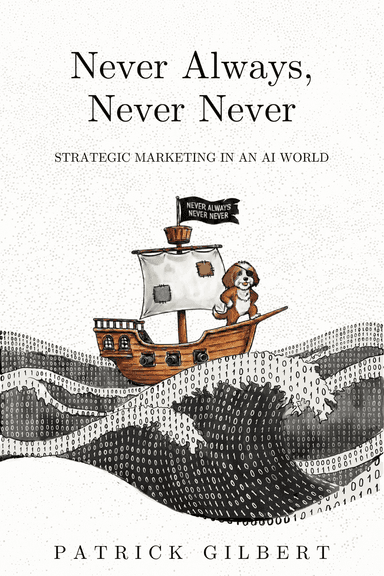
From the Book
Chapter 13 reveals how Disney's entertainment-first philosophy translates into measurable business results, with specific budget allocation frameworks and diagnostic tools to optimize your brand-performance balance for maximum profitable growth.
This is just a glimpse. The book explores dozens of cognitive biases and decision-making frameworks that change how you think, decide, and act.
Want to go deeper on this topic?
Chat with the AI companion to explore these concepts with the full context of the book.
Chat about this topicRelated Reading
The 60/40 Rule in Marketing: Why Brand and Performance Must Work Together
Discover why the traditional 60/40 brand-to-performance budget split is outdated and how integrated campaigns drive better results.
conceptBrand vs Performance Marketing: Why the Split is Killing Your Growth
The false division between brand and performance marketing is weakening both. Learn why integrated campaigns outperform siloed approaches.
conceptDistinctive Brand Assets: How to Build Mental Shortcuts That Drive Brand Recognition
Learn how distinctive brand assets create mental shortcuts for brand recognition. Jenni Romaniuk's framework for brand distinctiveness over differentiation.
conceptEmotional Advertising Effectiveness: Why Feelings Beat Logic in Marketing
Discover why emotional advertising outperforms rational appeals. Research from Binet & Field plus proven examples from Campbell's, Duolingo & more.
BlogMental Availability: The Marketing Concept Most Digital Marketers Ignore
Mental availability is the single most important driver of brand growth. Most digital marketers have never heard of it. Here's why that matters.
BlogWhy the Old Playbook Is Broken
The platform tricks and optimization shortcuts that built most digital marketing careers have been commoditized. Here's what actually changed and what to do about it.