Emotional Advertising Effectiveness: Why Feelings Beat Logic in Marketing
Quick Answer: emotional advertising effectiveness
Emotional advertising consistently outperforms rational advertising because feelings stick longer than logical arguments. Research by Les Binet and Peter Field shows emotional campaigns drive significantly higher effectiveness scores and market share growth. Examples like Campbell's Chunky Soup 'Mama's Boy' campaign and Duolingo's Duo owl demonstrate how emotional connections create memorable brand experiences. Animals and characters work particularly well because they bypass rational skepticism and create positive emotional responses. According to System1 research, ads with emotional elements generate 65-100% brand recall compared to near-zero for generic executions, while character-led ads are three times more likely to drive market share growth.
Definition
Emotional advertising creates feelings and emotional responses that connect audiences to brands, rather than relying primarily on rational arguments or product features. It leverages System 1 thinking to build lasting memory structures and mental availability.
What Emotional Advertising Really Means
As Patrick Gilbert argues in Never Always, Never Never, marketers overcomplicate emotional advertising by assuming it only applies to tear-jerking Super Bowl ads or heartwarming holiday campaigns. The reality is far simpler and more powerful. Take Safelite's straightforward jingle: 'Safelite repair, Safelite replace.' Four words that create a tiny sense of reassurance every time you hear them. The tone communicates the brand promise better than clever copy ever could. That's emotional advertising in its purest form: making people feel something, anything, that ties back to your brand.
Emotion doesn't always look like tears or laughter. Sometimes it's just a feeling you don't even realize you're having - like the exhale of relief in a simple jingle.
Why Emotional Campaigns Outperform Rational Ones
The research from Les Binet and Peter Field consistently demonstrates that emotional advertising drives superior business results compared to rational approaches. Their analysis of thousands of campaigns shows emotional ads generate higher effectiveness scores and sustained market share growth. The reason lies in how our brains process information. Rational arguments engage System 2 thinking, which requires conscious effort and fades quickly. Emotional responses activate System 1, creating automatic, lasting impressions that influence future purchase decisions.
- System1 research shows ads with emotional elements achieve 65-100% brand recall versus near-zero for generic executions
- Character-led ads are three times more likely to earn effectiveness ratings correlated with 3%+ market share growth
- A 2020 study in Marketing ZFP found animal-featuring ads consistently generated more favorable brand attitudes
- EEG studies show emotional engagement spikes when animals appear on screen and drops when they leave
The Campbell's Chunky Soup Case Study
Marvin Waldman's work on Campbell's Chunky Soup demonstrates emotional advertising mastery. Tasked with reaching men aged 25-45 who consumed the least soup, focus groups revealed a powerful insight. When asked what soup meant to them, men consistently recalled the same story: eating soup as kids when home sick from school. 'That's what my mom gave me when I was sick,' they remembered. Waldman saw deeper than the sick day angle. The emotional core wasn't about illness, it was about mothers. Soup equaled mom, and there's nothing more emotional than that connection.
Marvin didn't make an ad about soup. He made an ad about moms. And in doing so, he showed exactly what emotional advertising looks like when it's done right.
Patrick Gilbert, Never Always, Never Never
The 1997 'Mama's Boy' campaign starring NFL legend Reggie White became advertising legend. The spot showed White on the sideline when a cheerleader rips off her disguise to reveal his mom, delivering Chunky Soup. It was funny, memorable, and packed with subtext. If the toughest guys in football could still be mama's boys, maybe soup wasn't such a soft food after all. The campaign lasted decades, featuring stars like Jerome Bettis, Michael Strahan, and Travis Kelce, eventually using the players' real mothers instead of actresses.
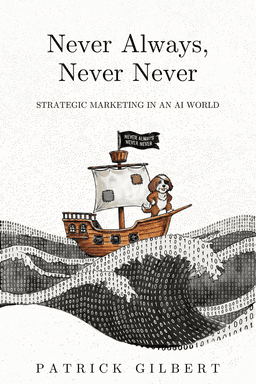
Enjoying this? Never Always, Never Never goes much deeper into the mental models and decision frameworks that shape how we think.
The Power of Characters and Animals
Brand characters work because they give stories a face without the baggage of celebrities. Jake from State Farm has lasted over a decade despite changing actors because the role remains consistent. Tony the Tiger, the Kool-Aid Man, and M&M characters are assets that cross generational lines, anchoring their brands in memory year after year. But characters don't just sustain established brands, they can build obscure ones. Before 2006, Dos Equis was a small Mexican beer with almost no U.S. presence. The Most Interesting Man in the World changed everything, driving nearly 30% sales growth between 2006 and 2016.
Most direct-to-consumer brands born in the digital era have ignored the character opportunity, instead running the same animated product photos and influencer clips as everyone else. That gap represents a massive opportunity.
Animals hold special power in advertising because they lower our defenses. As Les Binet explains in How Not To Plan, there's something deeply embedded in our psyche that responds peculiarly well to being sold to by animals. When an animal tells the story, System 2's skeptical, rational brain relaxes while System 1 thinks 'aww, that's cute.' The Charmin Bears have been successfully messaging about bathroom cleanliness for 25 years, helping keep Charmin America's best-selling toilet paper since the 1990s.
Modern Success: The Duolingo Case Study
Duolingo proves that emotional advertising through characters works for modern digital brands. Built around an animated green owl named Duo, the language learning app has created one of the most effective character-driven campaigns of the digital era. Rather than rational messaging about language learning benefits, Duo became famous for threatening users to complete lessons, starring in absurdist videos, and chaotic social media personality. Since 2019, when they leaned into this absurdity, Duolingo's TikTok following exploded from 50,000 to over 16 million followers.
- Revenue grew more than 10x from $70 million in 2019 to roughly $750 million by 2024
- TikTok following increased from 50,000 to 16+ million through character-driven content
- Organic social content became their primary growth engine, with paid campaigns keeping Duo front and center
- Demonstrates how personality-driven characters can work natively on modern social platforms
Debunking the 'People Like Me' Myth
Marketers often assume that putting 'people like them' in ads creates connection by matching the audience's age, gender, or lifestyle. But surface-level resemblance doesn't create connection the way storytelling does. Les Binet's work on a British Meat campaign proved this point. The most effective ad featured an elderly couple in their 80s celebrating their wedding anniversary with a quiet steak dinner. It outperformed every other concept not just with older viewers, but with younger ones too. The magic wasn't in the casting, it was in the universal story of tenderness and ritual that everyone could recognize.
It takes real courage to sit in a boardroom full of frustrated executives, pounding the table about declining sales, and look them straight in the eye and say: 'What we need is more cute, furry animals in our ads.'
Les Binet, as quoted by Patrick Gilbert
Why Feelings Beat Thinking in Marketing
The fundamental principle underlying emotional advertising effectiveness is that rational arguments fade while feelings stick. Campaigns that build mental availability over time aren't the ones that challenge people to think, they're the ones that give people something to feel. This happens because emotional responses create stronger memory encoding and easier retrieval. When consumers face purchase decisions, they're more likely to remember and choose brands that made them feel something positive, even if they can't articulate exactly why.
The campaigns that build mental availability over time aren't the ones that challenge people to think. They're the ones that give people something to feel.
Key People & Works
Researchers & Authors
- Les Binet
- Peter Field
- Marvin Waldman
- Patrick Gilbert
Key Works
- How Not To Plan by Les Binet
Practical Applications
- Use brand characters or animals to lower audience defenses and create memorable associations
- Focus on universal emotions like comfort, relief, or nostalgia rather than product features
- Tell stories that audiences can see themselves in, regardless of demographic differences
- Create consistent character roles that can outlast individual actors or spokespeople
- Leverage the 'power of fur' by incorporating animals to drive positive emotional responses
Frequently Asked Questions
What makes emotional advertising more effective than rational advertising?
Emotional advertising creates lasting memory structures by activating System 1 thinking, which processes information automatically and stores it more durably. According to research by Les Binet and Peter Field, emotional campaigns consistently drive higher effectiveness scores and market share growth because feelings stick longer than logical arguments.
Why do animals work so well in advertising campaigns?
Animals lower psychological defenses because they bypass skepticism that humans naturally have toward sales messages. Research shows animals trigger our innate biophilia and create positive emotional responses that transfer directly to the brand. System1 research found ads with animals consistently drove the highest levels of positive emotional response and brand recall.
How did Campbell's Chunky Soup successfully target men with emotional advertising?
Campbell's discovered through research that men associated soup with their mothers caring for them when sick as children. The 'Mama's Boy' campaign featuring NFL players and their mothers tapped into this universal emotional connection, making soup feel less 'soft' by showing tough athletes embracing their maternal relationships.
What's the difference between brand characters and celebrity endorsers?
Brand characters exist solely to tell your brand's story without outside baggage, scandals, or competing associations that celebrities bring. Characters like Jake from State Farm can outlast individual actors because they represent consistent roles rather than specific people, creating more durable brand assets.
Can emotional advertising work for modern digital brands?
Yes, Duolingo demonstrates how emotional advertising through characters succeeds in the digital era. Their animated owl Duo became famous for chaotic personality and absurdist content rather than rational language learning benefits, driving 10x revenue growth and 16+ million TikTok followers since 2019.
Why don't more D2C brands use character-driven advertising?
Most direct-to-consumer brands focus on performance marketing with product photos, influencer content, and discount codes rather than building distinctive brand assets. According to Patrick Gilbert, this represents a massive missed opportunity since character-led ads are three times more likely to drive significant market share growth.
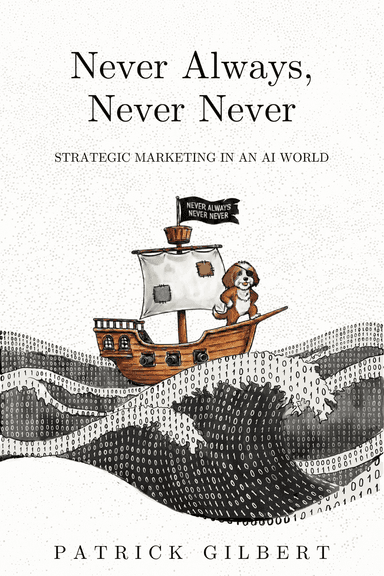
From the Book
Chapter 15 reveals the complete framework for emotional advertising, including detailed case studies, the psychology behind why animals and characters work so effectively, and specific strategies for building emotional connections in the digital age.
This is just a glimpse. The book explores dozens of cognitive biases and decision-making frameworks that change how you think, decide, and act.
Want to go deeper on this topic?
Chat with the AI companion to explore these concepts with the full context of the book.
Chat about this topicRelated Reading
Brand vs Performance Marketing: Why the Split is Killing Your Growth
The false division between brand and performance marketing is weakening both. Learn why integrated campaigns outperform siloed approaches.
conceptDistinctive Brand Assets: How to Build Mental Shortcuts That Drive Brand Recognition
Learn how distinctive brand assets create mental shortcuts for brand recognition. Jenni Romaniuk's framework for brand distinctiveness over differentiation.
conceptThe 60/40 Rule in Marketing: Why Brand and Performance Must Work Together
Discover why the traditional 60/40 brand-to-performance budget split is outdated and how integrated campaigns drive better results.
conceptThe Halo Effect in Marketing: How Brand Advertising Lifts All Performance
Learn how the halo effect in marketing creates brand lift across all channels. Research-backed strategies from Patrick Gilbert's Never Always, Never Never.
BlogMental Availability: The Marketing Concept Most Digital Marketers Ignore
Mental availability is the single most important driver of brand growth. Most digital marketers have never heard of it. Here's why that matters.
BlogWhy the Old Playbook Is Broken
The platform tricks and optimization shortcuts that built most digital marketing careers have been commoditized. Here's what actually changed and what to do about it.