The 60/40 Rule in Marketing: Why Brand and Performance Must Work Together
Quick Answer: 60 40 brand performance split
The traditional 60/40 brand-to-performance budget split, popularized by Les Binet and Peter Field, suggested allocating 60% of marketing budgets to brand building and 40% to performance marketing. However, modern data reveals this rigid division is outdated. Brand campaigns drive direct sales while performance campaigns build brand equity simultaneously. Rather than maintaining separate silos, successful marketers now integrate both approaches, recognizing that emotional brand building and performance-driven tactics work synergistically to maximize both short-term conversions and long-term brand growth in today's messy middle of customer decision-making.
Definition
The 60/40 rule traditionally allocated 60% of marketing budgets to brand building and 40% to performance marketing, but modern evidence shows both functions work together rather than as separate silos.
The False Division That's Costing You Money
For decades, marketing budgets followed a simple rule: spend roughly 60% on brand building and 40% on performance marketing. This 60/40 brand performance split, championed by researchers Les Binet and Peter Field, made intuitive sense. Brand marketing played the long game, building mental availability and emotional connections. Performance marketing handled the short game, driving immediate conversions and proving return on ad spend. Two separate worlds, two separate teams, two separate success metrics.
But that neat division has become a liability. As Patrick Gilbert argues in Never Always, Never Never, the rigid separation between brand and performance marketing distorts reality and weakens both approaches. In today's messy middle, where discovery and decision-making overlap chaotically, treating these functions as separate silos ignores how people actually buy.
The biggest lie in modern marketing is that anyone can win with a few thousand dollars in Google Ads. That era is over. Without brand equity behind you, your bottom-funnel dollars end up working harder for someone else.
The Data That Changed Everything
The evidence against strict brand-performance separation comes from real campaign data, not theoretical models. When AdVenture Media analyzed four years of Meta campaigns for a global apparel brand, they discovered something that challenged conventional wisdom entirely. The company had maintained separate brand and performance teams, each with distinct goals and ad accounts.
The findings were striking. Brand campaigns weren't just building awareness—they were driving direct sales. Lifestyle and awareness campaigns captured meaningful revenue on their own, contradicting the assumption that brand campaigns "don't sell." Even more surprising: performance campaigns weren't just capturing sales—they were building [brand equity](/learn/glossary/brand-equity). Product-focused ads delivered measurable lifts in brand recall and positive sentiment, even in markets without broad lifestyle campaigns running.
This is more than a halo effect. It's proof that the neat division between 'upper funnel builds equity' and 'lower funnel drives sales' no longer holds. Both sides were bleeding into each other in ways the client's siloed structure couldn't account for.
Patrick Gilbert, Never Always, Never Never
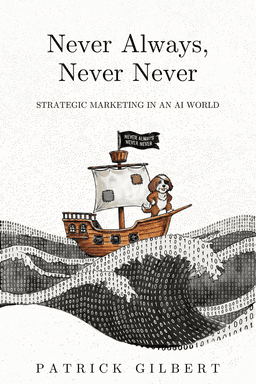
Enjoying this? Never Always, Never Never goes much deeper into the mental models and decision frameworks that shape how we think.
Why Emotional Advertising Drives Performance
The Campbell's Chunky Soup campaign exemplifies how emotional brand building directly drives sales. When creative director Marvin Waldman faced the challenge of selling soup to men aged 25-45—the demographic that consumed the least soup—focus groups revealed a powerful insight. Men didn't connect with rational benefits like convenience or nutrition. But they all remembered the same thing: their mothers giving them soup when they were sick as children.
The resulting "Mama's Boy" campaign didn't position soup as filling or convenient. Instead, it featured NFL stars like Reggie White receiving soup from their mothers on the sideline. The ads worked on multiple levels simultaneously—entertaining viewers with humor while subconsciously reactivating childhood memories of maternal care. This emotional connection translated directly into sales growth that sustained the brand for decades.
- Emotional campaigns create stronger memory encoding than rational appeals
- Characters and storytelling provide distinctive assets that competitors can't easily replicate
- System 1 emotional processing drives faster decision-making than System 2 rational analysis
- Emotional campaigns generate higher brand recall, improving performance across all channels
The Wilt Chamberlain Effect in Marketing
When Wilt Chamberlain scored his legendary 100-point game in 1962, he shot free throws underhand—a technique that boosted his success rate to 87.5% that night. Despite the proven effectiveness, he immediately abandoned the "granny shot" because it looked unconventional. He chose comfort over results, demonstrating what Gilbert calls the Wilt Chamberlain Effect: abandoning proven strategies because they feel uncomfortable or unfamiliar.
Marketers make the same mistake constantly. They know emotional advertising works. They know brand equity drives long-term profit. They know integrated campaigns outperform siloed approaches. Yet they default to what feels safer: optimizing for short-term metrics, maintaining rigid team structures, and ignoring evidence that challenges conventional divisions.
The evidence is no longer in question. The only question is whether you're willing to change how you work to reflect it.
Building Integrated Campaigns That Work
Effective integration doesn't mean eliminating the concepts of brand building and performance marketing. Instead, it means recognizing that both functions happen simultaneously in well-crafted campaigns. Consider Duolingo's approach with their green owl mascot, Duo. Rather than separate brand awareness and conversion campaigns, they built a character-driven strategy that entertains, builds brand recognition, and drives app downloads simultaneously.
The results speak for themselves. Since leaning into Duo's chaotic personality across all marketing channels, Duolingo's revenue has grown more than 10x—from roughly $70 million in 2019 to approximately $750 million by 2024. Their TikTok following exploded from 50,000 to over 16 million followers, with organic social content becoming their primary growth engine while paid campaigns maintain the same character-driven approach.
- Use consistent characters or creative themes across brand awareness and conversion campaigns
- Measure both immediate conversions and long-term brand lift from all campaign types
- Create emotional hooks in performance-focused ads while including clear conversion paths in brand campaigns
- Develop distinctive brand assets that work across awareness, consideration, and conversion touchpoints
- Test creative approaches that serve multiple funnel stages simultaneously
The Competitive Advantage of Integration
Legacy brands often struggle to integrate because their structures are too entrenched, their budgets too rigid, and their politics too complex. This creates opportunity for challenger brands willing to abandon outdated silos. When incumbents maintain separate brand and performance teams, agile competitors can move faster with integrated approaches that maximize every marketing dollar.
The democratization of marketing tools through AI has leveled the tactical playing field. What separates successful brands isn't access to better technology—it's the discipline to apply proven principles consistently, even when those principles challenge conventional structures. Integrated brand-performance marketing isn't just more effective; it's more efficient, requiring fewer resources to achieve better results.
Key People & Works
Researchers & Authors
- Les Binet
- Peter Field
- Marvin Waldman
- Patrick Gilbert
Key Works
- How Not To Plan by Les Binet
- Never Always, Never Never by Patrick Gilbert
Practical Applications
- Consolidate separate brand and performance teams into integrated campaign structures
- Measure both direct sales impact from brand campaigns and brand equity lift from performance ads
- Create fluid budget allocation between brand and performance based on real-time effectiveness data
- Use emotional storytelling in performance campaigns while including conversion elements in brand campaigns
- Implement unified measurement systems that track both immediate ROAS and long-term brand metrics
Frequently Asked Questions
What is the 60/40 rule in marketing budgets?
The 60/40 rule traditionally allocated 60% of marketing budgets to brand building activities and 40% to performance marketing. However, modern evidence shows this rigid separation is outdated, as both functions work synergistically rather than as distinct silos.
Why don't brand and performance marketing work as separate silos anymore?
Data analysis reveals that brand campaigns drive direct sales while performance campaigns build brand equity simultaneously. In today's complex customer journey, rigid separation between these functions ignores how people actually discover and purchase products.
How do emotional campaigns improve performance marketing results?
Emotional campaigns create stronger memory encoding and distinctive brand assets that improve recognition across all touchpoints. When people remember your brand positively, they're more likely to click your ads and convert, reducing acquisition costs and improving campaign performance.
What is the Wilt Chamberlain Effect in marketing?
The Wilt Chamberlain Effect describes abandoning proven strategies because they feel uncomfortable or unconventional. In marketing, this happens when teams ignore evidence that integrated approaches work better than traditional silos because change feels risky or unfamiliar.
How can small brands compete against larger companies with bigger budgets?
Small brands can outmaneuver larger competitors by integrating brand and performance marketing while incumbents remain stuck in rigid silos. This integrated approach maximizes every marketing dollar and creates more agile, responsive campaigns.
What makes characters like Duolingo's owl so effective in marketing?
Brand characters work across both brand building and performance marketing simultaneously. They create emotional connections, improve memory recall, and provide distinctive assets that can carry campaigns across all funnel stages, from awareness through conversion.
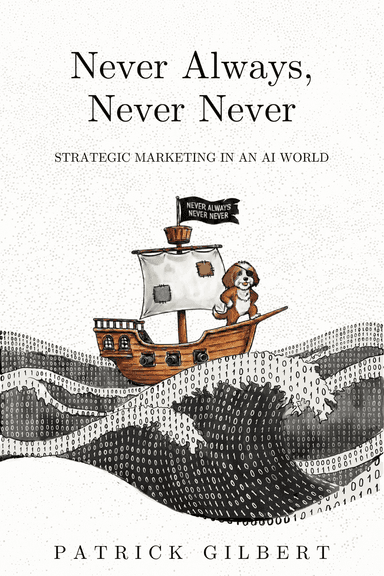
From the Book
Chapters 15 and 16 reveal how the traditional brand-performance split became marketing's biggest liability, with real campaign data showing why emotional advertising drives immediate sales and how integrated approaches outperform rigid silos.
This is just a glimpse. The book explores dozens of cognitive biases and decision-making frameworks that change how you think, decide, and act.
Want to go deeper on this topic?
Chat with the AI companion to explore these concepts with the full context of the book.
Chat about this topicRelated Reading
The Halo Effect in Marketing: How Brand Advertising Lifts All Performance
Learn how the halo effect in marketing creates brand lift across all channels. Research-backed strategies from Patrick Gilbert's Never Always, Never Never.
conceptThe 95-5 Rule: Why Most Buyers Aren't Ready to Buy (And What It Means for Marketing)
The 95-5 rule reveals only 5% of buyers are in-market at any time. Learn why this changes everything about brand vs performance marketing.
conceptBrand vs Performance Marketing: Why the Split is Killing Your Growth
The false division between brand and performance marketing is weakening both. Learn why integrated campaigns outperform siloed approaches.
conceptDistinctive Brand Assets: How to Build Mental Shortcuts That Drive Brand Recognition
Learn how distinctive brand assets create mental shortcuts for brand recognition. Jenni Romaniuk's framework for brand distinctiveness over differentiation.
BlogWhy the Old Playbook Is Broken
The platform tricks and optimization shortcuts that built most digital marketing careers have been commoditized. Here's what actually changed and what to do about it.
BlogMental Availability: The Marketing Concept Most Digital Marketers Ignore
Mental availability is the single most important driver of brand growth. Most digital marketers have never heard of it. Here's why that matters.