AEO (Answer Engine Optimization)
Definition
Answer Engine Optimization (AEO) is the strategy of ensuring that AI-driven search systems accurately and favorably represent your brand when generating answers to user queries. It goes beyond traditional SEO by addressing how AI models synthesize information from across the internet to form opinions about brands, products, and services.
Quick Answer: AEO marketing
Answer Engine Optimization (AEO) is the practice of shaping how AI-driven search systems, including Google AI Overviews, ChatGPT, and Perplexity, describe and recommend your brand. Unlike traditional SEO, which focuses on ranking a website in search results, AEO asks a broader question: how does the internet describe your brand when you are not in the room? AI systems synthesize information from websites, reviews, forums, social media, podcasts, and third-party mentions to form a consensus about who you are. AEO is the work of ensuring that consensus is accurate, favorable, and consistent.
How AEO Differs from SEO
Traditional SEO was built around a core premise: your website was the primary source of truth. You invested in content, site structure, backlinks, and technical hygiene so that search engines would recognize your site as authoritative and send users your way. Whatever happened after the click was in your control. AEO breaks that model. As Patrick Gilbert explains in Never Always, Never Never, "In an AI-mediated world, your website is no longer the place where meaning is formed. It is just one input among many." Large language models build their understanding of a brand by pulling signals from across the entire internet, then synthesizing those signals into a single explanation that feels coherent to the user. By the time someone reaches your site, if they reach it at all, their opinion is often already formed. The core distinction is this: SEO asks, "How do we get our site to rank?" AEO asks, "How does the internet describe us when we're not in the room?" That second question is harder to answer and harder to influence, because it depends not just on what you publish, but on what everyone else says about you.
The AdVenture Media Wake-Up Call
The urgency of AEO became concrete for Patrick Gilbert's own agency in late 2024. A prospective ecommerce client told AdVenture Media that he had discovered them through a ChatGPT search. The agency was recommended in the initial response, which was promising. But as the prospect asked follow-up questions, the model's understanding fell apart. ChatGPT described AdVenture Media as a company that primarily worked with private-equity-owned home services brands. When asked if they worked with ecommerce, it answered no. It then explained that AdVenture Media was a marketing education company that sold courses, often taught by its founder, Isaac Rudansky. None of this was entirely fabricated. AdVenture Media does have a home services division. They do sell educational content. But the agency is first and foremost a full-service digital marketing agency with a deep ecommerce portfolio. The AI was stitching together partial truths into a narrative that was fundamentally wrong. This client happened to be curious enough to visit the website and verify. Most people would not have done that. They would have moved on, never knowing the AI had misrepresented the brand. That was the moment AEO stopped being a future problem for Gilbert's team and became their top priority.
Answer engines don't invent perception. They compress it.
Patrick Gilbert, Never Always, Never Never
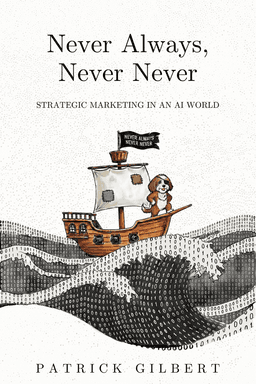
Enjoying this? Never Always, Never Never goes much deeper into the mental models and decision frameworks that shape how we think.
Why AEO Is Not a Tactic
The tempting response to AEO is to treat it like black-hat SEO for language models. If AI systems are synthesizing information from across the internet, surely there is a way to game them. Create content that "trains the model." Seed forums with favorable mentions. Flood the web with branded narratives. Patrick Gilbert argues this instinct is understandable but wrong. Answer engines do not work by weighting a single input more heavily than others. They work by pattern recognition. They look for consistency, repetition, and consensus across many independent sources. When they describe a brand, they are summarizing what appears to be broadly true. If enough creators describe your product the same way, that becomes the truth. If enough customers complain about the same issue, that becomes the truth. If enough third-party sources struggle to explain what makes you different, that becomes the truth. This is why AEO is less about optimization and more about alignment. Alignment between what you believe you stand for and what the world actually experiences. Alignment between your positioning and how consistently it shows up outside your own properties. The brands that win in AI-driven search are not chasing the newest tactic. They are investing in being unmistakable.
The Two Layers of AEO
Understanding the AI answer stack reveals that AEO actually operates on two distinct layers, and the strategy for each is different. The first layer is live search optimization. When an AI tool like ChatGPT or Google AI Overviews searches the web to answer a question, it retrieves and synthesizes content in real time. This is where traditional SEO principles still matter. Your content needs to be findable, well-structured, and authoritative enough to be selected when the model queries the web. Clear headings, direct answers, structured data, and topical authority all increase the probability that your content gets retrieved. The second layer is base knowledge optimization. Periodically, AI models are retrained on new data. Content that exists on the web today may become part of a model's foundational knowledge tomorrow, baked into its weights during training rather than retrieved in real time. The tactics that help your content rank in live search are not necessarily the same tactics that help your content get absorbed into base model knowledge. As Patrick Gilbert notes, "If you're optimizing content for AEO without knowing which layer you're targeting, you're flying blind. Live search optimization and base knowledge optimization are different games with different rules."
Related Terms
Frequently Asked Questions
What does AEO stand for?
AEO stands for Answer Engine Optimization. It refers to the practice of ensuring that AI-driven search systems like Google AI Overviews, ChatGPT, Perplexity, and other language model interfaces accurately and favorably represent your brand when generating answers to user queries.
How is AEO different from SEO?
SEO focuses on ranking your website in search engine results so users click through to your site. AEO focuses on how AI systems describe your brand when synthesizing answers from across the internet. With AEO, the brand impression often forms before a click happens, and the inputs include reviews, forums, social media, and third-party mentions, not just your website.
Why does AEO matter for brands?
More than 60% of searches end without a click, and AI systems are increasingly forming consumer opinions before a website visit ever occurs. If an AI system misrepresents your brand or fails to mention you at all, you lose potential customers without any signal in your analytics. AEO ensures your brand story is accurate where it matters most.
Can you game AEO like you could game SEO?
No. Answer engines work through pattern recognition across thousands of independent sources. They look for consistency and consensus, not individual signals that can be manipulated. The only sustainable AEO strategy is genuine alignment between your positioning and how the world actually describes you across every touchpoint.
What signals do AI systems use to form brand opinions?
AI systems synthesize information from websites, customer reviews, Reddit threads, YouTube videos, podcast transcripts, press mentions, social media posts, job listings, and any other publicly available content. A Reddit thread with no outbound links can shape an AI's understanding of your brand just as much as a polished case study on your own site.
How do you get started with AEO?
Start by auditing how AI systems currently describe your brand. Ask ChatGPT, Perplexity, and Google's AI Overview about your company and note where the description is inaccurate or incomplete. Then work on ensuring consistent, accurate messaging across every place your brand appears online, from your website to third-party reviews and media mentions.
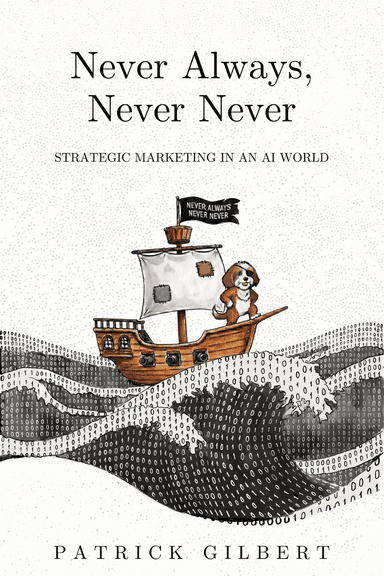
From the Book
Chapter 27 breaks down the six layers of the AI answer stack and explains why understanding which layer produced an AI's answer is the key to effective AEO strategy.
This is just a glimpse. The book explores dozens of cognitive biases and decision-making frameworks that change how you think, decide, and act.
Want to go deeper on this topic?
Chat with the AI companion to explore these concepts with the full context of the book.
Chat about this topicRelated Reading
Zero-Click Search: When Google Answers Without a Click
Over 60% of Google searches end without a click. Learn what zero-click search means for brands, why it's growing, and how to maintain visibility when clicks disappear.
conceptHow AI Search Works: Understanding the 6 Layers of the AI Answer Stack
Learn how AI search works through the 6 layers of the AI answer stack. From base model knowledge to deep research, understand AI responses for better marketing.
conceptMental Availability Marketing: How Brands Win the Battle for Memory
Mental availability marketing builds brand recall through category entry points. Learn how McDonald's, Disney & others dominate consumer memory structures.
conceptDistinctive Brand Assets: How to Build Mental Shortcuts That Drive Brand Recognition
Learn how distinctive brand assets create mental shortcuts for brand recognition. Jenni Romaniuk's framework for brand distinctiveness over differentiation.
glossaryBrand Salience: The Key to Mental Availability in Marketing
Brand salience is your brand's propensity to come to mind when customers have a need. Learn how it drives mental availability and purchase decisions.
BlogWhy the Old Playbook Is Broken
The platform tricks and optimization shortcuts that built most digital marketing careers have been commoditized. Here's what actually changed and what to do about it.