The Wilt Chamberlain Effect: Why Marketers Abandon What Works
Quick Answer: wilt chamberlain effect marketing
The Wilt Chamberlain Effect describes the tendency to abandon a proven approach because it feels uncomfortable or goes against convention. In 1962, Wilt Chamberlain scored 100 points in a single game, making 28 of 32 free throws using the underhand 'granny shot.' Despite its proven effectiveness, he abandoned the technique immediately afterward because it made him feel 'silly, like a sissy.' Patrick Gilbert applies this principle to marketing: brands know that emotional advertising works, that brand building drives long-term profit, and that integrating brand and performance delivers stronger results. Decades of research confirm it. Yet marketers continue to default to what feels safer because the proven approach is uncomfortable, unconventional, or difficult to explain to stakeholders.
Watch
The Wilt Chamberlain Effect: Why Marketers Ignore What Actually Works
The Greatest Night in Basketball History
In 1962, Wilt Chamberlain scored 100 points in a single NBA game, a record that has never been matched. But there is a detail about that night most people overlook. Chamberlain, who was famously terrible at free throws, made 28 out of 32 attempts. An 87.5% success rate. The reason? For that game, he shot them underhand, what players mocked as the 'granny shot.' As Patrick Gilbert recounts in Never Always, Never Never, Chamberlain had experimented with this technique earlier in the season and seen his percentages rise dramatically. On the night he scored 100, it worked better than ever. And yet, immediately afterward, he abandoned it. Chamberlain admitted years later that he felt 'silly, like a sissy' shooting that way. He knew it was wrong to give it up, but the social pressure was stronger than the data. He chose pride over effectiveness. One of the greatest athletes in history, on the greatest night of his career, found something that demonstrably made him better and walked away from it. Not because it stopped working. Not because he found something better. Because it made him feel uncomfortable. He had the data in his hands, literally, and it was not enough.
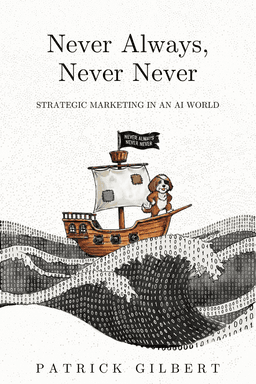
Enjoying this? Never Always, Never Never goes much deeper into the mental models and decision frameworks that shape how we think.
The Marketing Version of the Granny Shot
Patrick Gilbert argues that marketers make the same mistake every day. The evidence base is overwhelming. Emotional advertising works. Building brand equity drives long-term profit. Integrating brand and performance delivers stronger results than keeping them siloed. Decades of research from Les Binet, Peter Field, Byron Sharp, and the Ehrenberg-Bass Institute have proven it. Modern data has confirmed it repeatedly. Yet most marketers continue to default to what feels safer: optimizing for short-term metrics, sticking to rigid structures, ignoring the evidence that their brand campaigns can sell and their performance campaigns can build brand. Gilbert illustrates this with a global apparel brand he worked with. The company had two separate teams, two separate Meta ad accounts, and two very different goals. When AdVenture Media's marketing mix model proved that brand campaigns were driving direct sales and performance campaigns were building brand equity, the findings challenged every assumption that justified the existing structure. The VP of Paid Media listened carefully. He did not push back on the logic. He admitted it was fascinating and made perfect sense. And then he said, in effect: restructuring a multinational marketing team is not in my job description. This is above my pay grade. Can you show me how this model works within the current campaign structure? Nobody doubted the data. But nobody was willing to change either. That is the Wilt Chamberlain Effect in a corporate setting. The evidence is clear, and the organization still cannot act on it because the proven approach requires uncomfortable structural change.
Why the Effect Is So Persistent
The Wilt Chamberlain Effect persists because the forces that sustain it are structural, not just psychological. Within organizations, incentive systems reward visible, measurable outcomes. Short-term ROAS is easy to report, easy to justify, and easy to claim credit for. Long-term brand building effects are harder to attribute, slower to materialize, and impossible to tie to any single person's performance review. The careers that advance are the ones with clear metrics attached to them. Advocating for approaches whose benefits take years to compound is a career risk. Between organizations, the same dynamic plays out between clients and agencies. When an agency's survival depends on producing attributable short-term results, their incentives drift toward whatever is easiest to measure and claim credit for. Even if the agency knows that a different approach would serve the client better, recommending it means recommending something that is harder to prove, slower to show results, and more likely to get the agency fired before the benefits materialize. And within the broader industry, convention creates its own gravity. When everyone in your peer group is running performance-only strategies with tight ROAS targets, proposing something different feels risky even when the evidence supports it. The arbitrage era trained an entire generation of marketers to think a certain way. Unlearning those habits requires not just intellectual agreement but the organizational courage to act on it. The question Patrick Gilbert poses is direct: are you doing the same thing Wilt did? Do you have the evidence in your hands and still choose pride over effectiveness?
Wilt knew the underhand shot made him great. He knew abandoning it would hold him back. And still, he walked away from it. The question is: are you doing the same?
Patrick Gilbert, Never Always, Never Never
How It Works
Recognize the Pattern
Identify approaches in your marketing that are proven to work but feel uncomfortable, unconventional, or difficult to explain to stakeholders. Common examples: investing in brand building despite unclear short-term ROI, running emotional creative that feels 'off-brand,' or consolidating siloed teams that have their own budgets and goals.
Separate Data from Comfort
For each uncomfortable approach, ask: Am I making this decision based on evidence or based on how it looks? Wilt had a 87.5% free throw rate with the granny shot. The data was unambiguous. If your data supports the uncomfortable approach, acknowledge that the resistance is emotional, not rational.
Audit Your Marketing for Granny Shots
Where are you defaulting to convention over effectiveness? Avoiding emotional ads because they feel 'unserious.' Refusing to invest in brand because ROI is harder to prove. Keeping brand and performance teams siloed because the org chart demands it. Over-indexing on short-term metrics because they are easier to report. Each of these is a granny shot abandoned.
Build Organizational Cover
The hardest part of the granny shot is social pressure. Before making the change, build alignment with key stakeholders using data, case studies, and clear success metrics defined in advance. Frame the change as a test with specific evaluation criteria rather than a permanent shift. Make it safe to try.
Commit Fully and Give It Time
Half-measures do not work. Wilt abandoned the shot after his greatest game because he did not commit. If you adopt a proven but uncomfortable approach, give it enough time and resources to prove itself. Brand building effects compound over months and years. Pulling the budget after one quarter is the marketing equivalent of switching back to overhand free throws.
Frequently Asked Questions
What is the Wilt Chamberlain Effect?
The Wilt Chamberlain Effect is the tendency to abandon a proven approach because it feels uncomfortable or unconventional. Named after the basketball legend who abandoned his highly effective underhand free throw technique because it made him feel 'silly,' it describes how marketers walk away from evidence-based strategies in favor of approaches that feel safer.
What are common granny shots in marketing?
Investing in brand building despite unclear short-term ROI. Running emotional creative instead of feature-focused ads. Consolidating brand and performance teams into a unified structure. Accepting higher short-term costs for long-term market share gains. Each of these is supported by research but resisted because it requires uncomfortable change.
Why do marketers keep abandoning what works?
Incentive systems reward visible, measurable short-term outcomes. Long-term brand effects are harder to attribute and impossible to tie to one person's performance review. Convention creates its own gravity. When everyone in your peer group runs performance-only strategies, proposing something different feels risky even when the evidence supports it.
How do you overcome the Wilt Chamberlain Effect?
Start by recognizing the pattern. Separate data from comfort by asking whether your decisions are evidence-based or convention-based. Build organizational alignment before making changes. Frame changes as structured tests with predefined success criteria. Then commit fully and give the approach enough time to prove itself.
Is the Wilt Chamberlain Effect the same as risk aversion?
Not exactly. Risk aversion involves avoiding uncertain outcomes. The Wilt Chamberlain Effect involves abandoning approaches where the evidence is already clear. The outcome is not uncertain. The approach is proven. The resistance comes from social pressure and institutional comfort, not from genuine uncertainty about whether it works.
How does the Wilt Chamberlain Effect apply to AI adoption?
Many organizations recognize that AI transformation is necessary but resist the structural changes required to implement it. They adopt surface-level AI tools (Strand 1 of the double helix) but avoid the harder work of building proprietary AI capabilities (Strand 2) because it requires organizational change, new hiring practices, and uncomfortable shifts in how work gets done.
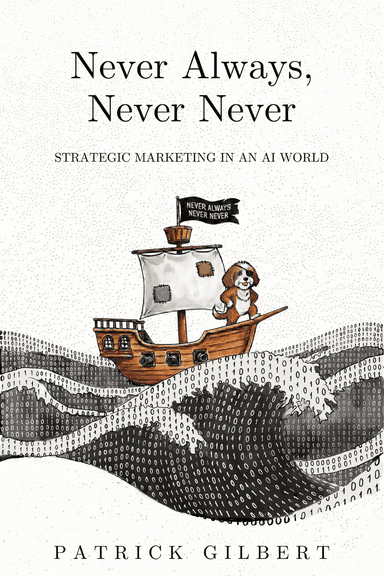
From the Book
Chapter 16 tells the story of Wilt Chamberlain's abandoned granny shot alongside a global apparel brand's refusal to act on its own data, showing why the biggest obstacle to marketing effectiveness is not ignorance but discomfort.
This is just a glimpse. The book explores dozens of cognitive biases and decision-making frameworks that change how you think, decide, and act.
Want to go deeper on this topic?
Chat with the AI companion to explore these concepts with the full context of the book.
Chat about this topicRelated Reading
Brand vs Performance Marketing: Why the Split is Killing Your Growth
The false division between brand and performance marketing is weakening both. Learn why integrated campaigns outperform siloed approaches.
frameworkThe 60/40 Rule: How to Split Your Marketing Budget Between Brand and Performance
Learn how to apply Binet and Field's 60/40 brand-to-performance marketing budget split. Understand the research, why most digital brands get it wrong, and how to implement it.
frameworkMarketing Strategy in Five Steps: How to Move from Tactics to Strategic Thinking
Learn a five-step framework for building real marketing strategy. Stop confusing tactics for strategy and start making decisions that compound over time.
conceptEmotional Advertising Effectiveness: Why Feelings Beat Logic in Marketing
Discover why emotional advertising outperforms rational appeals. Research from Binet & Field plus proven examples from Campbell's, Duolingo & more.
frameworkThe Attention Spectrum: A Framework for Emotional Advertising Effectiveness
Learn the attention spectrum framework for creating advertising that builds memory structures. From rational features to emotional storytelling, understand why feeling beats thinking.
BlogWhy the Old Playbook Is Broken
The platform tricks and optimization shortcuts that built most digital marketing careers have been commoditized. Here's what actually changed and what to do about it.