Marketing Strategy in Five Steps: How to Move from Tactics to Strategic Thinking
Quick Answer: marketing strategy framework
A marketing strategy framework separates long-term direction from short-term execution. Strategy defines the non-negotiable pillars that align marketing efforts with business goals: positioning, target audiences, and the trade-offs you are willing to make. Tactics are the flexible moves within that framework, including campaign structures, bid strategies, and creative variations. The five steps are: define strategic pillars, separate strategy from tactics, set proactive budgets, align all teams around the plan, and measure strategy alongside tactics. As Patrick Gilbert argues, the arbitrage era trained an entire industry to skip strategy entirely, treating marketing budgets as reactive bets based on short-term profitability rather than proactive investments in long-term growth.
The Industry That Forgot Strategy
For the last fifteen years, most digital marketers did not need a strategy. They needed a better tactic. As Patrick Gilbert writes in Never Always, Never Never, the entire premise of digital advertising was built on a single, unspoken idea: arbitrage. You could buy large amounts of website traffic at below-market costs and quickly convert that traffic into customers for a profit. Whether you were an ecommerce brand, a local service provider, or a global retailer, the underlying approach was almost always the same. Few people admitted this was their strategy, but that is what it was. Because the overarching approach was already defined, the industry's attention shifted to tactics. Best practices, playbooks, templates, checklists. Every discussion about performance came down to one question: how do we keep acquisition costs low and outmaneuver the competition with a new secret sauce? Gilbert admits he fell into this trap early in his career. He remembers learning about Single Keyword Ad Groups and thinking it was a strategy. Later, it was automated bidding versus manual bidding. It took years for him to realize he was confusing the ingredients for the recipe. The distinction matters now more than ever. The arbitrage era is ending. Costs are rising. Platform AI is commoditizing tactical execution. The brands that win going forward will be the ones with genuine strategic direction, not just a bag of clever tactics.
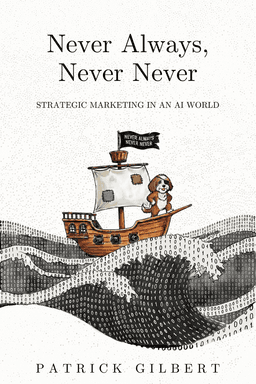
Enjoying this? Never Always, Never Never goes much deeper into the mental models and decision frameworks that shape how we think.
Strategy vs. Tactics: A Litmus Test
Patrick Gilbert offers a simple litmus test for distinguishing strategy from tactics. If a debate is existential, such as whether to enter a new market even if it looks less profitable in the short term, that is strategy. If the debate is incremental, such as whether to use broad match or exact match for a specific campaign, that is tactics. Both matter, but they are not the same. Strategy is the long game. It defines the non-negotiable pillars that align a company's marketing efforts with its business goals. These are decisions that should not shift week to week. Your positioning in the market, the audiences you must win, the trade-offs you are willing to make. Strategy tells everyone in the organization that this is the direction, even if the path gets bumpy along the way. Tactics are the moves within that framework. Campaign structures, bid strategies, creative variations, budget allocations. Tactics are important, but they are flexible. A tactic can change tomorrow without derailing the overall mission, as long as it still serves the strategy. Optimization is tactical work: small improvements made inside channels to squeeze out better performance. Strategic initiatives are long-term projects designed to move the business forward: entering a new market, repositioning a product, shifting media mix to build brand equity. The problem arises when organizations get these two layers confused and spend all their time in tactical debates without ever aligning on the strategic pillars those tactics are supposed to serve.
From Reactive Budgets to Strategic Investment
One of the clearest signs of missing strategy is how budgets are set. Before the arbitrage era, business strategy helped define marketing budgets. Organizations determined what they wanted to achieve and proactively allocated resources toward those initiatives. That is not how most digital advertisers operate. Patrick Gilbert describes the running joke at AdVenture Media about the number of clients and prospects who say, 'Well, if my campaigns are profitable, my budget is unlimited.' Many say it while pounding their chest, as if they have revealed some profound business truth. Gilbert has heard it hundreds of times, and every time, he thinks the same thing: that is not the right mindset. When marketing budgets are defined purely by what is profitable in the short term, they stop being strategic investments and become tactical bets. The exercise shifts from 'How do we grow the business?' to 'How much can we squeeze from this tactic before efficiency drops?' Gilbert compares this to oil miners wandering through a desert, drilling wherever they can find a pocket of opportunity and moving on once it runs dry. That is not strategy. That is extraction. Strategic marketing is about building systems, assets, and brand equity that compound over time rather than deplete with use. The ecommerce case study in the chapter demonstrates what happens when a brand commits to strategy over efficiency, endures short-term pain, and emerges with both its highest top-line and bottom-line performance in fifteen years.
When strategy and tactics work in harmony, when your budget, measurement, and creative decisions all serve a larger purpose, the result is resilience.
Patrick Gilbert, Never Always, Never Never
How It Works
Define Your Strategic Pillars
Identify three to five non-negotiable principles that align marketing efforts with business goals. These are the decisions that should not change quarter to quarter. Examples: 'We build brand equity in Category X,' 'We reach light buyers through broad-reach media,' or 'We invest in measurement infrastructure before scaling spend.'
Separate Strategy from Tactics
Use the litmus test. If the debate is existential, it is strategy. If the debate is incremental, it is tactics. Stop treating tactical decisions like campaign structure and bid strategy as strategic. They are important, but they are flexible moves within a direction that should already be set.
Set Proactive Budgets
Move from reactive budgets defined by short-term ROAS thresholds to proactive budgets defined by strategic goals. Determine what you want to achieve, then allocate resources toward those initiatives. Accept that some investments will not show positive ROAS in the first quarter.
Align All Teams Around the Plan
Every stakeholder, from agency to internal team to creative partner, must understand which decisions are strategic and not to be changed, and which decisions are tactical and open to testing. Without this alignment, every decision feels like a coin toss and teams chase the next shiny thing.
Measure Strategy, Not Just Tactics
Track business health metrics alongside tactical KPIs. Revenue growth, profit, market share, brand demand, and customer diversification reveal whether the strategy is working. ROAS and CPA alone cannot tell you if you are building something durable or just extracting short-term value.
Frequently Asked Questions
What is the difference between strategy and tactics in marketing?
Strategy defines the long-term direction: positioning, target audiences, and the trade-offs you are willing to make. Tactics are the flexible moves within that direction, including campaign structures, bid strategies, and creative variations. Strategy should not change week to week. Tactics should be debated, tested, and refined constantly.
Why do most digital marketers confuse strategy and tactics?
The arbitrage era of digital marketing made strategy unnecessary. The overarching approach was always the same: buy cheap traffic and convert it. With the strategy already defined by default, the industry focused entirely on tactics. As costs rose and platform AI commoditized tactical execution, the absence of strategy became a liability.
How should marketing budgets be set?
Proactively. Start with what you want to achieve, then allocate resources toward those goals. Reactive budgets defined purely by short-term ROAS thresholds are not strategic investments. They are tactical bets that optimize for what can be squeezed from a channel before efficiency drops.
What is an example of strategy driving better results?
Patrick Gilbert describes an ecommerce brand that expanded its product catalog and saw profitability plummet. Instead of cutting spend, they increased investment, launched new channels, and committed to a long-term strategic plan. ROAS dropped 50% in the short term but the business posted its highest revenue and profit in fifteen years by mid-summer.
How do I know if my marketing team is being strategic?
Ask whether your team can articulate three to five non-negotiable strategic pillars that guide all decisions. If every discussion is about which campaign to pause or which bid to adjust, you are operating tactically. Strategy provides the framework that makes tactical decisions coherent rather than ad hoc.
Does strategy mean ignoring short-term performance?
No. Strategy and tactics work in harmony. The strategic pillars set direction. Tactics execute within that direction and should still be optimized for performance. The difference is that tactical decisions serve the strategy rather than replacing it. Short-term performance matters, but it should not be the only thing that matters.
From the Book
Chapter 17 traces how the arbitrage era trained marketers to confuse tactics for strategy, then uses an ecommerce turnaround case study to show what happens when a brand commits to strategic thinking over tactical optimization.
This is just a glimpse. The book explores dozens of cognitive biases and decision-making frameworks that change how you think, decide, and act.
Want to go deeper on this topic?
Chat with the AI companion to explore these concepts with the full context of the book.
Chat about this topicRelated Reading
Strategy vs Tactics in Marketing: Why Most Strategies Are Just Tactical Lists
Learn why most marketing strategies are actually just tactical lists. Discover the framework for building true strategic marketing that drives growth.
frameworkThe 60/40 Rule: How to Split Your Marketing Budget Between Brand and Performance
Learn how to apply Binet and Field's 60/40 brand-to-performance marketing budget split. Understand the research, why most digital brands get it wrong, and how to implement it.
frameworkScoreboards vs. Film Room: A Framework for Marketing Measurement
Learn the scoreboards vs. film room framework for marketing measurement. Separate campaign evaluation from team evaluation using MMM, attribution, and incrementality testing.
conceptBrand vs Performance Marketing: Why the Split is Killing Your Growth
The false division between brand and performance marketing is weakening both. Learn why integrated campaigns outperform siloed approaches.
frameworkThe Wilt Chamberlain Effect: Why Marketers Abandon What Works
Learn the Wilt Chamberlain Effect and how to overcome it. Understand why marketers abandon proven approaches that feel uncomfortable and how to commit to effectiveness over convention.
BlogWhy the Old Playbook Is Broken
The platform tricks and optimization shortcuts that built most digital marketing careers have been commoditized. Here's what actually changed and what to do about it.