Put Yourself Out of Business: The Innovator's Dilemma Applied to Marketing
Quick Answer: innovators dilemma marketing
The 'put yourself out of business' framework applies Clayton Christensen's Innovator's Dilemma to marketing strategy and AI adoption. Christensen showed that successful companies fail not because they are poorly managed, but because they are well-managed, optimizing for the current environment while the ground shifts beneath them. In marketing, the arbitrage era rewarded tactical speed, exploitation of underpriced channels, and short-term efficiency. Those behaviors are now liabilities. The framework asks organizations to identify what made them successful, assess how those skills become liabilities, imagine their own replacement, build what threatens them, and accept that most tactical experiments will fail while strategic bets compound. As Patrick Gilbert argues, the next era of marketing belongs to the strategists.
The Pattern Christensen Identified
In 1997, Clayton Christensen published The Innovator's Dilemma, a book that changed how a generation of business leaders thought about competition. The core argument was that the very practices that lead to success in stable markets can become liabilities when disruption arrives. Companies fail not because they are poorly managed, but because they are well-managed. They optimize for the current environment while the ground shifts beneath them. The pattern is predictable. An incumbent dominates a market by doing what it does best. A new technology or business model emerges that looks inferior at first, cheaper, simpler, less capable. The incumbent ignores it or dismisses it because it does not serve their best customers. And then, gradually, the new approach improves. By the time the incumbent recognizes the threat, it is too late. The skills and processes that made them successful have become the very things preventing them from adapting. As Patrick Gilbert writes in Never Always, Never Never, this pattern is playing out in real time across the marketing industry. The arbitrage era rewarded a specific set of behaviors: speed, exploitation of underpriced channels, and tactical cleverness. The agencies and brands that thrived were the ones who could find the next underpriced opportunity and move on before everyone else caught up. That era trained an entire industry to think a certain way. And those ways of thinking are now liabilities.
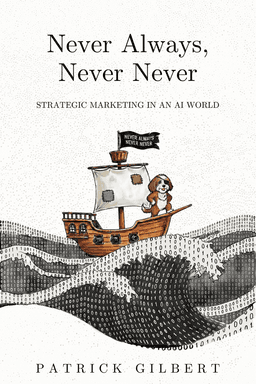
Enjoying this? Never Always, Never Never goes much deeper into the mental models and decision frameworks that shape how we think.
How Success Becomes a Liability
The arbitrage era of digital marketing rewarded three specific capabilities. First, speed: the ability to spot opportunities and act on them before competitors. Second, tactical execution: mastery of campaign structures, bidding strategies, and platform features. Third, short-term optimization: the discipline to measure everything and cut what was not immediately profitable. These capabilities built agencies, careers, and entire business models. They were the right skills for the right era. But Patrick Gilbert argues that each of them has become a trap. Speed without strategy leads to chasing every new platform and feature without asking why. Tactical execution without strategic direction means teams spend all their time on the how and never address the what. Short-term optimization without brand investment means budgets are reactive, defined by what is profitable this month rather than what builds value over years. The marketers who are struggling most are often the ones who were most successful in the previous era. Their skills are deeply ingrained. They have been rewarded for those skills for a decade or more. Unlearning them requires not just intellectual agreement that the world has changed but the organizational and personal courage to stop doing the things that used to work. Gilbert frames this tension honestly. If you run an agency, you have clients who came to you expecting the old model. They want quick fixes for their ad accounts. They want someone to push the buttons and pull the levers. They are paying the bills. You cannot ignore them. But if you only serve those clients in the way they expect, you will optimize yourself into irrelevance.
Cauterized Failures and Compounding Success
Patrick Gilbert shares a principle from his partner Isaac: most failures are cauterized, while success ripples outward. When you make a bad decision, the damage is usually contained. You lose some money, waste some time, learn a lesson, and move on. The pain is real but temporary. But when you make a good decision, a genuinely good one, the benefits compound in ways you cannot anticipate. One success creates the conditions for the next, which creates the conditions for the one after that. In 2014, Isaac believed that content marketing would be a powerful growth lever for AdVenture Media. They tried many things underneath that belief. Most have been long forgotten. But his Google AdWords course was the one that worked. That single project led to inbound leads that led to clients that led to case studies that led to a reputation that led to opportunities they never would have had otherwise. More than ten years later, the ripples from that decision are still spreading. In 2018, they made a similar bet on AI. Most of the industry was fighting against automation, clinging to manual bidding, resisting smart campaigns, insisting that machines could not be trusted. AdVenture Media leaned the other way. Within that direction, some decisions worked and some did not. But the strategic direction was right, and the good decisions compounded. The framework maps directly to the strategy versus tactics distinction. At the strategic level, you are choosing a direction for the company based on where you believe the world is heading. At the tactical level, you are experimenting within that direction. Most tactical experiments fail. That is fine. Those failures are cauterized. But when the strategic direction is right, a few tactics will succeed in ways that ripple far beyond what you expected.
The next era of marketing belongs to the strategists.
Patrick Gilbert, Never Always, Never Never
How It Works
Identify What Made You Successful
Map the skills, processes, and business model that built your current position. For many digital marketers, this was tactical execution, arbitrage of underpriced channels, and short-term optimization discipline. Be specific and honest about the capabilities that your organization and your career were built on.
Ask How Those Skills Become Liabilities
Christensen showed that well-managed companies fail because they optimize for the current environment while the ground shifts. The same skills that created your success may prevent your adaptation. Speed without strategy leads to chasing shiny objects. Tactical mastery without direction means optimizing for the wrong goals.
Imagine Your Own Replacement
If a competitor started from scratch today with modern AI tools and no legacy constraints, what would they build? What would they do differently? What capabilities would they invest in? What would they not carry forward from your current model? This exercise reveals both your vulnerabilities and your opportunities.
Build What Threatens You
Instead of waiting for a disruptor, become the disruptor. Invest in the capabilities, tools, and approaches that could make your current model obsolete. AdVenture Media restructured around AI capabilities, hired into roles that would not have existed two years earlier, and invested in infrastructure that has no value unless the bet pays off.
Accept That Most Experiments Will Fail
Most failures are cauterized. The damage is contained. But when the strategic direction is right, a few tactical experiments will ripple outward far beyond what you expected. Make the strategic bet on where the market is heading, then run enough experiments within that direction that a few of them compound.
Frequently Asked Questions
What is the Innovator's Dilemma in marketing?
Clayton Christensen showed that successful companies fail by optimizing for the current environment while the market changes. In marketing, the arbitrage era rewarded tactical speed, channel exploitation, and short-term ROAS optimization. Those same skills are now liabilities as platform AI commoditizes execution and brand building becomes essential for growth.
What does 'put yourself out of business' mean?
It means proactively building the capabilities that could make your current business model obsolete, before a competitor does it for you. Instead of waiting for disruption, you become the disruptor. This requires investing in new skills, tools, and approaches even when the current model is still profitable.
Why are arbitrage-era skills now liabilities?
The playbooks that worked in 2015 no longer work. Costs in Google and Meta have risen dramatically. Platform AI has commoditized bid management, audience targeting, and campaign optimization. Tactical execution alone no longer provides competitive advantage. The marketers who are struggling most are often the ones who were most successful in the previous era.
How do you know which strategic bet to make?
You do not know with certainty. That is the point. Strategic bets are made based on where you believe the market is heading. Most tactical experiments within that bet will fail. Success comes from getting the direction right and running enough experiments that a few of them compound. Failures are cauterized. Success ripples outward.
Can you serve existing clients while transforming your business?
You must. The tension is real. Existing clients expect the old model and they are paying the bills. But if you only serve them in the way they expect, you will optimize yourself into irrelevance. The solution is to maintain current service quality while investing in new capabilities, gradually transitioning clients to the new model as it proves itself.
What is the relationship between the Innovator's Dilemma and the AI double helix?
The double helix is the execution framework for responding to the Innovator's Dilemma. Strand 1 (internal efficiency) keeps you competitive in the current environment. Strand 2 (external value) builds the capabilities for the next era. Together, they allow you to serve today's clients while building tomorrow's business model.
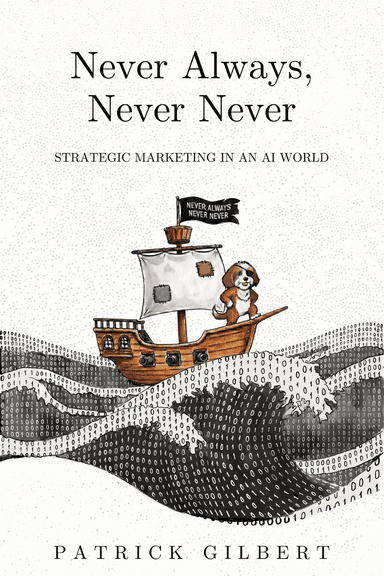
From the Book
Chapter 33 applies Clayton Christensen's Innovator's Dilemma to the marketing industry, tracing how AdVenture Media's bet on AI followed the same pattern as Isaac's 2014 content marketing bet: most experiments failed, but the ones that worked are still rippling outward.
This is just a glimpse. The book explores dozens of cognitive biases and decision-making frameworks that change how you think, decide, and act.
Want to go deeper on this topic?
Chat with the AI companion to explore these concepts with the full context of the book.
Chat about this topicRelated Reading
The AI Double Helix: A Step-by-Step Framework for AI Business Transformation
Learn how to implement the AI double helix framework. Two strands, internal efficiency and external value, spiral upward together to create compounding competitive advantage.
frameworkThe Resource Gap Framework: How AI Fills the Gaps That Hold Marketing Teams Back
Learn the resource gap framework for identifying where AI can fill strategic capability gaps in your marketing organization. Build what you previously could not afford.
frameworkMarketing Strategy in Five Steps: How to Move from Tactics to Strategic Thinking
Learn a five-step framework for building real marketing strategy. Stop confusing tactics for strategy and start making decisions that compound over time.
frameworkThe Wilt Chamberlain Effect: Why Marketers Abandon What Works
Learn the Wilt Chamberlain Effect and how to overcome it. Understand why marketers abandon proven approaches that feel uncomfortable and how to commit to effectiveness over convention.
conceptBuilding an AI-First Culture in Marketing: Beyond Tools to Transformation
Learn how to build an AI first culture that creates efficiency and value, not just faster horses. Strategic frameworks for marketing teams.
BlogWhy the Old Playbook Is Broken
The platform tricks and optimization shortcuts that built most digital marketing careers have been commoditized. Here's what actually changed and what to do about it.