Building an AI-First Culture in Marketing: Beyond Tools to Transformation
Quick Answer: AI first culture marketing
An AI-first culture in marketing operates on a double helix model with two intertwined strands: Internal Efficiency and External Value. The first strand automates tedious tasks like reporting and data cleaning to create bandwidth for strategic thinking. The second strand uses AI to deliver unique value that wasn't possible before, like sophisticated analysis or creative production at scale. Teams move from a 4x2 work model where every task is either copiloted with AI or fully delegated to it, eliminating solo work. This creates a compounding loop where efficiency funds experimentation, leading to new value creation that funds even greater efficiency.
Definition
An AI-first culture transforms how marketing teams work by systematically moving from using AI as occasional tools to building integrated systems where artificial intelligence enables both internal efficiency and external value creation that wasn't previously possible.
The AI Double Helix: Two Strands of Transformation
As Patrick Gilbert argues in Never Always, Never Never, building an AI-first culture requires understanding that transformation happens along two distinct but intertwined paths, like the double helix of DNA. Most marketing teams get trapped thinking about AI as simply "faster horses" when the real opportunity lies in systematic transformation across both internal operations and external value creation.
The first strand, Internal Efficiency, focuses on automating the tedious work that consumes human attention without adding client value. This includes data cleaning, report formatting, asset resizing, and the endless email threads required to gain platform access. Gilbert's agency discovered that these tasks were consuming massive bandwidth that could be redirected toward actual strategic problem-solving.
The primary goal of Internal Efficiency is bandwidth creation. Every hour freed from tedious tasks becomes an hour available for strategic thinking that directly impacts campaign performance.
The second strand, External Value, uses AI to deliver capabilities that were literally impossible just years ago. A mid-market brand can now conduct sophisticated analysis that previously required seven-figure budgets and contracts with global agencies. Creative teams can produce high-quality content without massive production houses. A single strategist can monitor competitor movements and market signals that once required entire departments.
The 4x2 Model: Eliminating Solo Work
Gilbert breaks down all marketing work into four distinct modes: Design (blank canvas visioning), Problem-Solving (detective work with defined goals), Decision-Making (turning analysis into action), and Building (execution of strategy). In the traditional model, each mode offered three approaches: Solo work, Copiloting with teammates, or Delegating to others.
In an AI-First culture, Solo is no longer a valid option. In fact, it's a red flag.
Patrick Gilbert, Never Always, Never Never
The new 4x2 model recognizes only Copiloting (human in driver's seat, AI as navigator) and Delegating (AI handles execution, human provides quality control). This shift forces a mental audit of every task: Can this be delegated to AI? If not, can I copilot it? Working solo becomes an act of operational negligence when AI alternatives exist.
- Design and Decision-Making work best with Copiloting approaches where humans maintain strategic control
- Building and repetitive Problem-Solving should be Delegated to AI agents with human oversight
- Teams must audit their to-do lists and eliminate solo work on tasks that could be automated
- The goal is redirecting human intelligence toward uniquely human work of understanding people and building brands
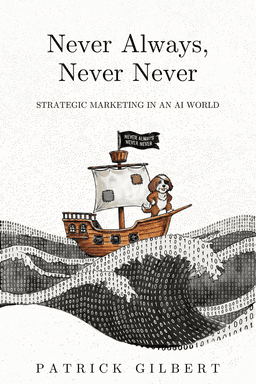
Enjoying this? Never Always, Never Never goes much deeper into the mental models and decision frameworks that shape how we think.
The AI Maturity Ladder: From Dabbler to Strategist
Gilbert's framework tracks AI adoption through four progressive levels. Dabblers use ChatGPT for occasional emails or summaries but haven't changed their fundamental work approach. Practitioners have adopted the 4x2 model, using AI to solve daily friction points like broken tracking pixels or copy variations.
The crucial leap happens at the Architect level, where individuals stop looking at individual tasks and start building systems. Instead of using an LLM to write one brief, Architects design automated workflows that generate every brief based on strategic inputs. They create the Internal Efficiency strand by institutionalizing automation across the organization.
Strategists represent the pinnacle, building the External Value strand through bespoke applications, proprietary data models, and interactive tools that provide unique customer value. They don't just analyze data with AI, they build custom tools that help clients visualize multi-million dollar strategies in real time.
In an industry where everyone has access to the same LLMs and ad platform algorithms, competitive advantage comes from the collective intelligence and maturity level of your team, not the software you buy.
The Compounding Loop: How Efficiency Funds Innovation
The transformative power emerges when both strands of the helix feed each other in a self-reinforcing cycle. Internal efficiency creates bandwidth, which enables experimentation with new AI capabilities. Successful experiments produce external value that wins clients and commands higher margins. That success provides capital and conviction to invest in even better internal systems.
Organizations that align around this compounding loop stop being groups of technicians and become fundamentally different businesses. They understand that efficiency alone leads to commoditization, while value creation without operational foundation can't scale. The combination creates sustainable competitive advantage.
The Human Element: Meeting People Where They Are
According to Gilbert's experience at AdVenture Media, building AI-first culture requires immense empathy for team members starting from different places. When a vocal minority moves at light speed while others lag behind, dangerous internal rifts emerge. People feeling left behind often shut out information that could help them catch up.
Education in this space is exponential; the longer you wait to start, the harder it feels to ever catch up.
Patrick Gilbert, Never Always, Never Never
The solution starts with developing shared language across the team. Everyone needs to understand fundamental AI concepts and work frameworks, even if they're not executing every part. A Level 2 Practitioner might not build custom workflows, but they should understand what that means and discuss such projects with Level 4 colleagues.
- Shared language removes the 'magic' from AI and replaces it with clarity
- Teams must establish minimum AI proficiency as a non-negotiable hiring requirement
- The culture change is a marathon requiring patience and systematic development
- Eventually, organizations raise the floor as collective intelligence advances
Key People & Works
Researchers & Authors
- Patrick Gilbert
- Henry Ford
Key Works
- Never Always, Never Never by Patrick Gilbert
Practical Applications
- Automate reporting and data cleaning to free up strategic thinking time
- Build custom AI workflows for creative brief generation and campaign analysis
- Implement the 4x2 work model where every task is either copiloted with AI or delegated to it
- Use AI maturity ladder assessment to track team development from Dabbler to Strategist level
- Create proprietary AI tools that provide unique client value and competitive differentiation
Frequently Asked Questions
What's the difference between AI-forward and AI-first culture in marketing?
AI-forward organizations use AI tools occasionally for productivity gains, like ChatGPT for emails or AI-wrapped SaaS products. AI-first cultures systematically transform work through the double helix model, creating both internal efficiency and external value that fundamentally changes what's possible for the business.
How does the 4x2 work model change daily marketing operations?
The 4x2 model eliminates solo work entirely. Every marketing task must be either copiloted with AI (human leads, AI assists) or delegated to AI (AI executes, human reviews). This forces teams to audit their work and automate routine tasks while focusing human intelligence on strategic thinking and creative problem-solving.
What are the four levels of the AI maturity ladder for marketing teams?
Dabblers use AI occasionally for basic tasks. Practitioners adopt the 4x2 model and solve daily friction points. Architects build systematic workflows and internal efficiency systems. Strategists create proprietary AI applications that deliver unique external value to clients and customers.
How does AI first culture create competitive advantage in marketing?
The advantage comes from the compounding loop where internal efficiency creates bandwidth for experimentation, leading to external value creation that funds even better efficiency. This allows smaller teams to compete with larger agencies and enables capabilities that weren't possible before AI.
What challenges do marketing teams face when building AI first culture?
The biggest challenge is managing the human element when team members start from different AI proficiency levels. Teams need shared language around AI concepts, systematic training approaches, and patience to prevent rifts between fast adopters and those moving more slowly.
How should marketing leaders implement the AI double helix model?
Start with Internal Efficiency by identifying tedious tasks that don't add client value, then automate them to create bandwidth. Use that freed capacity for experimentation with External Value creation. Success in value creation should fund reinvestment in better efficiency systems, creating a compounding loop.
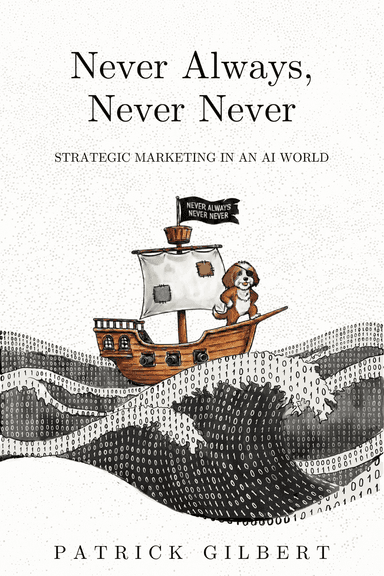
From the Book
Chapter 30 provides detailed frameworks for implementing each strand of the double helix, specific examples of AI workflows from Gilbert's agency transformation, and practical guidance for managing the cultural change process across different personality types and skill levels.
This is just a glimpse. The book explores dozens of cognitive biases and decision-making frameworks that change how you think, decide, and act.
Want to go deeper on this topic?
Chat with the AI companion to explore these concepts with the full context of the book.
Chat about this topicRelated Reading
AI Double Helix Framework: How to Transform Marketing with Two-Strand AI Strategy
Learn the AI double helix framework: using AI for internal efficiency (strand 1) and external value creation (strand 2) to build competitive advantage.
conceptAI Marketing Strategy 2026: Beyond Tools to Transformation
Learn how to build an AI marketing strategy that goes beyond tools to create competitive advantage through strategic implementation and culture change.
BlogAI Amplifies Whatever You Bring to the Table
AI isn't a shortcut. It's an amplifier. If you have strong strategy, AI makes you dramatically more effective. If you don't, it helps you execute mediocrity faster.