AI Double Helix Framework: How to Transform Marketing with Two-Strand AI Strategy
Quick Answer: AI double helix framework
The AI double helix framework consists of two intertwined strands that spiral upward together. Strand 1 focuses on Internal Efficiency—automating tedious tasks like reporting and data cleaning to create bandwidth for strategic work. Strand 2 focuses on External Value—using AI to deliver capabilities that were previously impossible or required massive resources, creating market differentiation. The magic happens when these strands feed each other: efficiency gains fund value creation experiments, successful innovations generate revenue to reinvest in better efficiency tools. Organizations that only focus on efficiency race toward commoditization, while those chasing value without operational foundation cannot scale.
Definition
The AI double helix framework represents two intertwined strands of business transformation: Internal Efficiency (automating tasks to create bandwidth) and External Value (using AI to deliver new capabilities), which spiral upward together in a self-reinforcing cycle.
The Two Strands of AI Transformation
As Patrick Gilbert argues in Never Always, Never Never, most businesses approach AI transformation incorrectly by focusing only on efficiency gains. The AI double helix framework recognizes that sustainable competitive advantage requires two distinct but interconnected approaches. Like the biological double helix that carries genetic instructions for life, business transformation requires two intertwined strands: Internal Efficiency and External Value creation.
The framework emerged from AdVenture Media's journey building an AI-first culture. After years of experimenting with various AI tools and approaches, Gilbert realized there was a fundamental difference between using AI tactically and building it into the core of business strategy. The double helix provides the structural framework for this deeper transformation.
Strand 1: Internal Efficiency - The Foundation
The first strand focuses on the 'doing' of the work—automating tedious reports, cleaning messy datasets, drafting internal communications, and streamlining operational processes. This is the 'obvious' win that most organizations start with because the benefits are immediately visible and measurable.
The primary goal of Strand 1 is bandwidth creation. By reducing the time your team spends on high-volume, low-impact tasks—the digital equivalent of 'lever-pulling'—you buy back the most valuable resource you have: human attention.
Patrick Gilbert, Never Always, Never Never
But efficiency gains serve a deeper strategic purpose beyond just 'doing more with less.' They create competitive protection. When competitors embrace these operational improvements while you don't, you face severe disadvantage. Operational efficiencies put downward pressure on industry pricing. Organizations that fail to achieve these gains find themselves either undercut by competitors or forced to match lower prices while their margins suffer.
At AdVenture Media, auditing daily tasks revealed that massive amounts of time went to activities that provided no direct client value: cleaning data, resizing images, formatting slide decks, troubleshooting tracking issues, and managing platform access requests.
The real breakthrough comes from systematically examining every task through the lens of client value. Marketing teams spend enormous amounts of time on reporting, email communication, and presentation creation—none of which directly improves campaign performance. Every hour freed from these activities can be redirected toward actual strategic problem-solving that drives results.
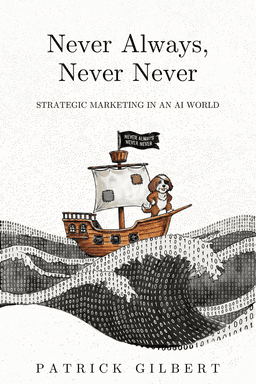
Enjoying this? Never Always, Never Never goes much deeper into the mental models and decision frameworks that shape how we think.
Strand 2: External Value - The True Advantage
While the first strand makes internal teams faster, the second strand makes businesses uniquely valuable to the market. This represents the shift from defense to offense—using AI to accomplish things that were literally impossible just a few years ago.
AI acts as a massive equalizer, allowing small teams to produce output that previously required much larger organizations. A two-person marketing team can now generate the same sophisticated analysis that once demanded expensive consultants and seven-figure budgets. Mid-market brands can conduct strategic analysis previously exclusive to global agencies like Omnicom or Publicis.
- Data Analysis: Small teams can now perform sophisticated market analysis previously requiring dedicated departments
- Creative Production: Marketers with design sense can produce high-quality creative without massive production budgets
- Strategic Intelligence: Single strategists can monitor competitor movements and market signals across vast datasets
- Custom Tool Development: Organizations can build proprietary solutions without large technical teams
The opportunity lies in market differentiation. As standard work becomes automated industry-wide, being 'good at the tools' stops being a competitive advantage. Real advantage belongs to strategists who use their newly acquired bandwidth to solve complex business problems that competitors are too slow to identify.
The Compounding Loop: How the Strands Interact
The transformative power emerges when these strands feed each other in a self-reinforcing cycle. Efficiency doesn't just save time—it creates bandwidth for experimentation. When your best people aren't fighting daily operational fires, they can finally ask 'What if?' about client challenges.
This bandwidth becomes fuel for experimentation. Teams use extra capacity to test new approaches, build solutions, and develop insights that define the second strand of value creation.
Successful experiments generate new value that wins clients, commands higher margins, and makes your organization harder to replace. This success provides capital and conviction to reinvest in even better internal efficiency tools. Profits from External Value fund improved Internal Efficiency, creating an upward spiral.
Organizations that focus only on efficiency race toward commoditization—becoming cheaper versions of themselves. Those chasing value creation without operational foundation cannot scale their innovations. But when both strands spiral upward together, you stop being a group of technicians and become a different species of business entirely.
The 4x2 Model of Work
To implement the double helix framework practically, Gilbert introduces the 4x2 Model of Work. Every task falls into one of four modes: Design (blank canvas visioning), Problem-Solving (detective work toward specific solutions), Decision-Making (turning analysis into action), and Building (execution).
In traditional work models, each mode offered three approaches: Solo, Copilot with teammates, or Delegate to others. The AI-first culture collapses this into a 4x2 matrix with only two options: Copiloting and Delegating.
In an AI-First culture, Solo is no longer a valid option. In fact, it's a red flag. We have effectively collapsed the matrix into a 4x2 model.
Patrick Gilbert, Never Always, Never Never
- Copiloting: Human remains in driver's seat while AI acts as navigator—ideal for Design and Decision-Making
- Delegating: Machine takes the wheel while human provides quality control—goal for Building and repetitive Problem-Solving
- Cultural Audit: Every team member asks 'Can this be delegated?' then 'Can I copilot it?' before starting any task
- Operational Negligence: Working Solo on tasks that could be copiloted or delegated wastes limited bandwidth
Real-World Implementation: From Theory to Practice
The framework's power becomes clear through concrete application. At AdVenture Media, the journey from concept to implementation revealed critical insights about building versus buying AI solutions. Initial attempts to create an AI-powered strategist called 'Brain AI' failed because it relied too heavily on large language models for tasks better suited to deterministic programming.
The breakthrough came when team members realized that AI doesn't need to be everywhere. The most valuable applications often combine deterministic infrastructure (reliable data pipelines and calculations) with AI layers for interpretation and insight generation. This 'never always AI' approach creates tools that are both powerful and trustworthy.
Success required months of unglamorous backend development—building data infrastructure, creating reliable pipelines, and ensuring accuracy—before adding AI capabilities on top.
This insight reveals where competitive advantage actually lives. While many rush to ship impressive AI demos, few invest in the infrastructure that makes tools genuinely reliable. The willingness to do this deeper work—building deterministic foundations before adding AI capabilities—separates signal from noise in an increasingly crowded market.
Key People & Works
Researchers & Authors
- Patrick Gilbert
- Henry Ford
Key Works
- Never Always, Never Never by Patrick Gilbert
Practical Applications
- Automate report generation and data cleaning to free up strategic thinking time
- Build custom AI agents to deliver services previously requiring large teams
- Create proprietary data analysis tools that provide unique client value
- Develop automated content systems to fill resource gaps
- Implement 4x2 work model replacing solo work with copiloting and delegating
Frequently Asked Questions
What is the AI double helix framework?
The AI double helix framework consists of two intertwined strands of business transformation. Strand 1 (Internal Efficiency) focuses on automating tedious tasks to create bandwidth, while Strand 2 (External Value) uses AI to deliver new capabilities that differentiate in the market. These strands spiral upward together in a self-reinforcing cycle.
Why do both strands of the AI double helix need to work together?
Organizations focusing only on efficiency race toward commoditization, while those chasing value creation without operational foundation cannot scale. The magic happens when efficiency gains create bandwidth for experimentation, successful innovations generate revenue, and profits fund better efficiency tools in an upward spiral.
What is the 4x2 model of work in AI-first organizations?
The 4x2 model identifies four modes of work (Design, Problem-Solving, Decision-Making, Building) but only two AI-era approaches: Copiloting (human leads with AI assistance) and Delegating (AI executes with human oversight). Solo work becomes operationally negligent when AI alternatives exist.
How does Strand 1 (Internal Efficiency) create competitive protection?
When competitors embrace operational AI improvements while you don't, you face severe disadvantage. Operational efficiencies put downward pressure on industry pricing, forcing non-adopters to either accept lower margins or lose business to more efficient competitors.
What makes Strand 2 (External Value) different from efficiency gains?
External Value uses AI to accomplish things that were previously impossible or required massive resources, like sophisticated data analysis, custom tool development, or real-time strategic intelligence. This creates market differentiation rather than just cost reduction.
Why do most AI implementations fail according to the double helix framework?
Most implementations focus only on efficiency (becoming cheaper versions of themselves) or rush to build AI tools without proper infrastructure. Success requires unglamorous backend development—reliable data pipelines and deterministic foundations—before adding AI capabilities on top.
How does the AI double helix framework prevent commoditization?
By moving beyond efficiency into value creation, organizations develop proprietary capabilities and custom solutions that competitors cannot easily replicate. The framework prevents the race to bottom that occurs when AI is used only for cost reduction.
What is the 'never always AI' principle in the double helix framework?
AI doesn't need to be everywhere in your systems. The most valuable applications combine deterministic infrastructure (reliable calculations and data handling) with AI layers for interpretation and insight generation, creating tools that are both powerful and trustworthy.
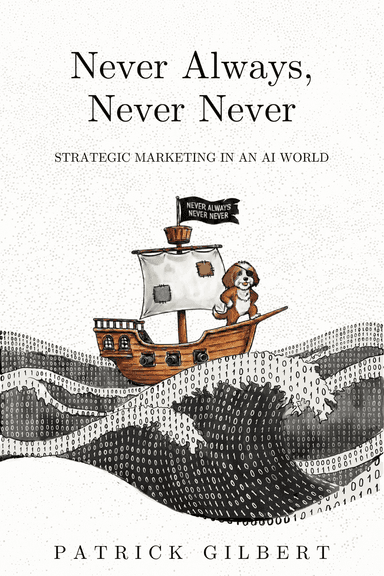
From the Book
Chapter 30 provides the complete blueprint for building an AI-first culture, including the AI Maturity Ladder for assessing team readiness and practical frameworks for managing the human psychology of technological change. Chapter 33 reveals the infrastructure secrets behind successful AI implementations and why most AI tools disappoint.
This is just a glimpse. The book explores dozens of cognitive biases and decision-making frameworks that change how you think, decide, and act.
Want to go deeper on this topic?
Chat with the AI companion to explore these concepts with the full context of the book.
Chat about this topicRelated Reading
AI Marketing Strategy 2026: Beyond Tools to Transformation
Learn how to build an AI marketing strategy that goes beyond tools to create competitive advantage through strategic implementation and culture change.
conceptBuilding an AI-First Culture in Marketing: Beyond Tools to Transformation
Learn how to build an AI first culture that creates efficiency and value, not just faster horses. Strategic frameworks for marketing teams.
BlogAI Amplifies Whatever You Bring to the Table
AI isn't a shortcut. It's an amplifier. If you have strong strategy, AI makes you dramatically more effective. If you don't, it helps you execute mediocrity faster.
BlogWhy the Old Playbook Is Broken
The platform tricks and optimization shortcuts that built most digital marketing careers have been commoditized. Here's what actually changed and what to do about it.