For decades, almost every company selling caffeine crowded into the same stretch of the day: the morning. The wake-up, the commute, Folgers reminding you it was the best part of waking up. They were all selling the same jolt, to the same people, at the same time.
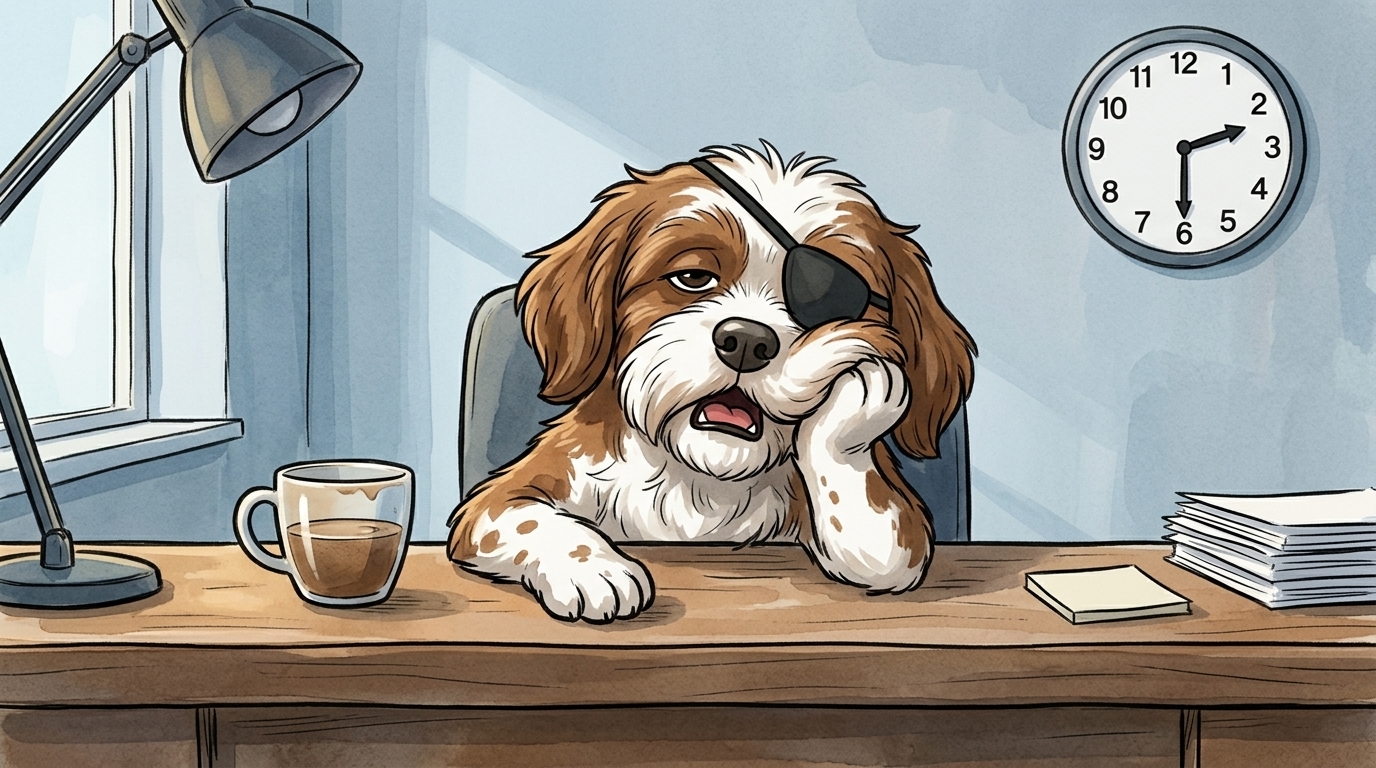
Then 5-hour Energy walked past the entire crowd and planted its flag somewhere nobody else was standing: 2:30 in the afternoon.
They didn't build a better product, and they didn't invent a new demographic. There is no "5-hour Energy customer" with a name, an age, and a Pinterest board. They simply noticed a moment everyone else had ignored: the mid-afternoon crash. The 2:30 wall almost every working adult hits, whether they drink coffee or not. (The slump is real, by the way. Most people hit a natural energy dip somewhere between 1 and 3 p.m.) They branded themselves as the cure for that 2:30 feeling, and they claimed it.
They owned a time of day, not a demographic.
That thing 5-hour Energy found has a name.
The moments that send a person looking for a product, the situations that make someone enter a market in the first place, are called category entry points. The idea comes from Jenni Romaniuk and the Ehrenberg-Bass Institute. A category entry point can be a need, an occasion, a feeling, a time, a place. Anything that flips a person from not thinking about your category to suddenly being in it. The 2:30 slump is a textbook one, and 5-hour Energy got there first.
There's a useful way to think about why that was so smart, and it comes from a business book called Blue Ocean Strategy. A red ocean is a crowded market where everyone fights over the same demand, slashing at each other on price and features like sharks in a feeding frenzy, until the water turns red. A blue ocean is open water: space nobody has claimed, where you get to swim alone.
The morning was a red ocean. Every caffeine brand on earth was already there, spending a fortune to out-shout each other over the same cup of coffee. The 2:30 slump was a blue ocean. Calm, wide open, and enormous, because almost every adult alive has felt it.
5-hour Energy even sold itself in blue water. You didn't find it in a coffee shop, lined up behind the lattes. You found it on the counter by the register at a convenience store, standing alone, the only thing of its kind in sight.
Now, I've spent the last few issues poking holes in the buyer persona, so let me be careful here: I'm not telling you to throw it out. A persona is genuinely useful for creative. It gives you one real human to picture when you're writing the ad, picking the music, casting the face on screen. That's a good use of it.
The trouble is when you let that one person define your whole market. We've spent the last few issues on exactly this: a growing brand pulls customers from every walk of life, and a tidy persona quietly tells you to ignore most of them. A persona is for deciding how you talk. A category entry point is for deciding where you show up.
And a category entry point is not a use case. It isn't a list of things your product can do. It's the set of moments where you could be the solution, the ones you decide to claim and then go plant yourself inside.
Once you start thinking in moments instead of customers, your competition changes. As I write in the book, when someone realizes they need something to wake me up, their brain can reach for coffee, a Coca-Cola, a brisk walk, a swim, or now, a 5-hour Energy. Marketers picture their competitors as the other brands that look like them. But the real competition is every option linked to the same moment, and sometimes it isn't even in your category.
Reed Hastings understood this better than most. The Netflix founder once said his company's real competition wasn't another streaming service. It was sleep. People spend their evenings deciding what to do with their time, and everything else they might do with it, a book, a bar, an early night, is what Netflix is actually up against.
The brands worth studying are the ones that go claim moments with nothing to do with their original story.
Pedialyte spent decades as a product for exactly one moment: a parent with a sick, dehydrated kid. Then, sometime in the 2010s, adults quietly discovered it worked wonders on a hangover. (I wouldn't know anything about that personally, of course. But I've heard great things.) Pedialyte could have ignored the whole thing. Instead they leaned all the way in, started marketing to grown-ups, and claimed a new category entry point: the morning after. A blue ocean hiding inside a bottle of children's medicine.
Liquid Death sells water. Just water, in a tallboy can that looks like a craft beer. They didn't fight Aquafina and Dasani penny for penny on the grocery shelf. They went and claimed the moments those brands ignored: the concert, the bar, the tattoo parlor, the moment you want something in your hand at a social event but don't actually want an alcoholic drink. Same product everyone else sells (water), completely different moment.
And in the book I tell the story of Pepsi and pizza, because pizza is one of the most dependable category entry points in America. When 40% of Americans eat pizza in a given week and more than 80% eat it in a given month, we're getting pizza tonight is a moment worth billions. So for decades Pepsi has run campaign after campaign to make sure it's the drink you picture when the pizza shows up, most recently by teaming with Domino's on its "Better With Pepsi" push. They aren't arguing that Pepsi tastes better than Coke. They're buying their way into the moment.
On a personal note, I'm getting on a plane later today, and a single trip is a parade of category entry points.
How am I getting to the airport? What am I going to eat once I'm there? How do I keep myself occupied for a few hours in the air? Every one of those is a moment, and some brand is hoping to be the answer.
But the one that has genuinely consumed my wife and me for weeks is bigger than all of them: how in the world are we going to keep our 17-month-old entertained and quiet on this flight?
The answer is not one product. It's an arsenal. Snacks. A few new toys she's never seen before. Noise-cancelling headphones. A small bag of random nonsense to hand over one piece at a time the second the seatbelt sign turns the wrong way. For that single moment, keeping the baby quiet at 35,000 feet, a snack company, a toy company, and a headphone company are all competing with each other. Not one of them would ever put the others on a competitive analysis. They aren't in the same category. But they're all fighting for the same moment in a tired parent's mind, and the one we think of first is the one that wins.
None of that is about what the products do. It's about the moment, and who comes to mind inside it.
So what do you do with this? Two things.
First, link yourself to as many of these moments as you can. Mental availability is really just the sum of every moment your brand springs to mind in, and more moments mean more chances to get picked. McDonald's is the master of it. The golden arches don't trigger one thing, they trigger dozens: hunger and convenience for some, the morning coffee ritual for others, a Happy Meal or a birthday party for parents, a clean bathroom off the highway for road trippers, the late-night drive home. Each one is a separate reason to think of them.
Second, and this is where the blue ocean earns its keep, prioritize the moments nobody has claimed yet. You can bleed for a crowded entry point, or you can go find a 2:30 sitting wide open. Both have their place, but open water is where you build the association cheaply, before the rest of your category notices it's there.
Finding them is less mysterious than it sounds. You interrogate the moment. Why is someone buying, when, where, while they're doing what, who are they with, what else is involved, and how do they feel? Run your category through those questions and you'll turn up more moments than you can use. Then comes the hard part, which is choosing the handful you can actually own, and being honest about which ones are already crowded and which ones are still empty. That's the worksheet that replaces the persona doc. At least the half of it that was ever supposed to drive strategy.
The persona tells you who to talk to. The category entry point tells you where to compete. And the blue ocean tells you where you can win without a fight.
The brands that grow are not the ones with the most flattering customer avatar pinned to a conference room wall. They're the ones that show up in the most moments that matter, especially the ones nobody else thought to claim.
I'll be testing the theory myself in a few hours, somewhere over the country, handing a squirming toddler one random object at a time. A dozen brands have been quietly competing for that exact moment in our house for weeks. The winners are just the ones we thought of.
The full argument behind this one, mental availability, category entry points, and why most of what we believe about customers is backwards, lives in Never Always, Never Never.