There's a restaurant at Disney's BoardWalk Resort that changed its name a few years ago, and nothing else. It used to be called the BoardWalk Bakery. Baked goods in the case, plus a handful of sandwiches and lunch items you wouldn't necessarily expect to find in a bakery. Then one day it became the BoardWalk Deli. Same menu, same kitchen, same tables and chairs. The only thing that changed was the word on the sign.
In fact, they barely changed the sign. Look closely and you'll see the spacing looks a bit off:
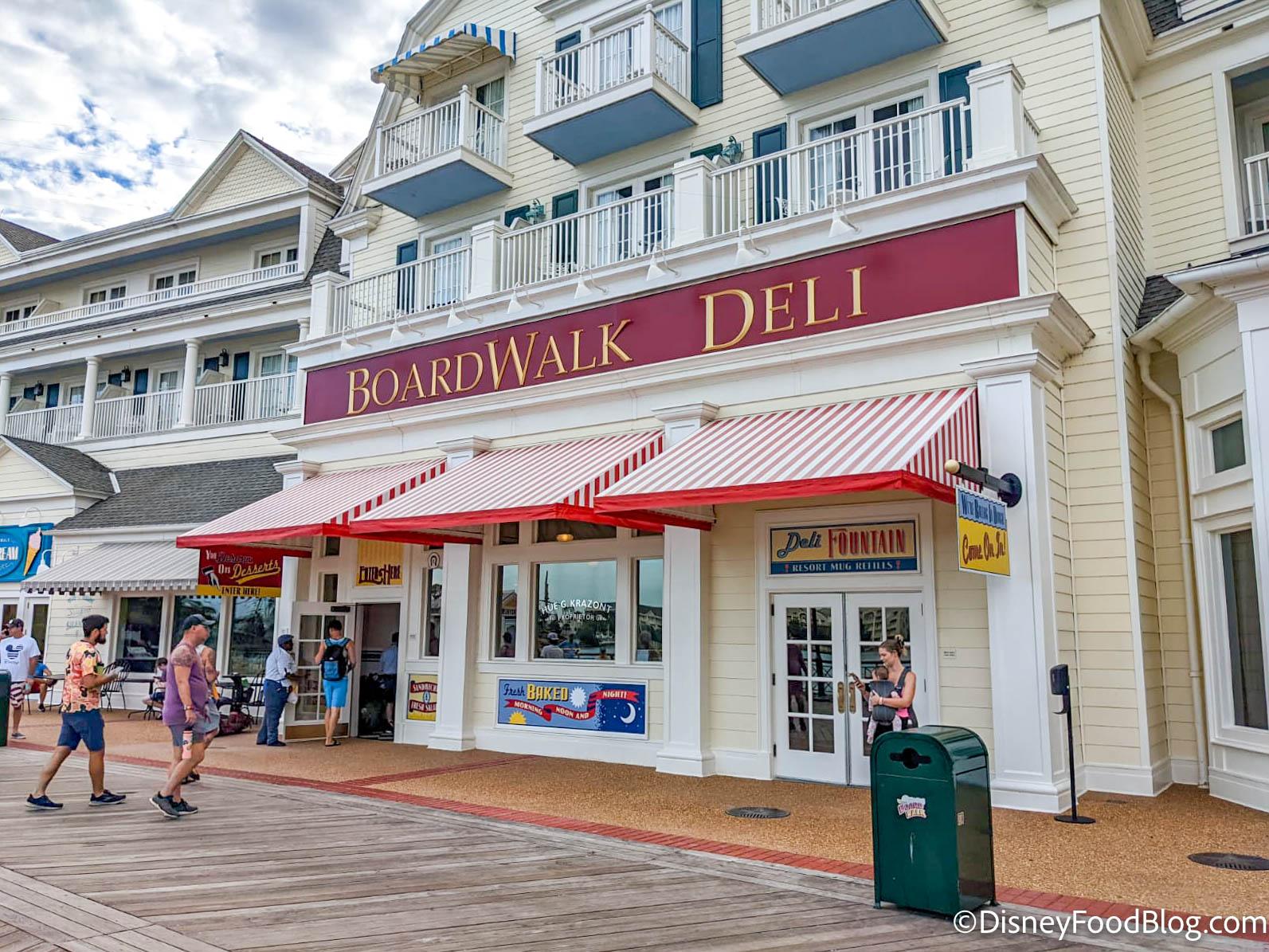
My assumption is that Disney looked at that spot, a prime piece of real estate right on the boardwalk, and decided it wasn't generating the revenue per guest it should have been. The food options across that resort were a little scattered, and a bakery is a place you stop at for a coffee and a muffin, not a place you go for lunch.
But a deli is. So they found a way to consolidate the logistics of feeding people at that resort and push more full meals through that one location, and they did it without touching the kitchen or the menu. They changed a word.
And I can tell you it worked, just based on my anecdotal experience. I've stayed at the BoardWalk at least once a year for the last ten years, and I noticed. Before the change I'd walk past and see a few people holding coffee. Now the tables outside are full of people eating sandwiches and full meals just about every time I go by.
I spent this past week at Disney World with my wife's family, like we do just about every year. And somewhere over the last twelve years of being indoctrinated into a Disney family, my relationship with this kind of thing changed. Disney is, among other things, one of the most sophisticated machines ever built for separating you from your money. Every walkway, every gift shop you have to exit through, every upcharge and add-on and premium tier is engineered to pull a little more out of your wallet. You could spend the whole trip feeling like a victim of it. For a while, I definitely did.
But at some point I stopped seeing it that way. Now, I can't help but appreciate it. It's kind of like my relationship with Tom Brady. As a life-long Bills fan, I obviously hated Tom Brady. But at a certain point (the Falcons Super Bowl, specifically), I gave up being a grump about it and decided to sit back and appreciate the fact that I got to watch one of the greatest athletes ever play the game.
The same is true for Disney. If you have a Disney trip in your future, I'd encourage you not to walk around with your Dave Ramsey hat on. Just accept that you're going to get hosed, lean all the way into it, and enjoy every overpriced minute. It's the price you pay to experience the most magical place on earth, and I promise you won't regret it.
(For what it's worth, the refillable popcorn bucket is the best investment you can make at WDW. You can thank me later.)
Walt Disney's original vision was a place with something for everyone, not just little kids but teenagers and adults too. What I've come to appreciate is that the something-for-everyone reaches all the way down to the marketing and business nerds like me, the ones who get a little too excited about the small details that make an experience better, or that quietly make the business more money.
It's hard not to be swept away by the tiny details of the Disney business, especially inside the parks. And so I've convinced myself that my time here is a live masterclass in how a proper business, and a proper marketing strategy, should be optimized over time.
That's what helps me fall asleep at night, at least.
Which brings me to the flywheel. Disney built the first real flywheel business, and there's a famous drawing of it, originally published in a Wall Street Journal article back in the 1950s, that lays out how the whole thing feeds itself. The films feed the television, the television feeds the parks, the parks feed the merchandise, and all of it feeds back into the films. I have a framed version of it hanging in my home office.
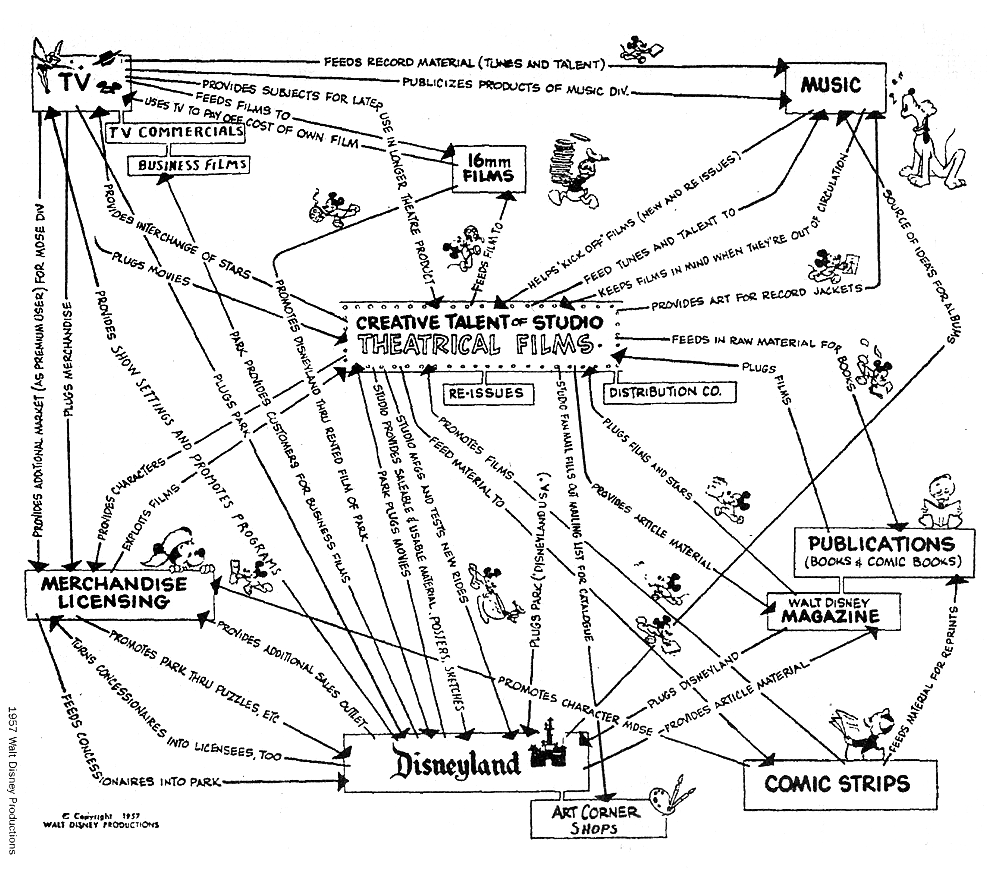
Some specific details that helped inspire this flywheel:
- Disney started licensing its IP for merchandise around 1929, starting with plush toys and apparel. The extremely popular Mickey Mouse watch followed in 1933, and Macy's sold 11,000 of them on the first day.
- Snow White was the first full-length animated feature film produced in America. All of Hollywood thought it wouldn't work and would bankrupt the company, so much so that its nickname was "Walt's Folly." It debuted in 1937 and was obviously very successful.
- The Snow White soundtrack was the first ever commercially-sold soundtrack album. At the time, this was the only way to take a piece of the movie home with you and replay it again and again.
- In 1938, The New York Times suggested that Snow White, the film, the soundtrack, and the supporting merchandise, would single-handedly pull America out of the Great Depression. A bit aggressive, but it really speaks to how much of a hit this film was. The success of Snow White created a playbook that inspired the next 15 years of animated films, including Pinocchio, Fantasia, Dumbo, and Bambi.
- Disney struck a deal with ABC in 1954, bringing Disney IP into the television era. This spawned the inception of the Mickey Mouse Club, among other things.
- Before Disneyland opened in 1955, a continuous docuseries of the park's construction aired on ABC for an entire year. This was effectively a year-long advertising campaign promoting the new park.
- ABC held a live broadcast at Disneyland on the park's official opening day. More than 90 million Americans tuned in to watch the broadcast, more than half the US population.
Please read that again. More than half the US population watched the Disneyland launch broadcast live. Today, the Super Bowl reaches about a third of US households.
And for what it's worth, in 1955 Disney was not exactly producing blockbuster movies. The entire brand had been in a bit of a slump. But the power of the flywheel kept them at the front of American culture regardless.
Disney's flywheel has grown extensively since this original drawing. As I put the final touches on this email on the eve of July 4th, I'm literally watching "Disney Celebrates America," a New Year's Eve style event being broadcast on ABC, National Geographic, and the FX networks. I can also stream it live through Disney+, Hulu, ESPN+, and probably a few other channels I'm forgetting.
As luck would have it, my favorite business podcast released a new episode recently on the Walt Disney Company. If you've never listened to Acquired, the short version is that two guys, Ben Gilbert and David Rosenthal, take a single company and tell its entire story in incredible depth, from the very beginning all the way through. It's some of the best business storytelling I've come across anywhere.
This 4.5 hour episode covered the first fifty or so years of the Walt Disney Company, and it did not disappoint. And while they covered the flywheel concept in depth, the real magic came down to two key advantages: the massive distribution of Disney's IP (the nodes of that flywheel), and the fact that their core IP, stories, and mascots were tied to animated figures that never aged.
Both are so simple they're easy to walk right past.
Start with the distribution. Disney didn't just create characters people loved. They owned an enormous number of channels to get those characters in front of you: theaters, television, comic strips in the newspaper, the Mickey Mouse Club, merchandise, and eventually the parks themselves. Here's how David Rosenthal described it:
"Once you've got the great IP, once you've distributed it as widely as possible, then you want to get that IP into as many other arenas as possible. And this is exactly what Disney was doing."
And here's the part that made it work:
"The beauty here and the discovery that Disney makes is that when you put the IP into these other ancillary nodes, it doesn't cannibalize the core IP."
Putting the same characters in more places didn't wear them out. It kept Disney everywhere at once, and it kept them top of mind with their fans all of the time.
Then there's the second advantage, which is the character itself. Disney's core IP wasn't a movie star, it was a cartoon. Mickey Mouse doesn't age, he doesn't renegotiate his contract, and he never turns up in the wrong headline. Here's how Ben Gilbert put it on the show:
"Mickey is always available to work... And Mickey doesn't age."
And a little later:
"You can create an eternal character through animation in a way that you just can't when you're using real people."
Because Mickey is a drawing, he can become almost anything you want him to be. A short, a feature film, a television show, a watch, a lunchbox, a float in a parade. He works in any format, he never goes out of style, and he's always available.
If you've been reading this newsletter over the last couple of months, that should sound familiar. A brand showing up in as many places as a customer might run into it, which is physical availability. Staying top of mind for the exact moment a need comes up, which is mental availability. And a distinctive character doing the branding work for you. (This was the topic of our very first Never Always Newsletter!) We've written about all three. Disney was running the entire playbook back in the 1930s, with a cartoon mouse.
For the last decade, Ben Gilbert and David Rosenthal have covered more than 200 companies on the Acquired podcast. And when they finally got to The Walt Disney Company, they landed on the same conclusion: the keys to Disney's sustainable success are the same concepts we've been talking about in this newsletter for the last few weeks. All of which I cover in a lot more detail in my book, Never Always, Never Never.
And there's one more detail I have to include, because I can't help myself. Walt Disney invented the modern public garbage can, the kind with the lid that swings inward when you push on it. He was so obsessed with cleanliness and clean sight lines that he wanted the trash itself hidden from his guests, so he came up with the flip-in lid. The story goes that he wanted to patent it, and his own leadership team talked him out of it. Nobody else, they told him, would ever care this much about a garbage can, so it wasn't worth the hassle of tying up their legal team over something so small.
Today that design is by far the most common public trash bin in the world.
Disney sweats the small details like that everywhere, and the very best ones pull double duty. They delight you and they make money at the same time. Take the popcorn. Even though I genuinely believe the refillable popcorn bucket is one of the best investments you can make in the parks, it's such a profitable product that analysts have speculated the profit from popcorn sales alone is more than enough to cover Disney's enormous daily fireworks bill.
That is the beauty of Disney, and the real lesson worth stealing. They have found dozens of tiny details that feel like a genuine gift to the guest, something as simple as all-you-can-eat popcorn while you wander the parks, and quietly turned each one into an engine of profit. Then they reinvest that profit into something else that adds to the experience, like a fireworks show you'll never forget. Delight funds profit, and profit funds more delight. These are details too incredible to ignore.
The brands that win aren't the ones hunting for one clever trick. They're the ones obsessing over a hundred small things at once, the availability, the distinctive character, the little delights, until it all compounds into something no competitor can touch. Disney has been running that playbook for a hundred years, and they're still the best on the planet at it.
That idea is the whole reason I wrote Never Always, Never Never, and it's what we'll keep taking apart here, one great brand at a time.
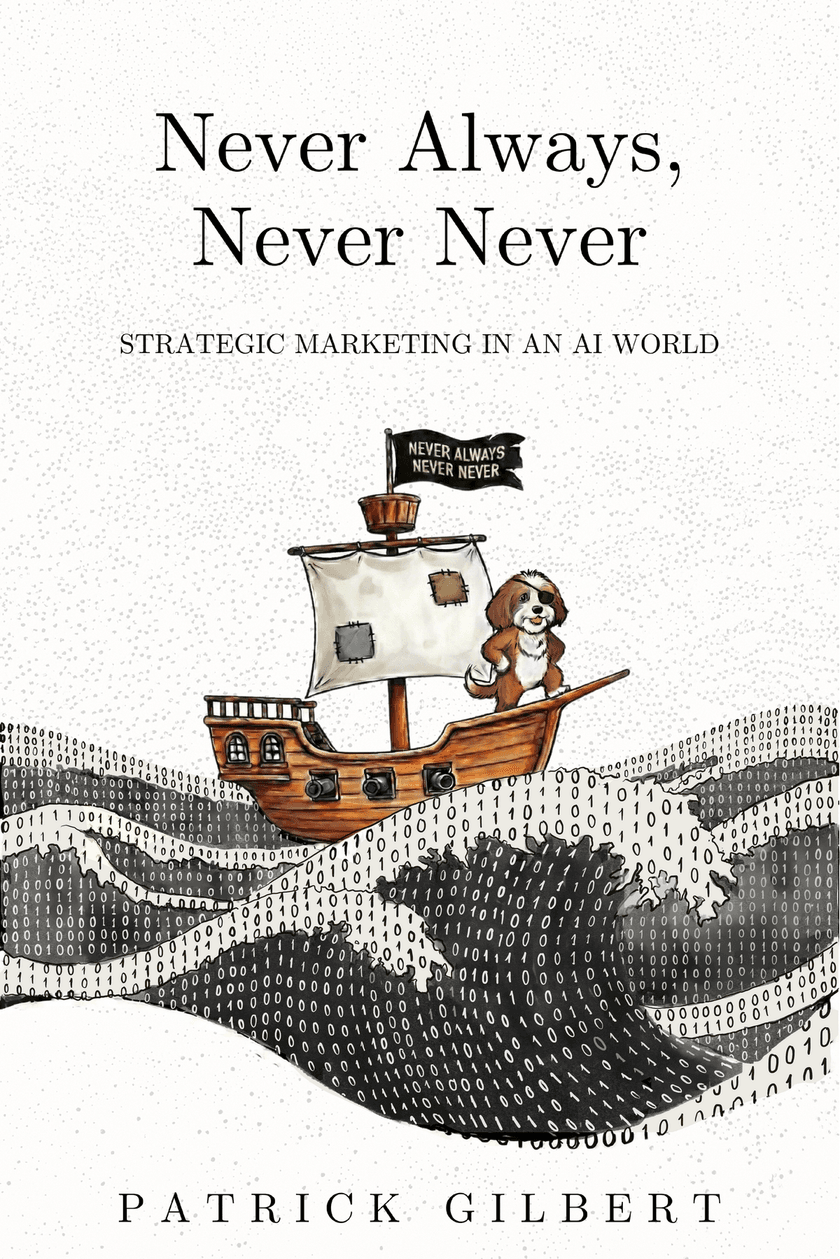
Never Always, Never Never is on Amazon, in paperback and Kindle. If you've read it and it landed with you, a quick review helps more than you'd think.