Talent in the Age of AI
I first downloaded Midjourney on a Saturday morning in the fall of 2022. It turned out to be one of the most important experiences I've had for understanding what AI was about to do to knowledge work.
ChatGPT did not exist yet, and the phrase "generative AI" had not been coined. I had been following the early text-to-image experiments for a few months, intrigued by the promise that anyone, including someone with zero background in graphic design, could produce a high-quality image just by describing it in a sentence. When Midjourney opened up, I was on it within minutes.
I'm not an artist. I have no background in art or photography, and I had never made anything visual that meant something to anyone. But within a few minutes of opening the software, I had. For the first time in my life I was holding a blank canvas where any idea could come to life.
The blank canvas turned out to be paralyzing. If you suddenly have the power to create anything, what the hell will you actually create?
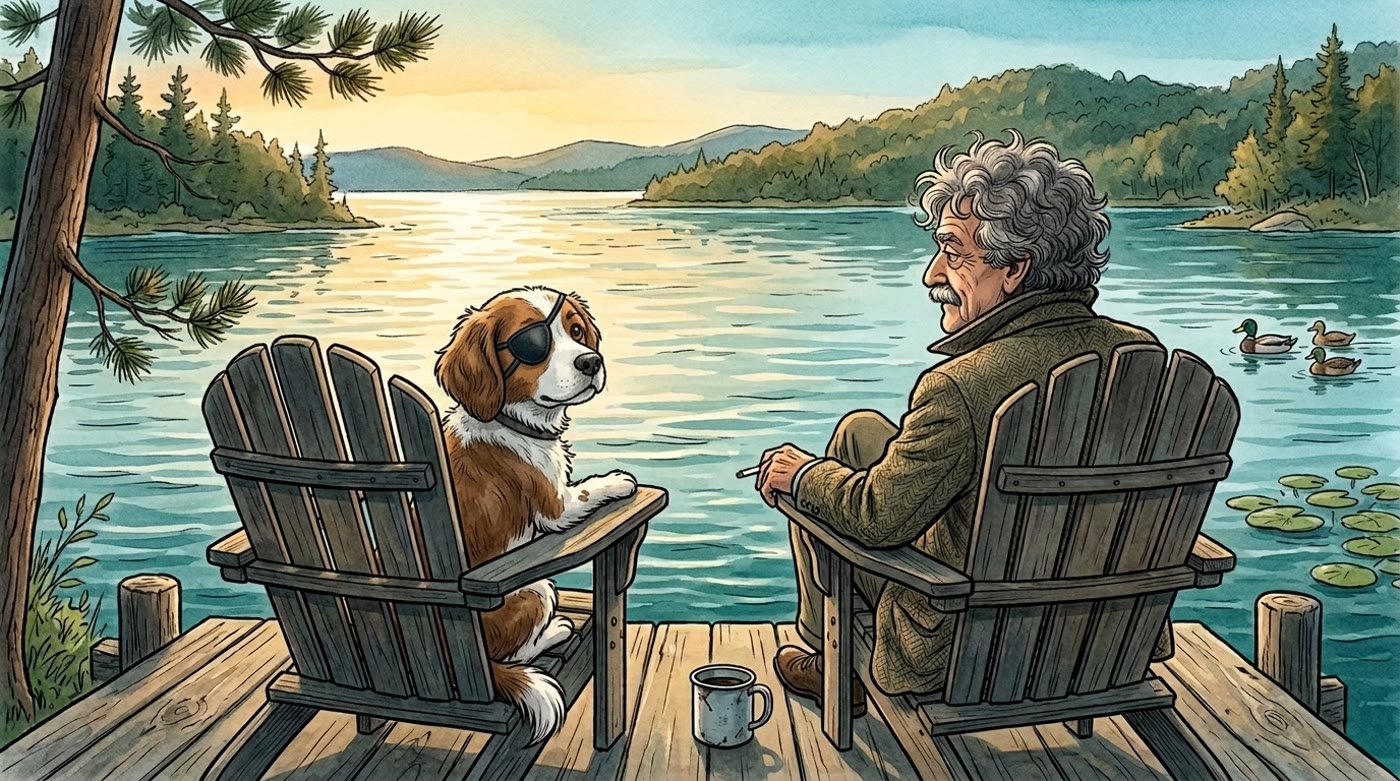
I scanned the room for inspiration and landed on the bookshelf, on a smattering of Kurt Vonnegut novels I'd read years earlier on family vacations to the Adirondacks, where my family has been going since the 1950s. The idea arrived fully formed: Kurt Vonnegut, sitting in an Adirondack chair on a dock, at golden hour, his back to the camera, watching a group of ducks.
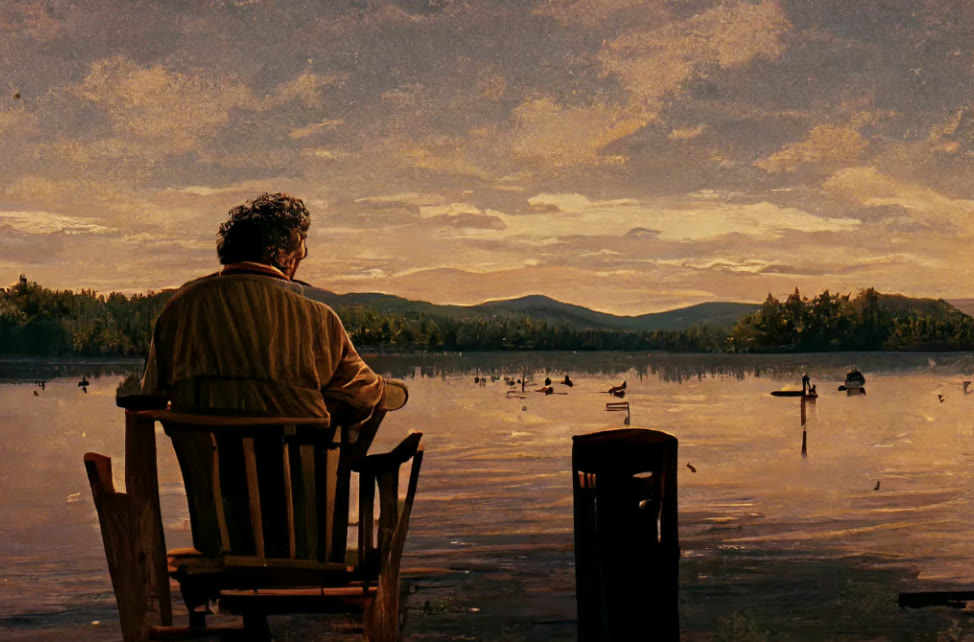
I was making art.
I spent the better part of two days on that one image. Forty-eight hours, on a couch, refining a picture of a dead novelist by a lake. This must be how Michelangelo felt painting the Sistine Chapel, I thought.
Eventually I had a version I was satisfied with, at least enough to show my wife. I explained the inspiration behind it, hoping the story would elevate the image. She tilted her head, squinted a little, and asked me to show her a real photo of Kurt Vonnegut. Then she smiled and said, "It's really good! This is cool!" The kind of supportive-but-gently-confused reaction you give a kid showing you their crayon drawing of a spaceship.
I was proud of it anyway. It was the first thing I had ever made that felt like it came out of me.
It took me a while to work out why that had never been possible before.
Every knowledge worker's success has always depended on two different kinds of skill.
The first is raw talent: the eye that makes someone a good designer, the ear that makes someone a good writer, the judgment that makes someone a good strategist. The second is the declarative knowledge of the tools that turn that talent into something real. A designer needs an eye, and a designer also needs Photoshop, and the second one takes hundreds of hours of purely technical study that has nothing to do with whether you can see.
Getting an idea out of your head and into the world has always required both, and for most of history the second one was the bottleneck. Plenty of talented people never got past it. Plenty of untalented people built careers on it.
AI collapses that second requirement. The tools now respond to plain English, and the technical knowledge that used to take years is available to anyone who can describe what they want. Which means the primary competitive advantage, and maybe the only one left, is raw talent.
I learned that on the Monday after my weekend with Midjourney.
Isaac is an actual artist. Before AdVenture Media he made his living painting and selling his work at showcases around New York and Long Island, and he got into digital advertising as a way to sell more of it. I told him about Midjourney that morning, and then the two of us got on a client Zoom. Partway through the call he sent me a Slack message: "I downloaded Midjourney. You're right. It's sick. Been playing around. What do you think?"
Attached was this.
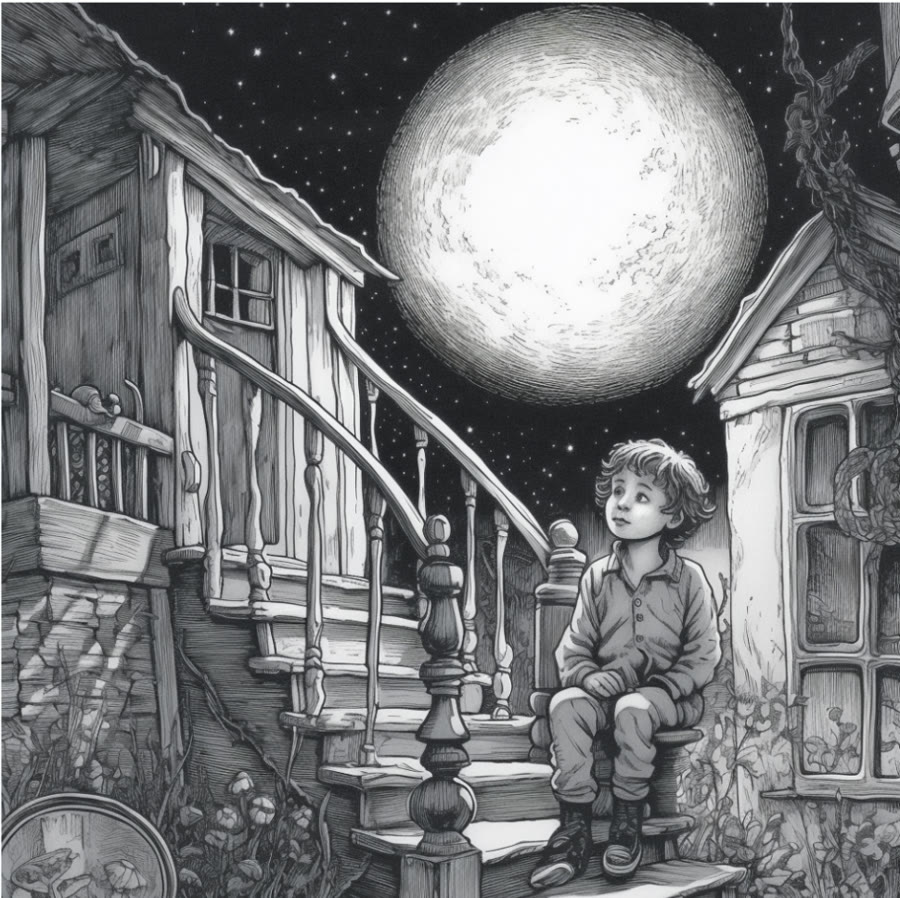
A boy on a crooked wooden staircase, looking up at an enormous moon, in pen-and-ink crosshatching, with depth in the buildings and a story in the kid's face. It looked like the cover of a children's book. He made it in about forty-five minutes, while actively participating in a client call.
His work wasn't just more polished than mine. It was more imaginative. My idea was a literal picture of a memory. His had no reference point at all.
The tool was the same. The talent wasn't.
It landed on me like a ton of bricks, and I'm grateful it happened as early as it did. For about seventy-two hours I thought I had become an artist. What had actually happened was that the artists had just been handed the most powerful tool of their lives, and I had been handed a hobby.
If Isaac and I had both spent the next year mastering Midjourney, it wouldn't have mattered. He would always have the leg up, because the thing that made his image good was never in the software. AI doesn't level the playing field. It lowers the barrier to entry and widens the gap between good and great.
I'm proof of it. I spent a lot of time in my mid-twenties learning Photoshop. I got the declarative knowledge down, and I was still never an effective designer, because I'm not an artist.
Software has always had the same structure with a higher wall around it. Computer science was reserved for people with high intelligence, real math ability, and above all the patience to sit in a flow state for hours, moving through code one line at a time, hunting for a missing semicolon. Most people cannot do that.
Vibe coding, meaning building software by describing what you want to an AI in plain English rather than writing the code yourself, removed that requirement in about eighteen months. The question stopped being who has the patience and became who has the best ideas about what should exist in the world. And for the first time, the people with the best ideas can actually see them come to life.
With the rise of vibe coding it's easy to assume that traditional software development jobs are at risk of being replaced. The opposite is true.
Since February 2025, software development postings on Indeed are up almost 15%, while total US postings over the same window fell 7%. For the four years before that, the more exposed an occupation was to AI, the worse it performed. That relationship reversed last year.
Look at where the growth landed. Of the net increase between May 2025 and May 2026, 71% was senior roles, and 37% was roles with AI in the title. In the first quarter of this year, 69.3% of all software development postings were senior level, the highest share of any category Indeed tracks.
The market did not stop hiring developers. It stopped hiring for the part of the job that was tool operation, and it is paying more than ever for the part that was judgment.
Raw talent is now the main competitive advantage, and the first time I saw it put to work commercially was Isaac again, a few months later.
In early 2023 we were pitching a luxury fashion client on the creative direction for their next brand campaign. Historically that meant bringing in an outside creative partner for upwards of $20,000, and several weeks of iterations and follow-up calls before we had anything worth showing. Isaac, who by then had a few months of Midjourney under him, said he'd do it himself, and two days later he walked into my office with the most beautiful concept art I had ever seen.
We presented it in their conference room. The CMO agreed that it was beautiful. It also wasn't quite what she was looking for, and she described what she had in mind instead.
In the old world that sentence ends the meeting. Everyone thanks everyone, the creative team goes back to the studio, and three weeks and another invoice later you present round two and hope.
Isaac said, "Ok. Just give me a few minutes then."
He kept working while the meeting moved on, and a few minutes later he turned his laptop around. Her eyes lit up. "That's exactly what I was looking for."
The loop that normally takes an agency weeks closed before anyone stood up. That is a real saving in time and money, and it is not the point. Isaac was never short on ideas. He was short on hours, on budget, and on a way to get an idea in front of a client before the moment passed. AI didn't give him taste. It gave him a way to finally spend the taste he already had.
Nechama Teigman came to AdVenture Media as an account manager, and for most of her time here the thing she was best at was the thing the job gave her the least room to do.
She has an analytical mind of a kind I have rarely worked with. But if you run Google and Meta campaigns for mid-sized businesses, the week is mostly negative keywords, bid adjustments, creative uploads, reporting, and meeting agendas. The data you get is capped by what the platforms hand you. The tools you can analyze it with are capped by what the agency can afford. And even a great insight tends to die on arrival, because the client has no budget or time to act on it.
Media Mix Modeling (MMM) was the clearest case of that ceiling. It's a statistical method for working out what your marketing actually did to the business — revenue and profit rather than clicks — by modeling every dollar of spend against outcomes over time. It has been around for decades and CFOs trust it, because the CFO doesn't care about return on ad spend.
We had some experience with MMM before Meridian existed. Unfortunately, this required hiring a vendor at roughly $10,000 a month. The vendor didn't understand our clients, the projects took months, and only a handful of our largest accounts could justify the cost. We knew the methodology was valuable, and we knew that if we had the technical ability to run it ourselves, we could do it faster and do it better.
In January 2025 Google open-sourced Meridian, its MMM package. Nechama, who has no software or coding background, decided she would figure it out. She used AI to teach herself how the models work, to wire them into our clients' campaign and revenue data, and to build an analytics platform on top of it that our whole team now uses.
The models immediately started answering questions nobody on the account had thought to ask. For example: campaigns that often showed a low in-platform ROAS were actually driving the majority of the growth. On one jewelry client, the budget shift that followed produced their first million-dollar month in fifteen years of business.
A year ago MMM was a $10,000-a-month line item for a handful of our clients. Today we run it on every account, for free.
Google noticed. Earlier this month Ginny Marvin, their Ads Product Liaison, interviewed Nechama and me for the Ads Decoded series about what a year inside Meridian actually looked like.
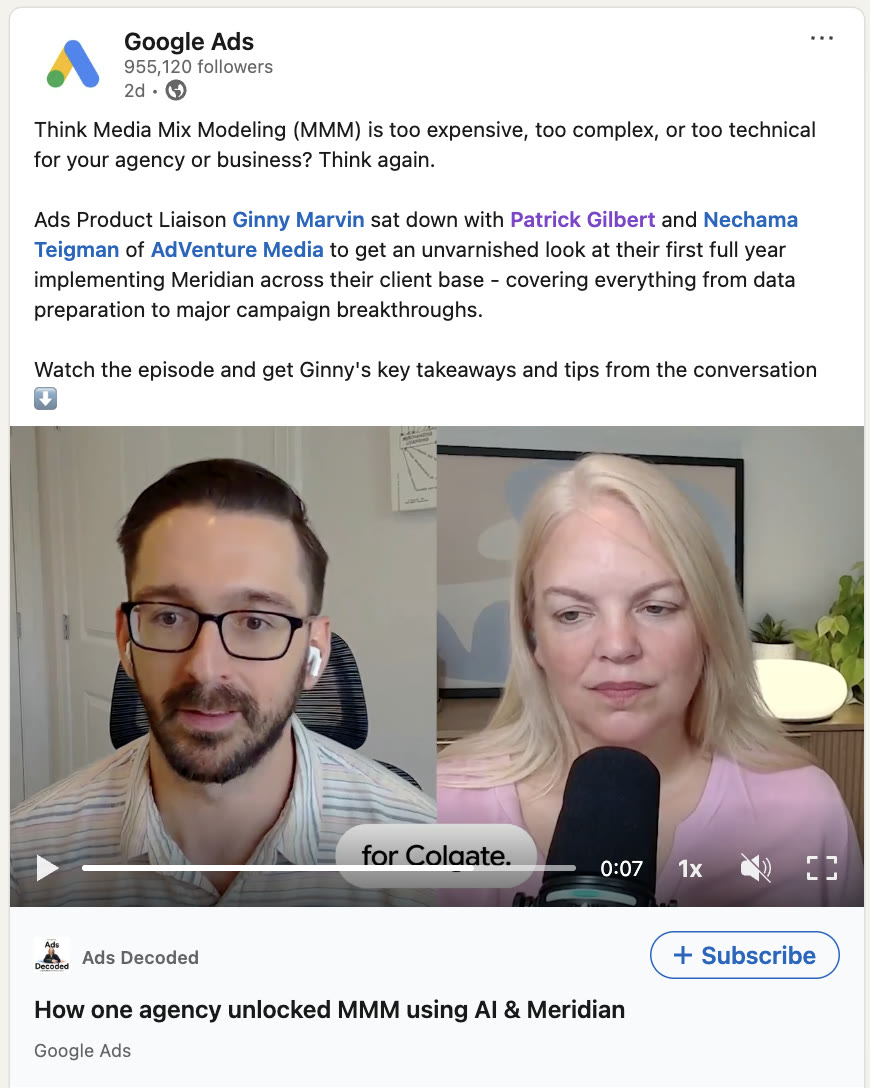
If you watch one thing this week, watch that: One year testing Meridian: Real agency results and takeaways. It's thirty-five minutes. Ginny asks most of the questions, Nechama answers most of them, and within the first five you'll understand what I mean about the way she thinks.
AI did not simply give Nechama her time back. If that were the story, the ending would be that she manages more accounts now, or gets to leave at five. What she did with the time she won back was reach a level of work that used to require a data scientist and a six-figure budget. Her ceiling moved, and it moved a lot further than her calendar did.
Nechama was an exceptional analyst long before Meridian existed. Isaac was an exceptional artist long before Midjourney. Neither of them got more talented over the last three years. What changed is that the second requirement, mastering the tools, stopped standing between them and the work they were already capable of. A $10,000-a-month vendor and a $20,000 creative partner were doing the job that their talent now does directly.
Success used to require both raw talent and the technical knowledge to put it to use. AI took care of the second one. What's left is the first, and there is no shortcut for it.
Last week I wrote that your future with AI is decided by your attitude toward it, because attitude is the one variable entirely up to you. I still believe that, and it isn't the whole equation. Attitude decides whether you're in the game. Talent decides how far the game takes you, and for the first time in my career there is nothing sitting in front of talent except the person who has it.
I spent forty-eight hours making a picture of Kurt Vonnegut by a lake. I'd do it again. I just wouldn't confuse it with being an artist.
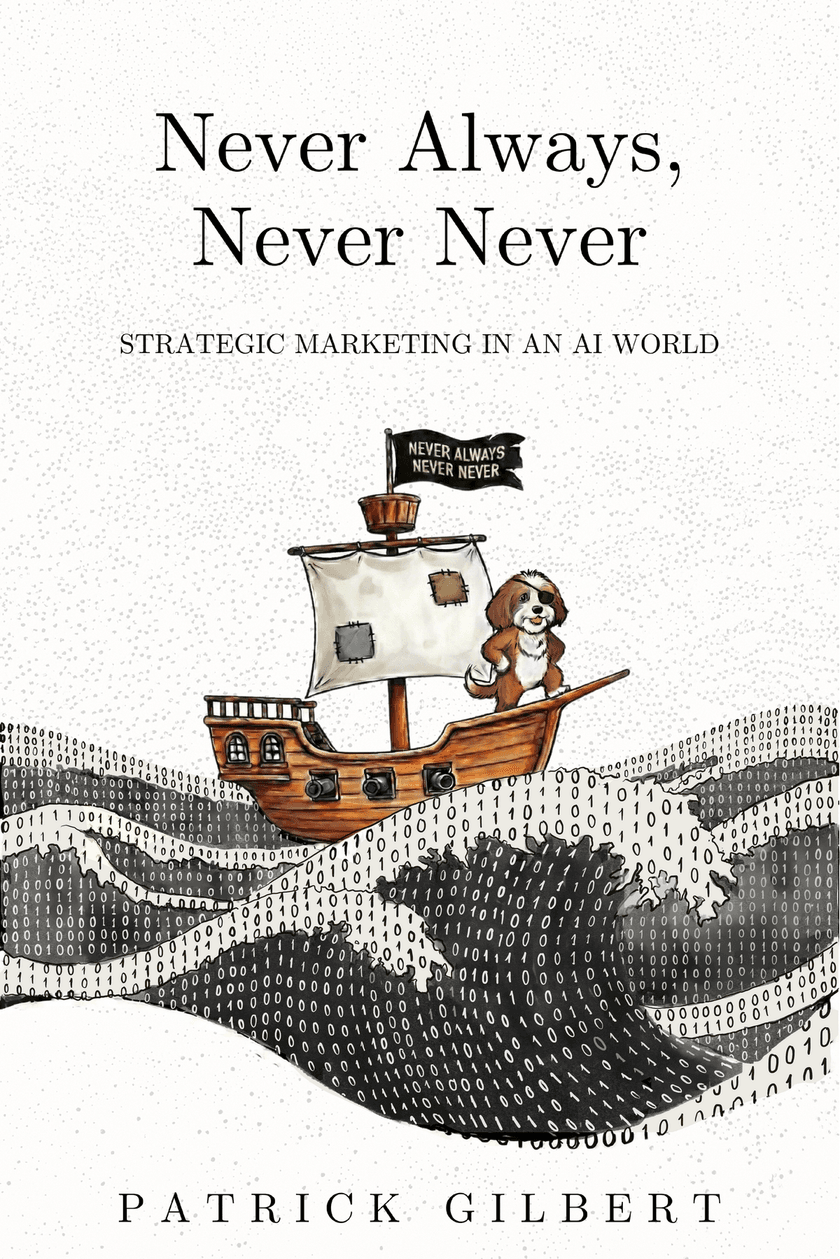
The Midjourney story is in chapter 25, with more context on how all of this applies to modern creative strategy. Prefer to listen? The audiobook is on Spotify and Audible.
Something new, continued
Another newsletter turned into a short video. This one is the patio furniture story from two issues ago, the Adirondack chairs and the thirteen Instagram ads, cut down to three and a half minutes. Different Adirondacks.
The #1 Mistake Google and Meta Advertisers Make (The First Date Fallacy) · 3:25
I put new videos up on YouTube most weeks. Subscribing there helps more than you'd think.