Is the Marketing Funnel Dead? Why the Traditional Model Is Obsolete
Quick Answer: is the marketing funnel dead
The traditional marketing funnel (awareness → consideration → conversion) is obsolete for modern consumers. Today's buyers loop between exploration and evaluation in what Google calls the "messy middle," bouncing between researching options and narrowing choices. Instead of linear progression, consumers access infinite information instantly, compare everything rather than just prices, and frequently switch brand preferences mid-journey. The internet collapsed the clean stages into a dynamic, non-linear process where visibility throughout the journey often outweighs brand loyalty or product superiority.
Definition
The obsolescence of the traditional linear marketing funnel model, replaced by the "messy middle" where consumers loop between exploration and evaluation phases rather than following a sequential path from awareness to purchase.
The Death of Linear Marketing
The traditional marketing funnel is dead. Not dying, not evolving. Dead. As Patrick Gilbert argues in Never Always, Never Never, the clean progression from awareness to consideration to conversion no longer reflects how consumers actually buy. The internet didn't just add new channels to an old model. It fundamentally broke the assumptions that made the funnel work for nearly a century.
The old funnel worked because consumers had limited information and limited options. When someone saw a Tide detergent commercial during Seinfeld, they couldn't immediately research alternatives, read reviews, or comparison shop. They made a mental note and hoped to remember Tide on their next supermarket run. Decisions happened in physical stores with whatever information fit on a package or could be gleaned from helpful sales staff.
In 2004, searches for "cheap" outnumbered searches for "best" by 3:1. Today, "best" outpaces "cheap" by 4:1. The internet transformed from a tool for comparing prices to a tool for comparing everything.
Digital completely rewrote these constraints. Consumers now carry infinite information in their pockets. Reviews, price comparisons, product specifications, expert opinions, user-generated content. Everything is instantly accessible. The clean stages of the funnel collapsed into what Google research calls the messy middle, a swirling loop of exploration and evaluation that defies the linear logic of traditional models.
How the Traditional Funnel Actually Worked
Before declaring the funnel dead, it's worth understanding why it worked so well for so long. The traditional model wasn't arbitrary. It reflected real constraints in how consumers discovered, researched, and purchased products in a pre-digital world.
Awareness happened through mass media. Television was king, combining visual storytelling, sound, and the undivided attention of families gathered in living rooms. A humorous TV ad for glass-cleaning spray might show birds flying into spotless windows without mentioning price or availability. The goal wasn't immediate action but mental availability, ensuring the brand would come to mind when the need arose later.
Consideration bridged awareness and conversion. Once consumers recognized a brand, they became receptive to follow-up messages. Newspapers excelled here, connecting national brand awareness with local retail availability. A Tide TV commercial might create awareness, but a newspaper coupon motivated action. This stage deployed persuasive tools like scarcity, social proof, and authority to build purchase intent.
Conversion happened in physical stores. Retailers and brands collaborated on shelf placement, end-cap displays, and in-store promotions. Paco Underhill's research in Why We Buy: The Science of Shopping revealed how subtle elements like basket placement, aisle width, and even store scent influenced purchase decisions. Trader Joe's spacious aisles create an enjoyable shopping experience that increases time spent in store and items per basket.
If you didn't buy it from Jay's... you paid too much!
Jay's Appliances tagline
Gilbert's experience at Jay's Appliances illustrates how even small businesses intuitively understood full-funnel dynamics. Cheesy TV commercials on leftover network inventory built awareness. Weekly newspaper ads with consistent layouts created consideration. And optimized store layouts with strategic decompression zones and crossed-out price tags drove conversion. This scrappy appliance store stayed in business for over 60 years by maintaining presence throughout the entire funnel.
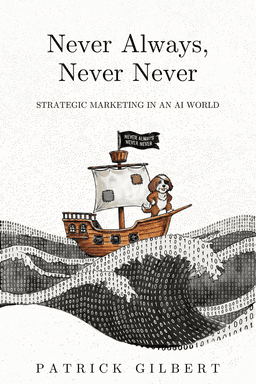
Enjoying this? Never Always, Never Never goes much deeper into the mental models and decision frameworks that shape how we think.
The Messy Middle Revolution
Google's 2020 study Decoding Decisions: Making Sense of the [Messy Middle](https://business.google.com/us/think/consumer-insights/navigating-purchase-behavior-and-decision-making/) fundamentally reimagined how we understand modern consumer behavior. After analyzing 310,000 purchase scenarios across 31 product categories, researchers discovered that the space between initial trigger and final purchase isn't a neat funnel. It's a complex loop between two mental modes: exploration and evaluation.
- Exploration is expansive: consumers cast wide nets, scrolling through search results, reviews, and social media to discover options
- Evaluation is reductive: consumers narrow choices by weighing price, quality, reviews, and other factors
- Consumers loop repeatedly between these modes before purchasing
- The process resembles foraging behavior, weighing effort against potential reward
This toggling between expansion and reduction helps consumers process overwhelming amounts of information without falling into decision paralysis. It's the brain's way of managing the paradox of choice, where too many options can leave people frozen rather than empowered.
One-third of consumers switched their brand preference within minutes of stating their original favorite when shown competing options in Google's simulation study.
Perhaps most striking was the fragility of brand loyalty. Even consumers who thought they were loyal to specific brands proved surprisingly willing to switch when presented with alternatives during their messy middle journey. In categories like car insurance and broadband internet, preferences were especially volatile. Even in stickier categories like smartphones, nearly 20% of consumers changed their minds on the spot.
The Power of Showing Up
Google's research revealed a critical insight: brands that consistently appeared throughout the messy middle outperformed those relying on historical preference or product superiority alone. Visibility often mattered more than loyalty or quality. Even strong first-choice brands could lose if competitors maintained presence throughout the exploration and evaluation journey.
Think of it this way: even lifelong Nike customers become vulnerable when Adidas appears in their Instagram feed during shoe research, pops up again in Google Search, and delivers a compelling YouTube ad just as they're comparing final options. It's not that Nike became worse. It's that Adidas became unavoidable. This persistent presence actively rewrites the consumer's consideration set.
This dynamic explains why bottom-funnel tactics alone aren't sufficient for sustainable growth. Capturing demand from consumers already ready to buy is important, but the brands achieving long-term success build future demand by maintaining exposure throughout the messy middle journey.
The Six Cognitive Biases That Shape Decisions
As consumers navigate the messy middle, they rely on psychological shortcuts to simplify decisions and conserve mental energy. Google identified six cognitive biases that consistently influence how people choose between options:
- Category heuristics: simple rules like "higher megapixels = better camera" that help consumers feel confident
- Power of now: preference for immediate rewards over delayed ones, which Amazon built an empire on
- Social proof: using ratings, reviews, and bestseller badges to guide uncertain decisions
- Scarcity bias: attraction to things that feel rare or limited, like "only 2 left in stock"
- Authority bias: borrowed credibility from expert endorsements or trusted influencer recommendations
- Power of free: the magnetic appeal of anything labeled "free," even when not needed
In Google's simulations, these psychological nudges didn't just help brands stand out; they changed outcomes. When travelers were offered a free checked bag with a competing airline, 75% more participants switched from their preferred carrier, even customers who didn't plan to check bags. The perceived value of "free" was enough to overcome existing brand preference.
With supercharged tactics leveraging these biases, Google's research team shifted brand loyalty from 75% to just 10% in certain categories.
Why Most Marketers Are Stuck in the Past
Despite overwhelming evidence that consumer behavior has fundamentally changed, most marketers haven't adapted their strategies. They've been conditioned by a decade of digital advertising focused on click-based attribution and short-term return on ad spend (ROAS). This bottom-funnel obsession treats marketing like a vending machine: insert ad spend, receive immediate sales.
Ben Thompson of Stratechery noted how Google Search uniquely benefited from this mindset: "The first wave of digital advertising took square aim at the bottom of the funnel... Search ads were so effective because consumers were entering the purchase funnel already at the bottom: they already wanted insurance, or to travel, or a lawyer." This created an addiction to measurable, immediate results that ignored the broader journey.
The brands achieving sustainable growth take a different approach. They embrace full-funnel strategies that build future demand while capturing current demand. They understand that in the messy middle, consistent exposure often outweighs product superiority or historical brand strength.
Moving Beyond the Dead Funnel
Accepting that the traditional funnel is dead doesn't mean abandoning strategic thinking about customer journeys. It means embracing a more sophisticated understanding of how modern consumers actually behave. The messy middle model provides a framework for this new reality, but it requires fundamental shifts in how marketers plan, execute, and measure campaigns.
Instead of linear progression, think in terms of loops. Instead of isolated touchpoints, think about persistent exposure. Instead of perfect attribution, think about the cumulative impact of showing up consistently throughout exploration and evaluation phases. The goal isn't to control the journey but to be present when consumers are ready to engage, regardless of which loop they're currently navigating.
Key People & Works
Researchers & Authors
- Patrick Gilbert
- Ben Thompson
- Sheryl Sandberg
- Paco Underhill
Key Works
- Why We Buy: The Science of Shopping by Paco Underhill
- Decoding Decisions: Making Sense of the Messy Middle by Google
- The Reality of Missing Out by Ben Thompson
Practical Applications
- Replace linear funnel thinking with messy middle loops in campaign planning
- Maintain brand presence throughout exploration and evaluation phases
- Use cognitive biases like scarcity and social proof to influence decisions
- Focus on showing up consistently rather than relying on brand loyalty alone
- Design campaigns that work across both expansive exploration and reductive evaluation modes
Frequently Asked Questions
Is the traditional marketing funnel completely obsolete?
Yes, the linear awareness-consideration-conversion model no longer reflects how consumers actually buy. Modern shoppers loop between exploration and evaluation in the "messy middle," accessing infinite information instantly and frequently switching brand preferences mid-journey.
What replaced the marketing funnel model?
Google's "messy middle" model shows consumers alternating between exploration (expansive research) and evaluation (narrowing choices) phases. This non-linear process better captures how people shop with unlimited digital access to information, reviews, and alternatives.
Why do consumers switch brand preferences so easily now?
Digital access to unlimited information makes brand loyalty fragile. Google's research found one-third of consumers switched preferences within minutes when shown competing options, because persistent brand exposure throughout the journey often outweighs historical loyalty or product quality.
How should marketers adapt to the messy middle?
Focus on consistent presence throughout exploration and evaluation loops rather than linear funnel stages. Use cognitive biases like social proof and scarcity strategically, maintain exposure across touchpoints, and balance bottom-funnel conversion tactics with upper-funnel demand building.
What cognitive biases influence messy middle decisions?
Six key biases shape consumer choices: category heuristics (simple rules), power of now (immediate vs. delayed rewards), social proof (reviews/ratings), scarcity bias (limited availability), authority bias (expert endorsements), and power of free (magnetic appeal of "free" offers).
Do small businesses need to worry about the messy middle?
Absolutely. Jay's Appliances succeeded for 60 years by intuitively understanding full-funnel dynamics with TV ads for awareness, newspaper ads for consideration, and optimized store layouts for conversion. Every business competes in the messy middle regardless of size.
How has search behavior changed since the internet?
According to Google's data, in 2004 searches for "cheap" outnumbered "best" by 3:1. Today, "best" outpaces "cheap" by 4:1, showing the internet transformed from a price comparison tool to a comprehensive evaluation platform for all product attributes.
Why did early digital advertising struggle with upper-funnel marketing?
Early digital ads were essentially digitized newspaper ads with poor targeting and disruptive placement. Banner ads felt intrusive compared to print, where flipping past ads was natural. Only bottom-funnel search ads succeeded initially because they captured existing demand rather than building it.
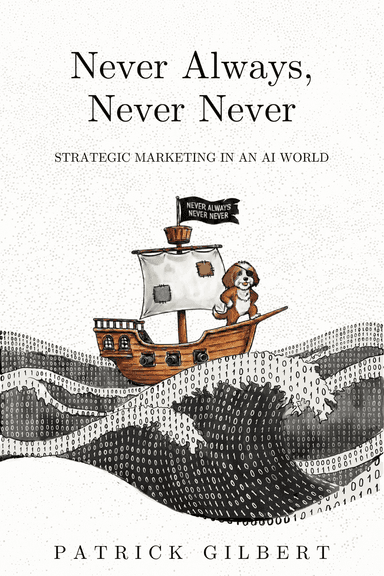
From the Book
Chapters 3 and 4 of *Never Always, Never Never* provide the complete case study of Jay's Appliances and deep dive into Google's messy middle research, including the full methodology behind their 310,000 purchase scenario experiment and tactical frameworks for navigating non-linear customer journeys.
This is just a glimpse. The book explores dozens of cognitive biases and decision-making frameworks that change how you think, decide, and act.
Want to go deeper on this topic?
Chat with the AI companion to explore these concepts with the full context of the book.
Chat about this topicRelated Reading
Light Buyers Marketing: Why Occasional Customers Drive Brand Growth
Light buyers, not loyal customers, drive brand growth. Learn why Ehrenberg-Bass research shows occasional purchasers matter more than super-fans.
conceptMental Availability Marketing: How Brands Win the Battle for Memory
Mental availability marketing builds brand recall through category entry points. Learn how McDonald's, Disney & others dominate consumer memory structures.
conceptThe Messy Middle: How Modern Consumers Really Make Purchase Decisions
Discover Google's messy middle research revealing how consumers explore and evaluate brands in complex loops, not linear funnels.
BlogMental Availability: The Marketing Concept Most Digital Marketers Ignore
Mental availability is the single most important driver of brand growth. Most digital marketers have never heard of it. Here's why that matters.
BlogWhy the Old Playbook Is Broken
The platform tricks and optimization shortcuts that built most digital marketing careers have been commoditized. Here's what actually changed and what to do about it.