How Google Ads Smart Bidding & Meta AI Actually Learn From Your Data
Quick Answer: google ads smart bidding how it works
Google Ads smart bidding uses structured learning, processing labeled historical data like conversions, keywords, and demographics to predict optimal bid strategies. The algorithm requires a learning phase to gather sufficient data before making confident predictions. Meta's AI combines structured bidding with unstructured learning for audience discovery, analyzing vast behavioral signals without predefined labels. Both systems need liquidity across placements, audiences, budgets, and creative to perform effectively. Campaign consolidation and broader targeting provide more data for algorithms to optimize, while fragmented campaigns with narrow targeting starve the AI of necessary information to exit the learning phase successfully.
Watch
The State of Paid Media | 2022 Keynote
Definition
Ad platform AI learning refers to how Google Ads, Meta, and other advertising platforms use machine learning algorithms to process campaign data and optimize performance through structured learning (labeled data) and unstructured learning (pattern discovery).
The Two Ways Ad Platforms Process Your Data
Understanding how ad platforms learn starts with recognizing the two fundamental approaches to AI data processing: structured and unstructured learning. These methods determine how Google Ads smart bidding, Meta's algorithms, and other advertising AI systems interpret your campaign performance and make optimization decisions.
Structured learning is like training an AI with a detailed instruction manual. You provide labeled data: historical conversions, ad placements, keywords, audience demographics. The algorithm learns to predict which combinations will drive the best results based on clear input-output relationships. Google's Smart Bidding algorithms exemplify this approach, using your conversion data as labels to train predictive models.
Unstructured learning takes a more exploratory approach. The AI analyzes vast amounts of customer data without predefined labels, identifying patterns and connections that human marketers might miss. Meta's Lookalike Audiences demonstrate this method, processing browsing behaviors, purchase histories, and interests to discover unexpected audience segments.
Structured learning excels when past behavior predicts future outcomes. Unstructured learning shines when discovering hidden patterns that challenge traditional buyer personas.
Why Smart Bidding Needs the Learning Phase
The learning phase isn't a temporary inconvenience to endure. It's the algorithm actively gathering data, testing hypotheses, and determining which combinations of inputs drive optimal outcomes. During this exploration mode, the system experiments with different audiences, placements, bids, and creative variations because it doesn't yet know what works best for your specific goals.
As Patrick Gilbert explains in Never Always, Never Never, launching a campaign resembles dropping a disc in the game of Plinko. You set initial parameters like audience targeting and bids, but the algorithm bounces through countless data signals, testing different combinations and adjusting based on feedback. Each interaction represents a different factor: user behavior, ad performance, competitive bids, time of day, device type.
The learning phase is the period when an algorithm is actively gathering data, testing hypotheses, and figuring out which combinations of inputs drive the best outcomes. It's exploration mode.
Patrick Gilbert, Never Always, Never Never
Performance volatility during this phase is normal and necessary. The algorithm needs sufficient data volume to make confident predictions. Interrupting the learning phase too early forces the system to optimize based on incomplete information, often leading to suboptimal long-term performance.
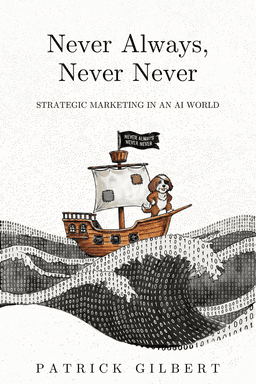
Enjoying this? Never Always, Never Never goes much deeper into the mental models and decision frameworks that shape how we think.
The Liquidity Principle: Why Consolidation Beats Fragmentation
The Interactive Advertising Bureau defines liquidity as the condition where machine learning identifies the most valuable impressions by allowing every dollar to flow to optimal opportunities. This happens when marketers remove restrictions and let algorithms read the terrain effectively.
Campaign fragmentation destroys liquidity. When you split spend across multiple small campaigns with individual budgets, you starve each algorithm of the data it needs to learn effectively. Every constraint you add reduces the system's ability to optimize: narrow audiences limit audience liquidity, restricted placements reduce placement liquidity, and rigid budgets prevent optimal allocation.
- Placement liquidity: Allowing ads to appear across all relevant placements and devices rather than restricting to specific environments
- Audience liquidity: Using broad match keywords and audience expansion instead of narrow targeting constraints
- Budget liquidity: Consolidating campaigns and using shared budgets rather than fragmenting spend across multiple small campaigns
- Creative liquidity: Running multiple ad variations and responsive formats to let algorithms test what resonates
Google and Meta push toward consolidated campaign structures not to increase spending, but because their algorithms need sufficient data volume to exit learning phases and make confident predictions.
When Unstructured Learning Challenges Buyer Personas
Eric Seufert, former VP of User Acquisition at Rovio, discovered that Facebook's algorithm succeeded where traditional buyer personas failed. When trying to identify high-value Angry Birds customers, conventional demographics revealed no clear patterns linking valuable users. They appeared to be random groups with little in common.
However, when Facebook's unstructured learning algorithms explored signals beyond typical buyer personas, they successfully identified connections between high-value customers. The key was allowing the algorithm to explore without constraining it with human assumptions about ideal customer profiles.
This pattern appears across industries. AdVenture Media found similar results with Grown Brilliance, where successful customers defied initial buyer persona assumptions. High-value customers included people shopping at Walmart and Gucci, driving electric vehicles and Ford F-150s, spanning diverse interests and socioeconomic backgrounds.
What Seufert's experience suggests is that personas, and the manual targeting settings advertisers rely on, can sometimes be distracting or even detrimental to performance.
Patrick Gilbert, Never Always, Never Never
The Confidence vs. Accuracy Problem
Algorithm confidence and accuracy don't always align, creating four distinct scenarios that affect campaign performance. Understanding these combinations helps marketers respond appropriately to different optimization challenges.
Low confidence, low accuracy represents algorithms still in learning phases, exploring various input combinations with volatile performance. High accuracy, low confidence describes systems that understand what works but lack sufficient data to scale those insights, often resulting in budget spending plateaus despite increased allocations.
High confidence, high accuracy is the optimal state where algorithms accurately predict results and confidently act on those predictions at scale. High confidence, low accuracy represents the most dangerous scenario: algorithms making decisions based on flawed data while believing they've mastered the optimization challenge.
The most dangerous AI is a confident one working with bad data. Always verify that conversion tracking accurately reflects your actual business objectives.
Why the Breakdown Effect Misleads Marketers
Meta's delivery system uses discount pacing, front-loading the cheapest conversions early in budget cycles before moving to more expensive opportunities. This creates situations where placement-level metrics appear counterintuitive to the algorithm's spending decisions.
Consider a campaign where one placement shows a $15 CPA while another shows $25, yet Meta allocated 80% of budget to the more expensive placement. Many advertisers conclude the system made an error, but the algorithm likely exhausted cheap conversions from the $15 placement, where the next conversion might cost $40, while the $25 placement still offered conversions at that price point.
This breakdown effect occurs because algorithms optimize for aggregate campaign performance, not individual line item metrics. When marketers pause placements based on average CPA comparisons, they often force spend into more expensive paths that the algorithm was actively avoiding.
Key People & Works
Researchers & Authors
- Patrick Gilbert
- Eric Seufert
- Byron Sharp
Key Works
- Never Always, Never Never by Patrick Gilbert
- Interactive Advertising Bureau 2019 Liquidity Paper
Practical Applications
- Consolidate campaigns to provide algorithms with more data volume
- Use broad match keywords and audience expansion to increase liquidity
- Allow learning phases to complete before making major campaign changes
- Reset learning phases when market conditions change or performance plateaus
- Monitor conversion tracking accuracy to prevent confident but inaccurate AI decisions
Frequently Asked Questions
How does Google Ads smart bidding actually learn from campaign data?
Google Ads smart bidding uses structured learning, analyzing labeled historical data including conversions, keywords, demographics, and ad placements. The algorithm identifies patterns between these inputs and conversion outcomes, then predicts which bid strategies will achieve your goals most efficiently.
Why do Meta ads and Google ads perform poorly during the learning phase?
During the learning phase, algorithms actively experiment with different audiences, placements, and bids to gather optimization data. Performance appears volatile because the system prioritizes exploration over immediate efficiency, testing various combinations to identify what works best long-term.
What is campaign liquidity and why does it matter for AI performance?
Campaign liquidity refers to removing restrictions that limit where algorithms can spend budget. High liquidity means allowing ads across all relevant placements, using broad targeting, and consolidating budgets rather than fragmenting spend. This gives algorithms more data to optimize effectively.
Should I pause ad placements with higher cost per acquisition?
Not necessarily. Ad platforms use discount pacing, spending cheaper conversions first before moving to more expensive opportunities. A placement showing higher average CPA may have exhausted its cheap conversions, while future conversions could be even more expensive than alternatives the algorithm is currently choosing.
How do I know if my ad platform AI is confident but inaccurate?
Monitor whether your conversion tracking accurately reflects business objectives. If the algorithm confidently optimizes but business results don't improve, you may have tracking issues. For example, tracking 'add to cart' instead of actual purchases creates confident optimization toward the wrong goal.
When should I reset the learning phase for better performance?
Reset learning phases when market conditions change significantly, performance plateaus despite optimization, or you suspect the algorithm is stuck in a local optimum. However, avoid frequent resets as algorithms need time to gather sufficient data for confident predictions.
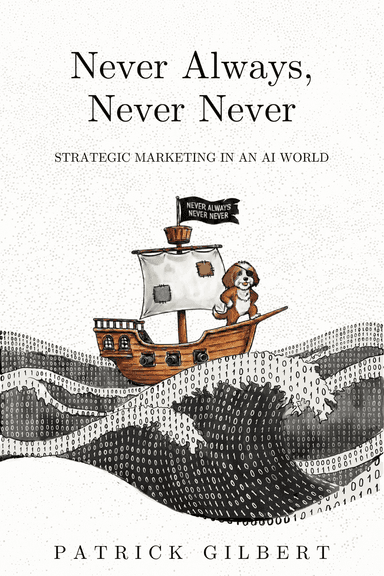
From the Book
Chapter 28 reveals the complete framework for understanding ad platform AI, including the four types of liquidity that determine algorithm performance, the Plinko analogy for campaign optimization, and why most marketers misinterpret the breakdown effect when analyzing placement performance.
This is just a glimpse. The book explores dozens of cognitive biases and decision-making frameworks that change how you think, decide, and act.
Want to go deeper on this topic?
Chat with the AI companion to explore these concepts with the full context of the book.
Chat about this topicRelated Reading
How AI Works for Marketers: Understanding Machine Learning Behind Marketing Tools
Learn how AI works in marketing through neural networks, training, and inference. Understand the machine learning behind your marketing tools.
conceptDigital Marketing Arbitrage: The End of the Cheap Clicks Era
Learn why digital marketing arbitrage worked for decades, how marketers exploited cheap traffic, and what replaced the era of low-cost clicks.
BlogWhy the Old Playbook Is Broken
The platform tricks and optimization shortcuts that built most digital marketing careers have been commoditized. Here's what actually changed and what to do about it.