Digital Marketing Arbitrage: The End of the Cheap Clicks Era
Quick Answer: digital marketing arbitrage
Digital marketing arbitrage refers to the practice of buying high-quality digital traffic for significantly less than its actual value, exploiting inefficiencies in early online advertising platforms. From the early 2000s through the mid-2010s, marketers could purchase Google AdWords clicks for pennies and Facebook traffic at massive discounts due to low competition and immature auction systems. Gary Vaynerchuk famously scaled his wine business buying wine keywords for five cents per click. Mary Meeker identified a $20 billion gap in 2011 between where consumers spent time online and where advertisers allocated budgets. This arbitrage era ended as competition increased, driving costs up to market equilibrium and forcing marketers to shift from performance-only tactics to long-term brand building strategies.
Watch
The Silent Killer of the Digital Marketing Industry
Definition
Digital marketing arbitrage was the practice of exploiting price inefficiencies in digital advertising platforms, allowing marketers to buy high-quality traffic for significantly less than its actual value during the early decades of online advertising.
The Golden Age of Cheap Traffic
For nearly two decades, digital marketing success had little to do with traditional marketing principles. Instead, it rewarded those who could identify and exploit arbitrage opportunities in the digital advertising ecosystem. These were the golden years when acquiring traffic on platforms like Google and Meta cost shockingly little, often far below true market value due to immature auction systems and limited competition.
Gary Vaynerchuk exemplifies this era perfectly. In the early 2000s, he scaled his family's liquor store business by purchasing wine-related keywords on Google AdWords for as little as five cents per click. The lack of competition in wine advertising kept auction prices artificially low, allowing him to capture high-intent shoppers for pennies on the dollar. Success didn't require brilliant creative or sophisticated customer relationships because traffic was so abundant and cheap.
You'd pick your keywords and show a banner at the top of Google search results. For some queries, it was incredibly cheap. You're buying CPM (not CPC), and $10K per month sounds like a lot—until you realize you're getting 100,000 clicks at ten cents apiece because people didn't know any better.
Brad Geddes, Advanced Google AdWords author
The $20 Billion Opportunity Gap
By 2011, the arbitrage opportunity had reached unprecedented scale. Mary Meeker's famous Internet Trends report revealed a $20 billion gap between where consumers were spending their time and where advertisers were investing their budgets. While consumers flocked to digital platforms, spending hours on mobile apps and social networks, brands continued pouring money into traditional media like TV, print, and radio.
This mismatch created the largest arbitrage opportunity in advertising history: digital platforms were severely undervalued while consumer attention was rapidly migrating online.
The data highlighted a fundamental disconnect. Demand for consumer attention was skyrocketing online, but advertiser supply hadn't caught up, keeping costs artificially low. For marketers willing to move fast, this represented an unprecedented opportunity to capture valuable traffic before the market corrected itself.
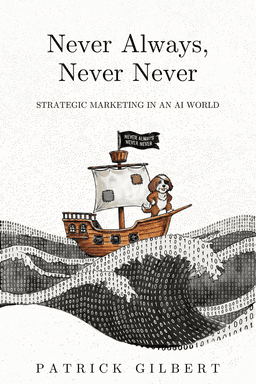
Enjoying this? Never Always, Never Never goes much deeper into the mental models and decision frameworks that shape how we think.
Blue Ocean Advertising
To understand what was actually happening during this period, it helps to apply the blue ocean framework from W. Chan Kim and Renée Mauborgne's strategy work. Red oceans are established markets with known competitors fighting over the same customers by the same rules. Blue oceans represent uncontested space where competition is minimal and prices haven't found their floor.
- Early Google AdWords represented a blue ocean with minimal competition
- Advertiser behavior hadn't caught up to consumer attention shifts
- Market pricing hadn't corrected to reflect true demand
- Long-tail keywords offered endless niche opportunities as mainstream competition increased
Early digital advertising was a massive blue ocean, though nobody thought about it strategically at the time. The water was open not because of clever positioning, but because advertiser behavior simply lagged behind consumer behavior. As competition eventually arrived, the remaining opportunities moved to overlooked pockets: niche searches, micro-targeted audiences, and long-tail keywords that the broader market hadn't yet priced appropriately.
The Inevitable Market Correction
As Patrick Gilbert argues in Never Always, Never Never, bubbles are difficult to recognize from inside. The collapse of digital arbitrage wasn't sudden like the housing crash, but rather resembled a slow leak in a balloon. CPCs rose gradually, ROAS fell incrementally, and each campaign became slightly harder than the last.
The preset business case study from 2019 illustrates this perfectly. A wedding photographer selling Adobe Lightroom presets scaled to $100,000 monthly profit by exploiting cheap Google Ads traffic in an undercompetitive niche. But presets were easy to copy, competitors flooded in, CPCs climbed, and what was once a goldmine became a commodity. This pattern repeated across countless niches as arbitrage opportunities were systematically discovered and competed away.
The road to ruin is paved with ROI. When marketers prioritize short-term wins above all else, they risk creating a house of cards.
Sam Tomlinson, Digital Download newsletter
Why ROAS Optimization Became Counterproductive
As arbitrage opportunities disappeared, many marketers doubled down on ROAS optimization, desperately seeking to recreate past performance. But this approach often backfired, creating what Gilbert calls a self-cannibalizing strategy. Optimizing exclusively for short-term returns meant cutting brand-building budgets, abandoning creative testing, and over-indexing on existing customers.
Goodhart's Law applies perfectly here: 'When a measure becomes a target, it ceases to be a good measure.' ROAS optimization without brand investment erodes the foundation that makes performance marketing possible.
- ROAS-focused strategies sacrifice long-term growth for short-term gains
- Over-optimization on existing customers limits audience expansion
- Brand-building investments get cut despite creating demand that performance marketing captures
- Attribution tools provide false comfort while missing the bigger strategic picture
The Post-Arbitrage Reality
The end of digital marketing arbitrage marks a fundamental shift in how marketing works. The playbook that enabled Gary Vaynerchuk's wine business success or the preset business's rapid scaling simply won't work in today's competitive landscape. Marketers who will thrive in the years ahead must embrace full-funnel strategies that balance performance marketing with long-term brand building.
This transition requires abandoning the rigid playbooks that worked during the arbitrage era in favor of adaptive strategies. Instead of seeking shortcuts or hidden audiences, successful marketers must invest in demand creation through brand awareness, emotional resonance, and cultural relevance. The metrics may be harder to track immediately, but they create the foundation that makes all marketing more effective.
Key People & Works
Researchers & Authors
- Gary Vaynerchuk
- Mary Meeker
- Brad Geddes
- Bill Gross
- W. Chan Kim
- Renée Mauborgne
- Sam Tomlinson
Key Works
- Blue Ocean Strategy by W. Chan Kim and Renée Mauborgne
- Advanced Google AdWords by Brad Geddes
- Internet Trends report by Mary Meeker
Practical Applications
- Identifying emerging platforms before they reach advertising equilibrium
- Exploiting long-tail keywords in undercompetitive niches
- Recognizing when arbitrage opportunities have been exhausted and pivoting to brand-building strategies
- Using blue ocean framework to find uncontested digital advertising spaces
- Balancing short-term ROAS optimization with long-term brand health investments
Frequently Asked Questions
What exactly was digital marketing arbitrage?
Digital marketing arbitrage was the practice of buying high-quality digital traffic for significantly less than its actual value by exploiting inefficiencies in early online advertising platforms. Marketers could purchase clicks and impressions at massive discounts due to low competition and immature auction systems, then profit from the difference between acquisition cost and customer value.
When did the cheap clicks era end?
The cheap clicks era gradually ended between 2015-2020 as competition increased across digital platforms. Unlike a sudden crash, it was a slow market correction where CPCs rose, ROAS fell, and arbitrage opportunities were systematically discovered and competed away across most niches and keywords.
Why can't marketers just find new arbitrage opportunities?
New arbitrage opportunities are extremely rare because the digital advertising market has largely matured. Most platforms now have sophisticated auction systems, extensive competition, and pricing that reflects true market value. When opportunities do emerge on new platforms, they're quickly discovered and competed away.
What replaced digital marketing arbitrage?
Full-funnel marketing strategies that balance performance marketing with brand building replaced pure arbitrage tactics. This approach invests in demand creation through brand awareness and emotional connection while still using performance channels to capture demand, creating sustainable competitive advantages rather than temporary exploitation of market inefficiencies.
How did Gary Vaynerchuk benefit from digital marketing arbitrage?
Gary Vaynerchuk scaled his family's wine business in the early 2000s by purchasing wine-related keywords on Google AdWords for as little as five cents per click. The lack of competition in wine advertising kept costs artificially low, allowing him to capture high-intent wine shoppers for pennies while they were actively searching to buy.
What was Mary Meeker's $20 billion gap?
Mary Meeker's 2011 Internet Trends report identified a $20 billion gap between where consumers were spending their time (increasingly on digital platforms) and where advertisers were allocating their budgets (still heavily focused on traditional media like TV and print). This mismatch created massive arbitrage opportunities for digital-first advertisers.
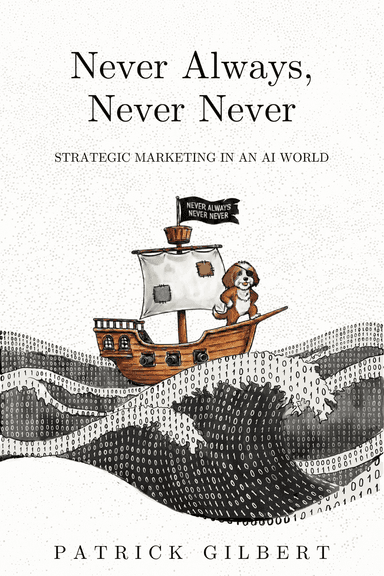
From the Book
These examples barely scratch the surface of how arbitrage shaped an entire generation of marketers and why its end represents the most significant shift in digital marketing since Google AdWords launched. The full chapters reveal the specific tactics that worked, the warning signs most missed, and what successful marketers are doing instead.
This is just a glimpse. The book explores dozens of cognitive biases and decision-making frameworks that change how you think, decide, and act.
Want to go deeper on this topic?
Chat with the AI companion to explore these concepts with the full context of the book.
Chat about this topicRelated Reading
How Google Ads Smart Bidding & Meta AI Actually Learn From Your Data
Learn how Google Ads smart bidding and Meta AI algorithms process your campaign data through structured and unstructured learning to optimize performance.
BlogWhy the Old Playbook Is Broken
The platform tricks and optimization shortcuts that built most digital marketing careers have been commoditized. Here's what actually changed and what to do about it.
BlogAI Amplifies Whatever You Bring to the Table
AI isn't a shortcut. It's an amplifier. If you have strong strategy, AI makes you dramatically more effective. If you don't, it helps you execute mediocrity faster.