Strategy vs Tactics in Marketing: The Critical Difference Most Marketers Miss
Quick Answer: strategy vs tactics in marketing
Marketing strategy defines the long-term direction and non-negotiable pillars that align marketing efforts with business goals, including positioning, target audiences, and trade-offs. Marketing tactics are the specific, flexible moves made within that strategic framework, such as campaign structures, bid strategies, and budget allocations. Strategy answers 'why' and 'what direction,' while tactics address 'how' and 'when.' The key distinction: strategic decisions are existential and shouldn't change frequently, while tactical decisions are incremental improvements that can be tested and refined regularly without derailing the overall mission.
| Dimension | Marketing Strategy | Marketing Tactics |
|---|---|---|
| Purpose | Defines long-term direction and non-negotiable pillars | Executes specific moves within the strategic framework |
| Time Horizon | Long-term, shouldn't change frequently | Short-term, can change daily or weekly |
| Decision Type | Existential choices about market positioning | Incremental improvements and optimizations |
| Flexibility | Stable foundation that provides direction | Highly flexible, should be tested and refined |
| Budget Approach | Proactive investment based on business vision | Reactive allocation based on performance metrics |
| Questions Answered | Why, what direction, at what cost | How, when, which specific method |
| Examples | Market entry, brand positioning, audience priorities | Campaign structures, bid strategies, creative variations |
| Success Metrics | Market share, brand equity, long-term growth | ROAS, CTR, conversion rates, efficiency metrics |
The Fundamental Distinction
As Patrick Gilbert argues in Never Always, Never Never, one of the most common mistakes in marketing is collapsing strategy and tactics into the same bucket. While they're connected, they serve fundamentally different purposes that most marketers fail to distinguish properly.
Strategy is the long game. It defines the non-negotiables: the few, clear pillars that align marketing efforts with business goals. These decisions shouldn't shift week to week. Your positioning in the market, the audiences you must win, the trade-offs you're willing to make. Strategy tells everyone in the organization the direction you're moving, even when the path gets bumpy.
Tactics are the moves you make within that framework. Campaign structures, bid strategies, creative variations, budget allocations. Tactics are flexible by design. They should be debated, tested, and refined. A tactic can change tomorrow without derailing the mission, as long as it serves the strategy.
Why Most Teams Get This Wrong
The confusion between strategy and tactics didn't happen in a vacuum. For the last fifteen years, the entire premise of digital advertising was built on arbitrage: buy cheap traffic from platforms like Google and Facebook and convert it profitably. Whether you were ecommerce, local services, or global retail, the underlying strategy was almost always the same.
Few people admitted arbitrage was their strategy, but that's exactly what it was. And because the overarching approach was already defined, the industry's attention shifted entirely to tactics.
This tactical focus bled into budget setting. Instead of starting with a business vision and allocating resources proactively, most digital advertisers back into budgets based on what's profitable under specific ROAS thresholds. Gilbert notes the running joke about clients who say, 'If my campaigns are profitable, my budget is unlimited!' This reactive approach transforms strategic investments into tactical bets.
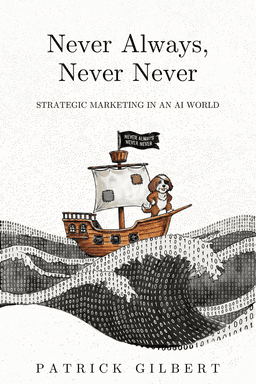
Enjoying this? Never Always, Never Never goes much deeper into the mental models and decision frameworks that shape how we think.
The Litmus Test for Strategic vs Tactical Decisions
A simple test helps clarify the distinction: If a debate is existential, it's strategy. If it's incremental, it's tactics. Should we enter this market, even if it looks less profitable short-term? That's strategy. Should we use broad match or exact match for this campaign? That's tactics.
- Strategic: Repositioning your brand to capture a new market segment
- Tactical: Testing new ad copy variations to improve CTR
- Strategic: Shifting media mix from performance to brand building
- Tactical: Adjusting bid strategies based on dayparting data
- Strategic: Entering a new geographic market with different messaging
- Tactical: Optimizing landing page elements to reduce bounce rate
Both matter enormously, but they operate at different altitudes and require different mindsets.
Real-World Case Study: From Efficiency to Strategy
Gilbert shares a compelling example from 2025 involving an ecommerce brand that overhauled its business model. For years, they manufactured a small product line in-house with healthy margins, selling directly through Google Ads. Simple, profitable, efficient.
But when they expanded their catalog with third-party manufactured products, their margins compressed. Their ad structure, built for high-margin products, couldn't handle the shift. Initially, they tried managing this tactically: segmented campaigns by product type, unique ROAS targets, micromanaged efficiency. Revenue grew, but profitability plummeted.
We proposed doing the opposite of what most PPC managers would do when facing declining ROAS. Instead of pulling back, we increased investment.
Patrick Gilbert
The strategic approach involved increasing investment, launching campaigns on new platforms, and implementing entirely new brand messaging. Short-term performance worsened dramatically - ROAS dropped another 50%. But by mid-summer, the business posted its highest top-line and bottom-line month in its 15-year history.
That turnaround didn't come from chasing efficiency. It came from strategy - zooming out, aligning on the company's new direction, and viewing budget as an investment in the future.
When Strategy and Tactics Work in Harmony
The most successful marketing organizations don't choose between strategy and tactics - they align them properly. Strategic decisions create the framework within which tactical decisions can be made quickly and confidently.
When your budget, measurement, and creative decisions all serve a larger strategic purpose, the result is resilience. Teams stop chasing shiny objects because they have clear criteria for evaluation. Every tactical debate can be resolved by asking: Does this serve our strategic pillars?
This alignment becomes especially critical as AI commoditizes tactical execution. While anyone can optimize campaigns or test creative variations, the ability to think strategically about market positioning and long-term growth becomes the key differentiator.
Frequently Asked Questions
What's the main difference between marketing strategy and tactics?
Strategy defines your long-term direction and non-negotiable pillars - positioning, target audiences, trade-offs. Tactics are the specific, flexible moves within that framework - campaign structures, bidding, creative tests. Strategy answers 'why' and 'what direction,' tactics answer 'how' and 'when.'
How do I know if I'm making a strategic or tactical decision?
Use the litmus test: if the decision is existential (should we enter this market?), it's strategic. If it's incremental (should we test new ad copy?), it's tactical. Strategic decisions shouldn't change frequently, while tactical ones can be adjusted regularly.
Why do most marketers confuse strategy with tactics?
For fifteen years, digital advertising was built on arbitrage - buying cheap traffic and converting it profitably. Since the overarching strategy was the same for most businesses, attention shifted entirely to tactical optimization and efficiency metrics rather than strategic thinking.
Can tactics succeed without a clear strategy?
Tactical wins without strategy are usually short-lived. Without strategic pillars, teams chase every new opportunity and optimization, leading to inconsistent results and resource waste. Strategy provides the framework that makes tactical decisions coherent and sustainable.
How should budgets be set strategically vs tactically?
Strategic budgeting starts with business vision and allocates resources proactively toward goals. Tactical budgeting reacts to performance metrics, backing into spend based on ROAS thresholds. The strategic approach treats marketing as investment, tactical as expense management.
What happens when strategy and tactics are misaligned?
Misalignment leads to constant firefighting, inconsistent results, and teams that feel like they're always starting over. Every decision becomes a coin toss because there's no framework for evaluation. Resources get wasted chasing short-term efficiency gains that don't build long-term value.
From the Book
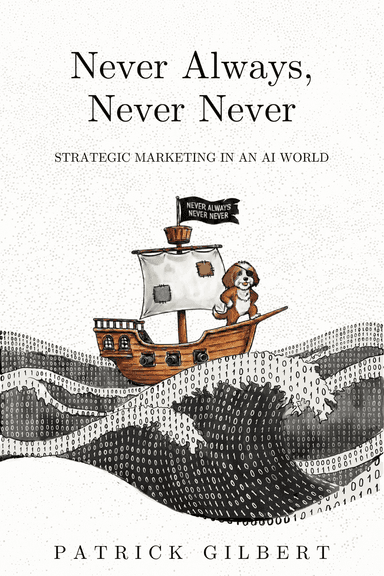
Chapter 17 reveals why most marketing teams are stuck in tactical thinking and provides a clear framework for distinguishing between strategic and tactical decisions. Gilbert shows how the arbitrage era collapsed this distinction and why getting it right is critical for sustainable growth.
This is just a glimpse. The book explores dozens of cognitive biases and decision-making frameworks that change how you think, decide, and act.
Want to go deeper on this topic?
Chat with the AI companion to explore these concepts with the full context of the book.
Chat about this topicRelated Reading
Why the Old Playbook Is Broken
The platform tricks and optimization shortcuts that built most digital marketing careers have been commoditized. Here's what actually changed and what to do about it.
BlogAI Amplifies Whatever You Bring to the Table
AI isn't a shortcut. It's an amplifier. If you have strong strategy, AI makes you dramatically more effective. If you don't, it helps you execute mediocrity faster.