Marketing Strategy vs Marketing Plan: Strategy = Choices, Plan = Execution
Quick Answer: marketing strategy vs marketing plan
Marketing strategy defines long-term direction through fundamental choices about positioning, target audiences, and resource allocation priorities. Marketing plans translate those strategic choices into specific tactical actions, campaigns, and execution details. Strategy answers 'what direction and why' while plans answer 'how and when.' According to Patrick Gilbert, strategy consists of non-negotiable pillars that shouldn't shift week to week, while plans contain flexible tactics that can be tested, refined, and changed without derailing the overall mission. Most organizations confuse tactical optimization with strategic thinking, leading to reactive decision-making rather than purposeful business building.
| Dimension | Marketing Strategy | Marketing Plan |
|---|---|---|
| Purpose | Defines direction and non-negotiable pillars | Translates strategy into actionable tactics |
| Time Horizon | Long-term, stable framework | Short to medium-term execution cycles |
| Flexibility | Should remain consistent despite bumps | Highly flexible, tested and refined regularly |
| Scope | Business-level outcomes and positioning | Campaign structures, budgets, and channels |
| Decision Level | Existential choices about markets and direction | Incremental optimizations and tactics |
| Key Questions | Where to compete, how to win, what trade-offs to make | Which channels, what budgets, how to execute |
| Success Metrics | Business outcomes: profit, market share, revenue growth | Performance metrics: ROAS, CPA, conversion rates |
| Resource Approach | Proactive allocation toward strategic initiatives | Reactive budgeting based on efficiency thresholds |
The Fundamental Distinction
The most common mistake in marketing is treating strategy and planning as the same activity. As Patrick Gilbert argues in Never Always, Never Never, they serve fundamentally different purposes and operate on different timescales. Understanding this distinction separates effective marketers from those who chase tactics without direction.
Marketing strategy defines the long game. It establishes the few, clear pillars that align marketing efforts with business goals. These are decisions about positioning in the market, the audiences you must win, and the trade-offs you're willing to make. Strategy provides organizational direction that remains stable even when the path gets bumpy.
Marketing plans, by contrast, are the tactical moves made within that strategic framework. They include campaign structures, bid strategies, creative variations, and budget allocations. Plans are important but flexible, designed to be debated, tested, and refined without derailing the overall mission.
A useful litmus test: if a debate is existential (should we enter this market?), that's strategy. If it's incremental (broad match or exact match?), that's tactics.
The Arbitrage Era Confusion
For fifteen years, digital advertising operated on a simple premise: arbitrage. Buy large amounts of website traffic at below-market costs and convert it into customers for profit. This underlying approach was so universal that most industry attention shifted to tactical optimization rather than strategic thinking.
The focus became best practices, playbooks, and secret sauce tactics. Every performance discussion centered on one question: how do we keep acquisition costs low and outmaneuver competition? This tactical obsession created a generation of marketers who confused ingredients for the recipe.
Strategic marketing is about building, not exploiting. It's about creating systems, assets, and brand equity that compound over time rather than deplete with use.
Patrick Gilbert, Never Always Never Never
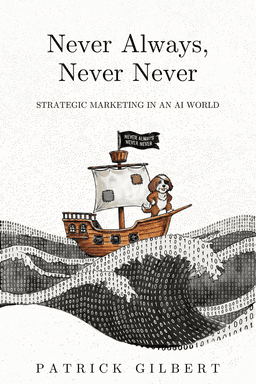
Enjoying this? Never Always, Never Never goes much deeper into the mental models and decision frameworks that shape how we think.
Building Strategic Framework
AdVenture Media's Nechama Teigman developed a five-step framework for translating ambition into strategic direction. This approach structures strategic thinking while maintaining flexibility for changing conditions.
- Define Goals & Guardrails: Business outcomes (profit, market share, growth) and non-negotiable constraints
- Assess the Gap: Understand current trajectory versus strategic goals and market context
- Envision Ideal Strategy: Imagine success without historical limitations or short-term pressures
- Reality Check: Reconcile vision with resources, risk tolerance, and practical constraints
- Actionable Strategy: Focus on few high-impact initiatives that permanently change business operations
This framework ensures strategy remains grounded in business reality while ambitious enough to drive meaningful growth. Each step builds toward initiatives that create lasting competitive advantage rather than temporary efficiency gains.
When Plans Drive Strategy (The Wrong Way)
Many organizations approach budgeting reactively, backing into numbers based on what's profitable under specific ROAS thresholds. This mindset treats marketing as extraction rather than investment, optimizing for short-term efficiency over long-term business building.
"If my campaigns are profitable, my budget is unlimited!" - This common refrain reveals tactical thinking masquerading as strategy.
When budgets are defined purely by tactical profitability, marketing stops being strategic investment and becomes opportunistic betting. Teams operate like resource extractors, drilling wherever they find efficiency and moving on once returns diminish.
Strategic Success: The Ecommerce Transformation Case
In early 2025, AdVenture worked with an ecommerce brand transitioning from high-margin, in-house products to a broader catalog including third-party manufactured items. The shift opened larger market opportunities but compressed profit margins, making their existing tactical approach unsustainable.
Rather than optimize for declining ROAS, the team took a strategic approach. They increased investment across new channels, launched brand-building campaigns, and focused on higher-margin product mix. Short-term performance worsened dramatically, with ROAS dropping 50% below break-even.
By mid-summer, strategic patience paid off. Despite ROAS remaining 60% lower than the previous year, the business posted its highest revenue and profit month in 15 years. The transformation succeeded because strategy guided decisions, not reactive efficiency metrics.
That turnaround didn't come from chasing efficiency. It came from strategy—from zooming out, aligning on the company's new direction, and viewing budget as an investment in that future.
Patrick Gilbert
Integration for Resilience
Effective marketing requires both strategic clarity and tactical excellence. Strategy without execution remains aspiration. Tactics without strategy become random optimization. The goal is harmony: budget, measurement, and creative decisions all serving a larger strategic purpose.
Organizations that achieve this integration demonstrate resilience. They can weather short-term performance fluctuations because they're building toward defined long-term outcomes. Their tactical flexibility serves strategic consistency rather than replacing it.
Frequently Asked Questions
What's the main difference between marketing strategy and marketing plan?
Marketing strategy defines long-term direction through fundamental choices about positioning, audiences, and trade-offs. Marketing plans translate those choices into specific tactical actions, campaigns, and execution details. Strategy provides stable direction while plans offer flexible execution methods.
How do you know if a decision is strategic or tactical?
According to Patrick Gilbert, if a debate is existential (should we enter this market?), that's strategy. If it's incremental (broad match versus exact match keywords?), that's tactics. Strategic decisions affect business direction while tactical decisions optimize within that direction.
Can you have a marketing plan without a marketing strategy?
Yes, but it leads to reactive decision-making and optimization without purpose. Many organizations confuse tactical efficiency with strategic thinking, resulting in campaigns that chase short-term metrics rather than building long-term business value. Plans without strategy become resource extraction rather than investment.
Why do most marketers focus on tactics instead of strategy?
The digital advertising era emphasized arbitrage - buying cheap traffic and converting it profitably. This approach was so universal that industry attention shifted to tactical optimization rather than strategic differentiation. Most marketers learned to optimize ingredients without understanding the overall recipe.
How should strategy influence marketing budgets?
Strategic budgets are proactive investments toward defined business outcomes rather than reactive allocations based on efficiency thresholds. Instead of backing into spending based on ROAS targets, strategic budgeting starts with vision and allocates resources to achieve specific business goals.
What are the key components of a marketing strategy?
According to AdVenture Media's framework, marketing strategy includes clearly defined business goals and guardrails, assessment of current position versus objectives, vision of ideal strategic direction, reality-checked resource requirements, and focused initiatives that permanently change business operations or competitive position.
How often should marketing strategy versus plans change?
Marketing strategy should remain stable over longer periods, providing consistent direction even when execution gets difficult. Marketing plans should be flexible, tested, and refined regularly based on performance data and changing market conditions while still serving the overarching strategic framework.
What happens when strategy and tactics are confused?
Organizations get locked in tactical debates without strategic alignment, leading to decision-making that feels like coin flips. Teams chase new platforms and techniques without understanding how they serve business objectives, resulting in scattered efforts and reactive optimization rather than purposeful business building.
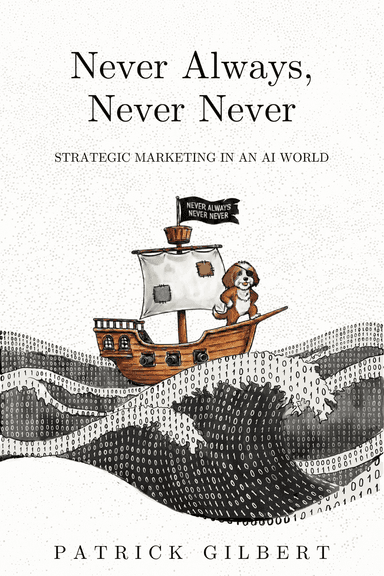
From the Book
Chapters 17-18 provide frameworks for distinguishing strategy from tactics and building strategic direction that translates vision into focused action. Gilbert reveals why most marketing teams confuse optimization with strategy and how to build resilient growth systems.
This is just a glimpse. The book explores dozens of cognitive biases and decision-making frameworks that change how you think, decide, and act.
Want to go deeper on this topic?
Chat with the AI companion to explore these concepts with the full context of the book.
Chat about this topicRelated Reading
Why the Old Playbook Is Broken
The platform tricks and optimization shortcuts that built most digital marketing careers have been commoditized. Here's what actually changed and what to do about it.
BlogAI Amplifies Whatever You Bring to the Table
AI isn't a shortcut. It's an amplifier. If you have strong strategy, AI makes you dramatically more effective. If you don't, it helps you execute mediocrity faster.