How to Use AI in Marketing: A Practical Guide to Implementation
Quick Answer: how to use AI in marketing
Using AI in marketing effectively requires understanding that modern AI combines multiple learning approaches: connectionist systems for pattern recognition, Bayesian methods for probability updates, and analogist logic for finding similarities. Start by identifying internal efficiency opportunities like automated reporting and data cleaning, then build toward external value creation through custom analysis and creative generation. Focus on copiloting high-level work like strategy and decision-making while delegating repetitive tasks to AI systems. Success comes from treating AI as probabilistic, not deterministic, and building systematic workflows rather than using individual tools ad-hoc.
Watch
The 4x2 Model of Work: How AI Transforms Creativity, Decision-Making & Execution
Why Most Marketing Teams Get AI Wrong
As Patrick Gilbert argues in Never Always, Never Never, most marketers approach AI with deterministic expectations in a probabilistic world. They expect perfect results every time, then abandon AI tools when they encounter the occasional odd result or hallucination. This misses the fundamental nature of how modern AI works.
The reality is that AI systems combine multiple learning approaches that were once separate. Connectionist neural networks recognize patterns like a brain, strengthening connections based on feedback. Bayesian systems update probabilities like statisticians, getting smarter with more data. Analogist logic finds similar patterns like lazy students, assuming new situations will match previous ones. Understanding these different approaches helps you choose the right AI tool for each marketing challenge.
Modern AI is probabilistic by design. Occasional unexpected results aren't bugs—they're features that enable creative problem-solving and pattern discovery.
The Shift from Deterministic to Probabilistic Marketing
Traditional marketing tools were deterministic. When you targeted users based on specific demographics or behaviors, you knew exactly who would see your ads. But privacy changes and data restrictions have forced platforms toward probabilistic models that make educated guesses based on aggregate patterns.
Meta's evolution illustrates this shift perfectly. The platform once relied on precise user tracking across websites and apps. After iOS 14.5 and GDPR reduced data availability, Meta pivoted to probabilistic models that estimate user behavior and conversion likelihood based on broader trends. As Ben Thompson noted in Stratechery, this transition deepens the moat around major platforms because building better probabilistic models requires massive engineering resources.
For marketers, this means accepting less visibility and control in exchange for maintained performance. The platforms moved to probabilistic models whether we like it or not. Success requires learning to work within these systems rather than fighting them.
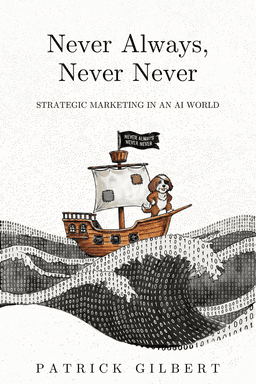
Enjoying this? Never Always, Never Never goes much deeper into the mental models and decision frameworks that shape how we think.
The AI Double Helix: Efficiency Plus Value
Building an AI-first marketing organization requires balancing two intertwined strands: Internal Efficiency and External Value. Most teams focus only on efficiency—using AI to automate reporting or speed up content creation. This defensive approach protects margins but leads toward commoditization.
The second strand involves using AI to deliver unique value that wasn't previously possible. This might mean custom competitive analysis, real-time strategy visualization, or personalized creative at scale. When both strands work together, efficiency gains fund value creation, which generates resources for even better efficiency.
The organizations that pull ahead are the ones that treat these strands as inseparable. They understand that if they pull only on efficiency, they race toward commoditization.
Patrick Gilbert, Never Always, Never Never
Common Implementation Mistakes
- Expecting perfection: Treating AI like deterministic software and abandoning tools after seeing unexpected results
- Tool hopping: Chasing shiny new AI products instead of building systematic workflows with proven platforms
- Working solo: Defaulting to manual work instead of consistently copiloting or delegating to AI systems
- Ignoring data quality: Feeding poor conversion data into analogist systems like Lookalike Audiences
- Skipping efficiency: Jumping straight to advanced applications without first automating basic internal workflows
Understanding Different Types of AI for Marketing
Not all AI works the same way, and understanding the underlying approaches helps you choose the right tool. Connectionist systems like large language models excel at pattern recognition and creative generation. They're ideal for content creation, data analysis, and identifying trends in successful campaigns.
Bayesian systems update their beliefs as new evidence arrives, making them perfect for campaign optimization. Google's Smart Bidding and Meta's automated targeting use Bayesian approaches to improve performance as they gather more conversion data. Analogist systems find similar patterns and assume the same results will follow, powering features like Lookalike Audiences and recommendation engines.
The key insight from Pedro Domingos' research in The Master Algorithm is that modern AI combines these once-separate approaches. Large language models use connectionist architecture for memory, analogist principles for context understanding, and Bayesian probability for response generation. This combination creates more versatile tools but requires understanding each component's strengths and limitations.
Steps
Audit your current work to identify AI opportunities
Break down your team's daily tasks into four categories: Design (creative strategy, brand concepts), Problem-Solving (diagnosing issues, finding solutions), Decision-Making (budget allocation, strategy choices), and Building (execution, reporting). Identify which tasks provide direct value to customers versus internal busywork. Focus first on automating high-volume, low-impact activities like data cleaning, report formatting, and routine communications.
Implement the 4x2 Model for task execution
Eliminate solo work as your default mode. For every task, ask: Can this be delegated to AI? If yes, hand it over completely and focus on quality control. If no, can you copilot it with AI assistance? Use AI as a navigator for strategic work while maintaining human judgment for final decisions. This shifts your team from technical execution toward higher-value strategy and creative work.
Start with connectionist AI for pattern recognition tasks
Use neural network-based tools like large language models for tasks requiring pattern matching: content generation, data analysis, and audience insights. These systems excel at recognizing patterns in your existing successful campaigns and applying those learnings to new contexts. Feed them your best-performing creative and campaign data to identify what elements consistently drive results.
Leverage Bayesian approaches for campaign optimization
Embrace platform AI that uses probabilistic learning, like Google's Smart Bidding or Meta's automated targeting. These systems start with baseline assumptions and improve with more conversion data. Feed high-quality conversion signals and be patient as the algorithms learn. Avoid reactive changes based on short-term fluctuations, as Bayesian systems need time to update their probability models.
Build analogist systems for audience development
Use Lookalike Audiences and similar targeting thoughtfully by providing clean input data. Before uploading customer lists, scrub out low-quality conversions like returns or cancelled subscriptions. The analogist logic will find users similar to your inputs, so ensure your source data represents genuinely valuable customers, not just high-volume converters.
Develop internal efficiency workflows first
Create automated workflows for recurring tasks: client reporting dashboards, campaign setup templates, and performance alert systems. Use tools like Zapier or n8n to connect your marketing platforms and eliminate manual data transfer. This creates bandwidth for higher-level strategic work and protects your margins against competitors who achieve similar automation.
Build external value through custom AI applications
Once internal efficiency is established, develop proprietary tools that provide unique client value. Create custom analysis dashboards, competitive intelligence systems, or interactive strategy visualization tools. These differentiate your services and justify premium pricing by delivering capabilities that weren't economically feasible before AI.
Establish AI maturity progression for your team
Move team members up the maturity ladder: from Dabbler (occasional ChatGPT use) to Practitioner (consistent copiloting), then Architect (building systematic workflows) to Strategist (creating custom value-added tools). Provide shared language and frameworks so everyone understands AI capabilities even if they're not implementing every system themselves.
Frequently Asked Questions
What's the difference between deterministic and probabilistic AI in marketing?
Deterministic systems follow strict rules and deliver identical results every time, like traditional targeting based on specific demographics. Probabilistic systems use patterns to generate likely responses without guaranteeing accuracy, like modern platform AI that estimates user behavior based on aggregate trends. Most current marketing AI is probabilistic by design.
Should I focus on AI efficiency or AI-powered innovation first?
Start with internal efficiency to create bandwidth, then build toward external value creation. According to Patrick Gilbert's Double Helix model, these two strands must work together—efficiency gains fund innovation, while successful innovation generates resources for better efficiency systems.
How do I know if my team is ready for AI implementation?
Use the AI Maturity Ladder assessment. Teams should progress from Dabbler (occasional tool use) to Practitioner (consistent copiloting), then Architect (building workflows) to Strategist (creating custom value). Focus on shared language and frameworks so everyone understands AI capabilities even if they're not implementing every system.
What are the biggest mistakes when implementing AI in marketing campaigns?
The most common error is expecting deterministic results from probabilistic systems, then abandoning AI tools after seeing unexpected outcomes. Other mistakes include poor data quality for analogist systems like Lookalike Audiences, tool hopping instead of systematic implementation, and defaulting to solo work rather than AI copiloting.
How should I handle AI hallucinations and incorrect results?
Understand that occasional incorrect results are inherent to probabilistic systems, not system failures. Focus on overall performance rather than individual anomalies. For campaign AI, strange search terms or targeting choices may be part of the learning process—judge success by conversion efficiency, not individual auction relevance.
Which AI tools should I start with for marketing automation?
Begin with connectionist systems like large language models for content and analysis, then Bayesian platform AI for campaign optimization. Focus on automating high-volume, low-impact tasks first: reporting, data cleaning, and routine communications. Build systematic workflows rather than relying on individual tools ad-hoc.
From the Book
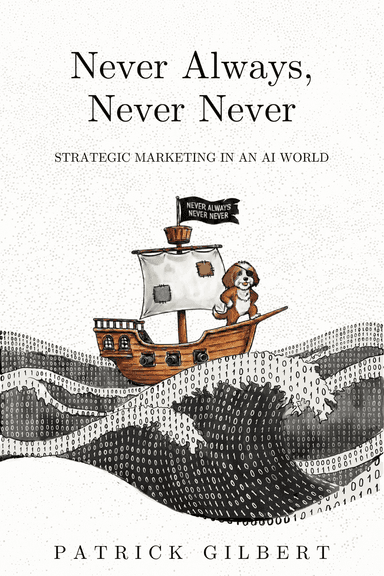
Chapter 26 reveals how modern AI combines different learning approaches that were once separate, while Chapter 30 provides the frameworks for building an AI-first marketing culture.
This is just a glimpse. The book explores dozens of cognitive biases and decision-making frameworks that change how you think, decide, and act.
Want to go deeper on this topic?
Chat with the AI companion to explore these concepts with the full context of the book.
Chat about this topicRelated Reading
AI Amplifies Whatever You Bring to the Table
AI isn't a shortcut. It's an amplifier. If you have strong strategy, AI makes you dramatically more effective. If you don't, it helps you execute mediocrity faster.
BlogWhy the Old Playbook Is Broken
The platform tricks and optimization shortcuts that built most digital marketing careers have been commoditized. Here's what actually changed and what to do about it.