How to Set Marketing Goals That Drive Real Business Growth
Quick Answer: how to set marketing goals
Effective marketing goals must connect directly to business outcomes like revenue, profit, or market share rather than channel KPIs. According to research by Les Binet and Peter Field, marketers need both short-term activation goals (0-6 months) and long-term brand building goals (6-36 months). Short-term goals focus on immediate sales through promotions and direct response, measured by ROAS or conversion rates. Long-term goals build memory structures and emotional affinity, measured by brand awareness or market penetration. The optimal balance depends on category context, but most brands need heavier investment in whichever area is underperforming.
Why Most Marketing Goals Fail
Most marketing goals fail because they optimize the wrong things. Teams set targets around channel KPIs, engagement rates, or cost efficiencies without connecting them to actual business outcomes. This creates a fundamental misalignment where marketing can hit every target while the business stagnates.
As Patrick Gilbert argues in Never Always, Never Never, strategy only becomes real when it shows up in what we aim for and how we decide. The problem isn't that marketers lack ambition. It's that they've been trained to measure success through metrics that feel precise but don't predict growth.
If it can't be traced to a real business outcome like revenue, profit, market share, pricing power, penetration, or customer equity, it's not a goal.
Patrick Gilbert, Never Always, Never Never
This distinction matters because it reframes budget conversations from expense to investment. When goals connect to revenue or market share, finance understands the logic. Teams stop optimizing click-through rates and start building sustainable competitive advantages.
The Science Behind Effective Goal Setting
Les Binet and Peter Field's research revealed that marketing works on two fundamental timescales, each requiring different objectives and measurement approaches. Their findings challenge the conventional wisdom that effective marketing is just an accumulation of efficient short-term wins.
Short-term activation drives immediate sales through promotions, retargeted ads, and direct calls-to-action. These campaigns create quick conversion spikes but have minimal carryover effects. Once the promotion ends, the impact decays rapidly. A flash sale might boost this week's revenue but rarely contributes to next year's growth trajectory.
Long-term brand building creates the memory structures and emotional affinity that make consumers choose your brand in future purchase situations. These effects accumulate over months and years, building pricing power and reducing acquisition costs. The impact is harder to measure immediately but drives significantly more profit over time.
Brand campaigns prime consumers to want to choose the brand and significantly impact profit over time, according to Binet and Field's analysis.
The key insight is that these two types of goals work in synergy, each enhancing the other. Strong brand equity makes activation more efficient. Effective activation provides the revenue to fund brand building. The mistake most marketers make is treating them as either-or choices rather than complementary investments.
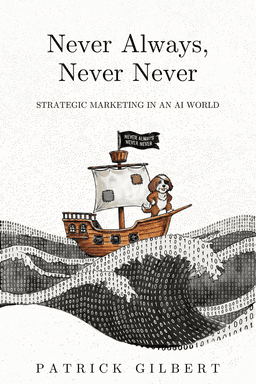
Enjoying this? Never Always, Never Never goes much deeper into the mental models and decision frameworks that shape how we think.
The Context-Dependent Nature of Marketing Goals
One of the most counterintuitive findings from Binet and Field's research is that when something is hard to do, the answer isn't to do less of it. It's to do more. This inverts the conventional wisdom of doubling down on what's working and cutting what feels difficult.
They write: 'Regardless of your category, you need both a strong brand and efficient activation. So when brand building is hard, you need to spend more on brand. And when activation is less responsive, you need to spend more on activation.'
This creates a different approach to goal setting. Instead of asking 'What's working?' the right question becomes 'What's missing?' If activation is efficient but brand growth is sluggish, don't funnel more budget into high-performing campaigns. Invest more in the underdeveloped parts of your marketing ecosystem.
- SaaS companies often need 60-70% brand investment because digital categories are crowded and performance channels eventually run out of oxygen
- Luxury brands with high baseline awareness may benefit from 40% brand, 60% activation splits
- Non-profits with strong emotional goodwill can often skew heavier toward activation
- Context determines the optimal balance, not industry habits or what feels comfortable
The balanced scorecard approach gives marketers a practical way to evaluate performance across both timescales without collapsing them into single metrics. Short-term metrics show the pulse. Long-term metrics show the health. You need both in view to understand whether marketing delivers sustainable business growth.
Common Mistakes in Marketing Goal Setting
The biggest mistake is the instinct to double down on what's working. This approach assumes marketing operates in isolation, channels perform independently, and short-term performance gains scale infinitely. In reality, over-optimization for efficiency creates a self-reinforcing trap.
Here's how it typically unfolds: Performance campaigns deliver strong ROAS numbers, so teams reallocate budget toward what's 'working.' Brand investment feels fuzzy and slow to pay off, so it gets cut. This erodes future demand, making conversion harder and creating more pressure to optimize for efficiency. The cycle continues, growth plateaus, and marketing budgets shrink.
Marketing is not a slot machine where you keep feeding quarters into your winners. It's a portfolio of investments where today's underperforming assets often hold tomorrow's compounding returns.
Another common error is the 'online fallacy' that Binet warns against. Just because consumers research and buy online doesn't mean advertising messages are best served online as activation messages. Media should be chosen based on goals, not assumptions. YouTube can absolutely serve brand-building objectives through emotional storytelling, while traditional 'brand' channels like CTV can drive activation through direct-response messaging.
Steps
Connect Every Goal to a Real Business Outcome
If your goal can't be traced to revenue, profit, market share, pricing power, penetration, or customer equity, it's not a goal. This distinction reframes budget as investment and prevents teams from optimizing metrics that don't move the business. Replace vanity metrics like impressions or engagement with goals like 'Acquire 100,000 net-new customers' or 'Increase market share from 8% to 10%.'
Separate Short-Term Activation from Long-Term Brand Goals
Create two distinct goal categories based on Binet and Field's research. Short-term goals (0-6 months) drive immediate sales through promotions and direct response, measured by ROAS, conversion rates, or CPA. Long-term goals (6-36 months) build brand equity and future demand, measured by brand awareness, consideration scores, or market penetration. These require fundamentally different tactics and timelines.
Prioritize Growth Before Efficiency
Set ambition around scale first, then manage efficiency within that framework. A tidy ROI on a tiny audience won't move the company. Focus on goals that expand your customer base and category reach, like 'Reach 2 million new potential customers monthly' before optimizing for cost per acquisition. Growth goals should stretch your market presence, not just improve existing performance.
Invest More in What's Underperforming
Identify whether your brand building or activation is weaker, then invest more heavily there. As Binet and Field found, when brand building is hard, you need more brand investment, not less. If your performance campaigns are efficient but growth is plateauing, don't double down on what's working. Instead, increase investment in brand awareness, emotional connection, or broader reach to fuel future activation.
Make Penetration Goals Explicit
If the business wants market share growth, marketing must set specific penetration targets. This means winning more buyers, especially future buyers who aren't shopping today. Set concrete goals like 'Increase our share of category buyers from 8% to 10%' or 'Achieve 50% brand awareness among target demographic.' Penetration drives sustainable growth better than just increasing purchase frequency among existing customers.
Choose the Right Framework for Your Organization
Select OKRs for fast-moving teams with 6-12 month clarity, OGSMs for larger organizations making strategic tradeoffs, or ensure all goals meet SMART criteria (Specific, Measurable, Achievable, Relevant, Time-bound). The framework matters less than having a shared structure that turns strategic ambition into trackable action across your team.
Create RACI Charts for Goal Ownership
Assign one person as Accountable for each goal's outcome, even if multiple people are Responsible for execution tasks. Define who must be Consulted before key decisions and who should be Informed of progress. Clear ownership eliminates confusion, prevents deadline drift, and makes performance reviews concrete. Without single-point accountability, goals remain good intentions.
Balance Goals Across Both Timescales
Use Binet and Field's balanced scorecard approach to evaluate performance across short and long-term metrics simultaneously. Track immediate pulse metrics alongside long-term health indicators. Most online-born brands need 60-70% brand focus with 30-40% activation, while established brands with strong awareness may use 40% brand and 60% activation. Context determines the right balance, not industry habits.
Frequently Asked Questions
What's the difference between business goals and marketing goals?
Business goals focus on overall company outcomes like revenue growth, profitability, or market expansion. Marketing goals translate these into specific actions marketing can control, like acquiring new customers, building brand awareness, or increasing market penetration. Both must connect directly to measurable business outcomes, not just channel metrics.
How do I balance short-term and long-term marketing goals?
According to Binet and Field's research, most brands need 60% long-term brand building and 40% short-term activation, but the optimal balance depends on context. Online-born brands in competitive categories often need 70% brand focus, while established brands with strong awareness might use 40% brand, 60% activation. Invest more heavily in whichever area is currently underperforming.
What metrics should I use for long-term brand goals?
Long-term brand goals should be measured through brand awareness levels, consideration scores, share of voice, share of search, customer penetration rates, net promoter scores, and repeat purchase behavior. These metrics track memory structures and emotional affinity that drive future purchase decisions, unlike short-term metrics such as click-through rates or immediate conversions.
How do I know if my marketing goals are too ambitious?
Marketing goals should prioritize growth before efficiency, so they should feel stretched. The test is whether they connect to real business outcomes and have clear ownership through RACI charts. If you can achieve your goals without expanding market reach or customer base, they're probably not ambitious enough to drive meaningful business growth.
Should I cut marketing channels that aren't performing?
Not necessarily. Binet and Field's research shows that when something is hard to do, you often need to invest more, not less. Poor performance might indicate insufficient investment in reach, creative effort, or time horizon rather than channel failure. Ask 'What's missing?' instead of 'What's working?' before reallocating budget.
What framework should I use for marketing goal setting?
Choose OKRs for fast-moving teams with 6-12 month clarity, OGSMs for larger organizations making strategic tradeoffs, or ensure all goals meet SMART criteria. The specific framework matters less than having a shared structure that turns strategic ambition into trackable action and clear accountability across your team.
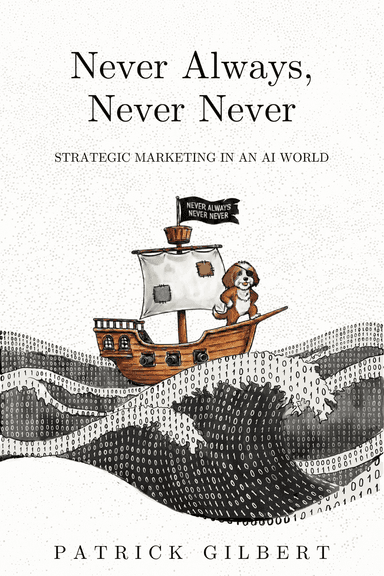
From the Book
Chapter 19 provides the complete framework for setting marketing goals that connect strategy to execution, including practical tools for managing both short-term activation and long-term brand building simultaneously.
This is just a glimpse. The book explores dozens of cognitive biases and decision-making frameworks that change how you think, decide, and act.
Want to go deeper on this topic?
Chat with the AI companion to explore these concepts with the full context of the book.
Chat about this topicRelated Reading
Why the Old Playbook Is Broken
The platform tricks and optimization shortcuts that built most digital marketing careers have been commoditized. Here's what actually changed and what to do about it.
BlogMental Availability: The Marketing Concept Most Digital Marketers Ignore
Mental availability is the single most important driver of brand growth. Most digital marketers have never heard of it. Here's why that matters.