How to Build Distinctive Brand Assets That Actually Drive Sales
Quick Answer: how to build distinctive brand assets
Building distinctive brand assets requires creating memorable visual, audio, and conceptual cues that help customers recognize and recall your brand. Focus on owning specific colors, shapes, sounds, or characters rather than trying to differentiate on product features. According to Jenni Romaniuk's research, successful brands use consistent assets like T-Mobile's magenta, McDonald's golden arches, or Progressive's Flo character. The key is repetition over time across all touchpoints, linking these assets to specific Category Entry Points when customers have relevant needs. Distinctiveness beats differentiation because it works on System 1 thinking, creating mental shortcuts that make your brand easier to notice and remember in buying situations.
Watch
Why I Put a Dog on My Book Cover: A Marketing Lesson in Distinctive Assets
Why Most Brands Get Distinctiveness Wrong
Most marketing teams confuse differentiation with distinctiveness, and it's costing them millions in wasted ad spend. They obsess over Unique Selling Propositions and feature comparisons, trying to convince customers their product is rationally superior. But as Patrick Gilbert demonstrates in Never Always, Never Never, this approach ignores how people actually make buying decisions.
Standing out and being different is important for any brand. But don't confuse saying something different with saying something in a different way. Difference is less important than distinctiveness.
Les Binet
The problem with differentiation is that it requires System 2 thinking. Customers need to process, compare, and evaluate your claims against competitors. But most purchase decisions happen in System 1, where people rely on mental shortcuts and immediate recognition cues. That's why a simple green beanie helped Isaac Rudansky's Google Ads course become a global phenomenon, selling over 300,000 copies across 195 countries.
Distinctive brand assets work because they make your brand easier to notice and recall, not because they prove you're better than competitors.
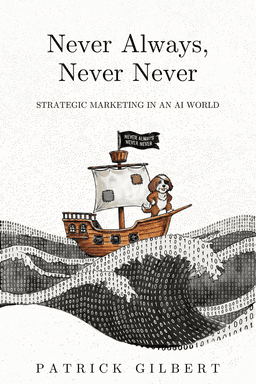
Enjoying this? Never Always, Never Never goes much deeper into the mental models and decision frameworks that shape how we think.
The Science Behind Distinctive Assets
Jenni Romaniuk's research at the Ehrenberg-Bass Institute reveals that brands don't win by persuading customers they're uniquely superior. They win by being easier to recognize and remember in buying situations. Her work on Distinctive Brand Assets shows that mental shortcuts like colors, shapes, characters, and sounds create what Byron Sharp calls [mental availability](/learn/mental-availability).
Consider how David Ogilvy approached Guinness in 1950s America. He didn't try to argue that Guinness was smoother or better than Budweiser. Instead, he created a mental link between Guinness and oysters. 'The Guinness Guide to Oysters' campaign wasn't about product differentiation. It was about claiming a Category Entry Point. When American drinkers thought about oysters, they thought about Guinness.
This strategy worked because it bypassed rational comparison. Ogilvy gave people a simple association: oysters plus Guinness equals the right choice. That mental shortcut was enough to earn Guinness a foothold in a crowded market dominated by light lagers.
Common Mistakes That Kill Distinctiveness
- Changing assets too frequently based on creative boredom rather than market feedback
- Choosing assets that are already strongly associated with major competitors
- Focusing on rational product features instead of memorable recognition cues
- Using assets inconsistently across different channels and touchpoints
- Trying to own too many different elements instead of building strength in a few
- Ignoring how assets perform in low-attention environments like social feeds
As Patrick Gilbert argues in Never Always, Never Never, the biggest mistake brands make is abandoning distinctive assets just when they're starting to work. After a new CMO or agency arrives, companies often launch new logos, swap taglines, or overhaul their visual identity. Each change resets the mental availability clock, diluting years of built-up associations.
The brands that win understand distinctiveness requires patience. McDonald's has used golden arches for decades. T-Mobile has owned magenta since 2001. Progressive has featured Flo since 2008. These assets became powerful precisely because they were repeated consistently over time, across channels, until they created automatic mental links.
Steps
Audit Your Current Brand Assets
List every visual, audio, and conceptual element your brand currently uses across all channels. Include colors, fonts, logos, characters, jingles, taglines, packaging shapes, and even spokesperson voices. Rate each asset on consistency of use and uniqueness in your category.
Identify Your Category Entry Points
Map the specific moments, emotions, or needs when customers might think of your category. Like 5-hour Energy claiming 'That 2:30 Feeling' or Guinness linking to oyster consumption, find the underexploited occasions where your brand can become the mental shortcut.
Choose Your Distinctive Elements
Select 3-5 core assets that can become uniquely yours through consistent repetition. Prioritize elements that work across multiple touchpoints and are ownable in your category, even if competitors could theoretically copy them.
Link Assets to Entry Points
Create specific associations between your distinctive assets and relevant Category Entry Points. This means showing your logo, colors, or character consistently in contexts where your target need arises, not just in product shots.
Test for Recognition and Recall
Before full rollout, test whether your assets actually help customers identify your brand when partially obscured or recall your brand when thinking about relevant needs. Use simple recognition tests where you show assets without brand names.
Implement Across All Touchpoints
Deploy your distinctive assets consistently across advertising, packaging, digital properties, retail environments, and customer service. Every brand interaction should reinforce the same visual and conceptual cues to build memory structures.
Resist the Urge to Change
Commit to using your distinctive assets for years, not quarters. The power comes from repetition over time, so avoid agency-driven rebrands or creative refreshes that dilute the mental links you're building.
Layer and Expand Over Time
Once core assets are established, add complementary elements that reinforce the same distinctiveness. Like Guinness adding toucans and harps to their oyster association, build a family of related cues that strengthen recognition.
Frequently Asked Questions
What's the difference between distinctive assets and differentiation?
Distinctive assets make your brand easier to recognize and recall through visual, audio, or conceptual cues like colors, characters, or sounds. Differentiation tries to prove your product is rationally superior through feature comparisons. According to Jenni Romaniuk's research, distinctiveness works better because it operates on System 1 thinking rather than requiring deliberate evaluation.
How long does it take for distinctive assets to become effective?
Distinctive assets require consistent repetition over months or years to build mental availability. The timeline depends on your media spend and market exposure, but most successful assets show recognition benefits after 6-12 months of consistent use. The key is avoiding changes during this building period, as each modification resets the mental association process.
Can small brands compete with distinctive assets against larger competitors?
Yes, small brands can often claim distinctive assets more easily than large competitors who are locked into existing associations. Isaac Rudansky's green beanie helped his course compete against major educational platforms precisely because it was simple, consistent, and ownable. The key is choosing assets that larger brands haven't already claimed in customer minds.
Should distinctive assets be the same across all markets and countries?
Generally yes, because consistency builds stronger mental availability. However, some cultural adaptation may be necessary for colors, symbols, or characters that have different meanings in specific markets. The goal is maintaining core recognition while respecting local contexts that could create negative associations.
How do I test if my distinctive assets are actually working?
Use recognition tests where you show your assets without brand names to see if customers can identify your brand. Also test recall by asking customers what brands come to mind for specific needs or occasions. Effective distinctive assets should improve both brand recognition when assets are visible and brand recall when relevant Category Entry Points arise.
What types of businesses benefit most from distinctive brand assets?
All businesses benefit from distinctive assets, but they're especially powerful in crowded categories where rational differentiation is difficult. Consumer brands, B2B services, and digital products all use distinctive assets successfully. Even personal brands like Isaac Rudansky's course show how simple assets can create massive competitive advantages through improved mental availability.
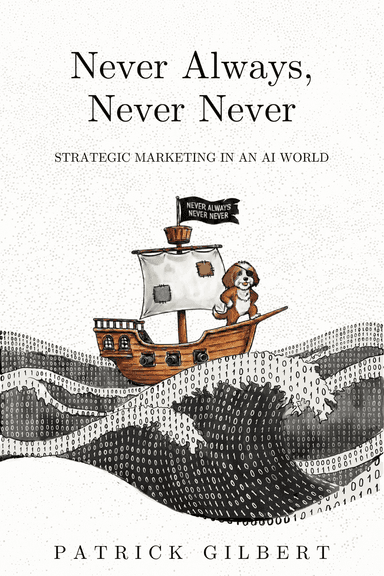
From the Book
Chapter 14 reveals how David Ogilvy made Guinness memorable in America not by proving it was better than Budweiser, but by linking it to oysters. Learn why distinctiveness beats differentiation and how simple assets like Isaac Rudansky's green beanie can transform unknown brands into global phenomena.
This is just a glimpse. The book explores dozens of cognitive biases and decision-making frameworks that change how you think, decide, and act.
Want to go deeper on this topic?
Chat with the AI companion to explore these concepts with the full context of the book.
Chat about this topicRelated Reading
Mental Availability: The Marketing Concept Most Digital Marketers Ignore
Mental availability is the single most important driver of brand growth. Most digital marketers have never heard of it. Here's why that matters.
BlogWhy the Old Playbook Is Broken
The platform tricks and optimization shortcuts that built most digital marketing careers have been commoditized. Here's what actually changed and what to do about it.