How to Build an AI-First Marketing Team: A Complete Framework for Transformation
Quick Answer: how to build AI first marketing team
Building an AI-first marketing team requires implementing the Double Helix framework: Internal Efficiency (automating reporting, data cleaning, and administrative tasks) paired with External Value creation (using AI for strategic analysis and differentiated capabilities). Teams must adopt the 4x2 Model, eliminating solo work in favor of copiloting (human-led collaboration with AI) or delegating tasks entirely to AI. Success depends on moving team members through the AI Maturity Ladder from Dabbler to Strategist levels while establishing shared language and psychological safety for the transition.
Watch
The AI Galaxy Brain Framework: How to Level Up from Beginner to Power User
Why Most AI Marketing Initiatives Fail
The problem with most AI adoption efforts is that they mistake tools for transformation. Teams rush to integrate ChatGPT, buy software with .ai domains, and celebrate small productivity gains while missing the fundamental shift happening in their industry. As Patrick Gilbert argues in Never Always, Never Never, there's a massive difference between being AI-forward and building an AI-first culture.
According to Gilbert's experience at AdVenture Media, most organizations get trapped in what he calls the "shiny object" phase. They sample new AI tools, generate a few automated reports, and declare victory. Meanwhile, their competitors are using AI to collapse entire departments, democratize enterprise-level capabilities, and create market advantages that didn't exist two years ago.
The real power of an AI-first culture is that it acts as a massive equalizer, allowing a marketing team of two to produce the same high-level output that a competitor with a team of ten might produce.
The Double Helix Framework
The foundation of an AI-first marketing team rests on what Gilbert calls the AI Double Helix: two intertwined strands that must spiral upward together. Internal Efficiency handles the operational transformation while External Value creation builds competitive differentiation.
Strand 1: Internal Efficiency focuses on automating the tedious work that consumes human attention without adding client value. This includes data cleaning, report formatting, email threads for platform access, and manual asset management. The goal isn't just speed but bandwidth creation. Every hour saved from administrative work becomes an hour available for strategic thinking.
Strand 2: External Value transforms that recovered bandwidth into market advantages. Teams use AI to conduct sophisticated analysis previously requiring seven-figure budgets, create high-quality creative that generates emotional response, and maintain competitive intelligence that was once exclusive to Fortune 500 companies. This strand moves beyond defense to offense.
If you only focus on internal efficiency, you are simply participating in a race to the bottom—using technology to become a slightly cheaper version of your old self.
Patrick Gilbert, Never Always, Never Never
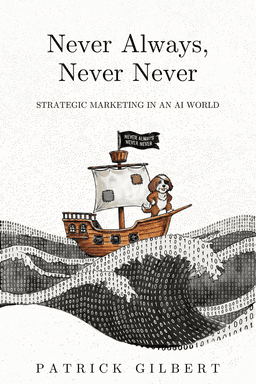
Enjoying this? Never Always, Never Never goes much deeper into the mental models and decision frameworks that shape how we think.
The Psychology of AI Adoption
Building an AI-first culture requires immense empathy for the human element. When a vocal fraction of your team starts moving at light speed with AI capabilities, it creates internal rifts. Team members who feel left behind often shut down rather than ask questions, widening the skills gap exponentially.
The solution isn't forcing everyone to become AI engineers overnight. Instead, focus on developing shared language across the organization. A Practitioner-level team member might not build complex automated workflows, but they should understand what those workflows accomplish and contribute to high-level discussions about AI implementation.
- Meet team members where they are in their AI journey
- Remove the 'magic' from AI by explaining concepts clearly
- Create development paths rather than performance ultimatums
- Build psychological safety for experimentation and learning
Common Implementation Mistakes
The biggest mistake is treating AI adoption as a technology problem rather than a culture problem. Organizations that succeed focus on changing how work gets done, not just which tools get used. They recognize that AI proficiency must become a non-negotiable prerequisite, not a bonus skill.
Another critical error is stopping at efficiency gains. Teams celebrate time savings without reinvesting that bandwidth into value creation. They optimize the old model instead of building a new one. This leaves them vulnerable to competitors who use AI for genuine differentiation rather than marginal improvements.
In an industry where standard work is being automated by the minute, being 'good at the tools' is no longer a competitive advantage. The real advantage belongs to strategists who use their newly acquired bandwidth to solve messy business problems.
Steps
Audit Your Current Work Distribution
Map every task your team performs into four categories: Design (creative visioning), Problem-Solving (diagnostic work), Decision-Making (strategic choices), and Building (execution). Track time spent on non-value-adding activities like formatting slide decks, manual reporting, and access requests. This audit reveals where AI can create immediate bandwidth by handling repetitive, low-impact work.
Implement the 4x2 Model Across All Tasks
Eliminate solo work entirely. Before starting any task, team members must ask: Can this be delegated to AI? If not, can I copilot with AI? Delegate Building tasks and repetitive Problem-Solving to automated workflows. Use copiloting for Design and Decision-Making where humans remain in control while AI provides analysis and alternatives.
Build Internal Efficiency Systems First
Start with Strand 1 of the Double Helix by automating high-volume, low-impact tasks. Create automated workflows for client reporting, data cleaning, and asset management. Focus on buying back human attention rather than chasing shiny AI tools. This defensive move protects margins while competitors struggle with manual processes.
Establish AI Maturity Levels for Your Team
Assess each team member using the AI Maturity Ladder: Dabbler (occasional ChatGPT use), Practitioner (daily AI integration), Architect (building systematic workflows), and Strategist (creating proprietary AI solutions). Meet people where they are and create development paths. Require Practitioner-level fluency as the minimum hiring standard.
Develop External Value Capabilities
Launch Strand 2 by using freed bandwidth to build unique market advantages. Create custom analysis tools, proprietary data models, and interactive client solutions previously available only to Fortune 500 companies. Use AI to compress entire departments into single strategists who can identify market opportunities faster than competitors.
Create Shared Language and Psychological Safety
Ensure everyone understands core AI concepts even if they don't execute every technical task. Remove the intimidation factor by explaining workflows in clear terms. Address the psychological gap between fast adopters and slower team members. Make AI proficiency a team competency, not an individual performance issue.
Institutionalize the Compounding Loop
Connect efficiency gains directly to value creation investments. Use time saved from automated reporting to fund experimentation with new AI capabilities. Reinvest profits from AI-driven client value back into better internal systems. This creates the upward spiral where efficiency funds innovation, which funds better efficiency.
Scale Through Systematic Experimentation
Dedicate the bandwidth created by efficiency gains to structured experimentation. Test new AI applications weekly, document what works, and scale successful experiments across the organization. Build a culture where trying new AI approaches becomes core discipline, not side projects. Use experiments to climb from Architect to Strategist maturity levels.
Frequently Asked Questions
What's the difference between AI-forward and AI-first marketing teams?
AI-forward teams use AI tools to do existing work faster, while AI-first teams fundamentally restructure how work gets done. According to Patrick Gilbert, AI-first culture eliminates solo work entirely, requiring team members to either copilot with AI or delegate tasks completely to automated systems.
How long does it take to build an AI-first marketing culture?
Building an AI-first culture is a marathon, not a sprint, according to Gilbert's experience at AdVenture Media. The timeline depends on team size and starting maturity levels, but most organizations need 6-12 months to move from dabbler to practitioner levels, with architect and strategist capabilities developing over years.
What should be the minimum AI skill level for new marketing hires?
AdVenture Media no longer considers candidates who aren't already at Practitioner level fluency. This means daily AI integration for problem-solving and content creation, not just occasional ChatGPT use. As technology matures, this minimum threshold will likely increase to Architect level.
How do you measure success in AI-first marketing transformation?
Success metrics include bandwidth creation (hours saved from automated tasks), value creation (new capabilities that command higher margins), and team maturity progression up the AI ladder. The key indicator is whether efficiency gains directly fund innovation experiments that create external client value.
What happens if competitors adopt AI first while we're still planning?
According to Gilbert, failing to embrace AI efficiency leaves organizations vulnerable to competitive disadvantage. When competitors streamline operations with AI, they can either undercut pricing or maintain margins while others struggle. The defensive necessity makes immediate action critical.
Which marketing tasks should be delegated to AI versus copiloted?
Delegate building tasks (execution, reporting, data cleaning) and repetitive problem-solving to AI systems. Use copiloting for design work (creative strategy, campaign concepts) and decision-making (budget allocation, strategic choices) where human judgment remains essential but AI provides analysis and alternatives.
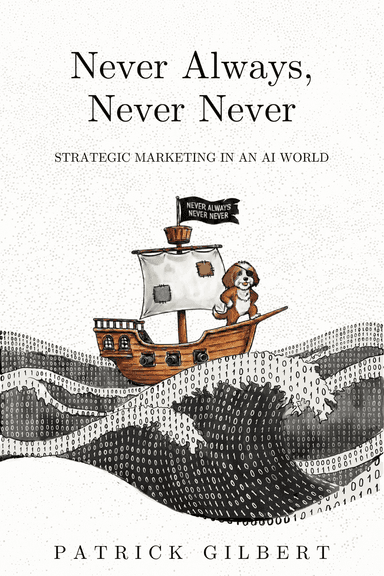
From the Book
Chapter 30 reveals the complete framework for building an AI-first culture, including the Double Helix model, 4x2 work structure, and AI Maturity Ladder that transforms marketing teams from tool users into strategic differentiators.
This is just a glimpse. The book explores dozens of cognitive biases and decision-making frameworks that change how you think, decide, and act.
Want to go deeper on this topic?
Chat with the AI companion to explore these concepts with the full context of the book.
Chat about this topicRelated Reading
AI Amplifies Whatever You Bring to the Table
AI isn't a shortcut. It's an amplifier. If you have strong strategy, AI makes you dramatically more effective. If you don't, it helps you execute mediocrity faster.
BlogWhy the Old Playbook Is Broken
The platform tricks and optimization shortcuts that built most digital marketing careers have been commoditized. Here's what actually changed and what to do about it.