How to Build a Marketing Strategy: A 5-Step Framework That Works
Quick Answer: how to build a marketing strategy
Building a marketing strategy requires five key steps: Define clear business goals and non-negotiable guardrails, assess the gap between current performance and targets, envision your ideal strategy without constraints, conduct a reality check against resources and capabilities, and create actionable initiatives that drive meaningful change. According to marketing strategist Patrick Gilbert, most teams skip the foundational work and jump to tactics. True strategy focuses on business outcomes like profit and market share, not just performance metrics like ROAS or CPA.
Why Most Marketing Plans Fail Before They Start
Most marketing plans aren't actually strategic. They're collections of tactics dressed up with buzzwords and quarterly targets. As Patrick Gilbert argues in Never Always, Never Never, the fundamental problem is that teams jump straight to execution without establishing the strategic foundation that makes execution meaningful.
The confusion runs deep. For fifteen years, digital marketing operated on a simple premise: buy cheap traffic from platforms like Google and Facebook, then convert it profitably. This arbitrage model worked so well that strategy became an afterthought. The real game was tactical: who could find the best bidding strategy, the smartest audience targeting, or the most efficient campaign structure.
Strategy is the long game. Tactics are the moves you make within that framework.
But arbitrage opportunities don't last forever. As acquisition costs rise and competition intensifies, the brands that survive are those that can think beyond tactical optimization. They understand the difference between strategy (the non-negotiable pillars that guide long-term decisions) and tactics (the flexible moves that can change week to week).
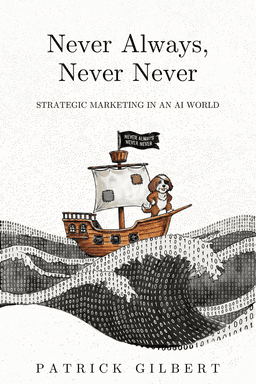
Enjoying this? Never Always, Never Never goes much deeper into the mental models and decision frameworks that shape how we think.
The AdVenture Media Strategy Framework
At AdVenture Media, our approach to strategy has been shaped by Nechama Teigman, who leads our strategy department. Over the years, she's developed a framework that helps teams translate ambition into direction. It's structured enough to keep everyone aligned, but flexible enough to adapt as conditions change.
This isn't an academic model or classroom exercise. It's a practical way to clarify what you're trying to achieve, how far you are from it, and what needs to happen next. Every client engagement and long-term roadmap at AdVenture is guided by this five-step approach.
Real-World Example: From Efficiency to Strategy
In 2025, we worked with an ecommerce brand that had dramatically expanded its product catalog by introducing third-party manufactured products. The move opened a larger market opportunity but compressed profit margins. Their old ad structure, built for high-margin in-house products, couldn't handle this shift.
At first, they tried managing the change tactically: segmenting campaigns by product type, assigning unique ROAS targets, and micromanaging efficiency. Revenue grew, but overall profitability plummeted. When we stepped in, our recommendation challenged conventional wisdom.
Instead of pulling back when ROAS declined, we increased investment. We launched new campaigns on Meta and Pinterest, expanded Google campaign reach, and implemented an entirely new brand strategy. In the short term, performance worsened. ROAS dropped another 50%. But we had alignment on the strategy: this was an intentional, long-term investment in building reach and customer diversification.
By mid-summer, the picture changed. ROAS was still 60% lower than the start of the year, but actual profit margins recovered. By August, the business posted its highest top-line and bottom-line month in its 15-year history. The turnaround didn't come from chasing efficiency. It came from strategy.
Types of Strategic Initiatives
Not all strategic initiatives look the same. Some are customer-facing, others operational. Some are bold public moves, others quiet internal improvements. What defines them as strategic is that they require sustained investment, cross-functional coordination, and leadership buy-in.
- Customer-based initiatives reshape who you reach: entering new markets, appealing to different demographics, or repositioning for business use
- Positioning initiatives reframe what your brand means: moving from mid-market to premium, abandoning discounting, or owning new category entry points
- Operational initiatives optimize profitability mechanics: improving conversion rates, building capacity models, or streamlining fulfillment
- Distribution initiatives change where customers encounter your brand: expanding into retail, building partnerships, or creating subscription models
- Data and technology initiatives improve decision-making quality through better measurement, first-party data strategies, or AI implementation
The best strategies don't ignore constraints—they integrate them.
Steps
Define Goals & Guardrails
Start with business outcomes, not performance metrics. List your most important goals (profit, market share, revenue growth) and rank them by priority. Then establish guardrails: minimum margin thresholds, maximum payback periods, and other non-negotiables that keep your strategy disciplined.
Assess the Gap
Project where you'll be in 6-12 months if nothing changes, then compare that to your goals. Identify whether your shortfall is internal (operational inefficiencies) or external (market conditions). Create a clear problem statement that frames your strategic challenge in one or two sentences.
Envision the Ideal Strategy
Set aside current limitations and imagine success without constraints. Think in terms of direction, not tactics: entering new markets, repositioning your brand, or targeting different customer segments. Create a narrative about where your business could go if everything went right.
Reality Check
Ground your vision in actual data, resources, and risk tolerance. For each major initiative, ask: How much will it cost? How long will it take to see results? What's the risk if it fails? Adjust your strategy based on what you can realistically execute and afford.
Create Actionable Strategy
Select the few high-impact initiatives that will truly move your business forward. Focus on strategic moves that permanently change how you operate or compete, whether through customer expansion, positioning shifts, operational improvements, or distribution changes.
Frequently Asked Questions
What's the difference between marketing goals and business goals?
Business goals are outcomes like profit, market share, and revenue growth that define success for the company. Marketing goals are performance metrics like ROAS, CPA, or conversion rates that measure marketing efficiency. According to Patrick Gilbert, true strategic goals should focus on business outcomes, not just marketing metrics.
How do I know if my marketing strategy is actually strategic?
Ask yourself: if two smart people on your team were making budget decisions independently, would they reach the same conclusion based on your written strategy? If not, you're probably dealing with tactics, not strategy. Strategic decisions shouldn't shift week to week and should serve clear business outcomes.
Why should I increase investment when performance is declining?
Sometimes declining performance signals the need for strategic investment, not tactical cuts. If you're transitioning business models, entering new markets, or building long-term assets, short-term efficiency may decrease while you build toward larger goals. The key is having alignment on why you're making that investment.
How long should a marketing strategy take to show results?
Strategic initiatives typically require sustained investment over months or quarters, not weeks. Tactical optimizations might show results quickly, but strategic moves like market expansion, brand repositioning, or operational improvements need time to mature. Set expectations accordingly and measure progress against strategic milestones, not daily metrics.
What's the biggest mistake companies make when building marketing strategy?
According to Patrick Gilbert, the biggest mistake is collapsing strategy and tactics into the same bucket. Most teams debate tactical questions like budget allocation or campaign structure without first aligning on strategic pillars. This leads to reactive decision-making and chasing the latest shiny object rather than building sustainable competitive advantages.
How do I balance strategic initiatives with day-to-day performance?
Strategic initiatives should coexist with tactical optimization, not replace it. Maintain performance in your core channels while investing in strategic moves that create long-term value. The key is having clear guardrails that define acceptable trade-offs between short-term efficiency and strategic investment.
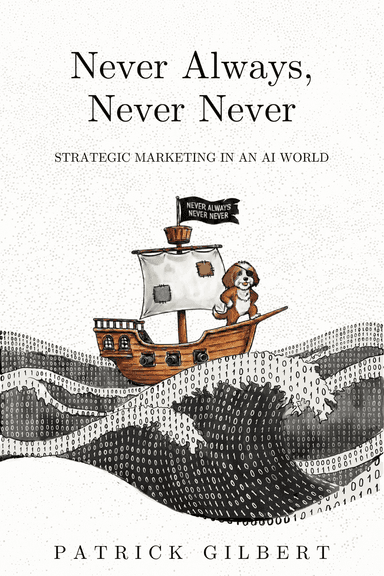
From the Book
Chapter 18 provides the complete AdVenture Media framework for translating business ambition into actionable marketing strategy, with detailed examples and real client case studies.
This is just a glimpse. The book explores dozens of cognitive biases and decision-making frameworks that change how you think, decide, and act.
Want to go deeper on this topic?
Chat with the AI companion to explore these concepts with the full context of the book.
Chat about this topicRelated Reading
AI Amplifies Whatever You Bring to the Table
AI isn't a shortcut. It's an amplifier. If you have strong strategy, AI makes you dramatically more effective. If you don't, it helps you execute mediocrity faster.
BlogWhy the Old Playbook Is Broken
The platform tricks and optimization shortcuts that built most digital marketing careers have been commoditized. Here's what actually changed and what to do about it.