Satisficing
Definition
Satisficing is a decision-making strategy where consumers select options that meet their minimum acceptable criteria rather than seeking the optimal choice. Originally coined by Nobel laureate Herbert Simon, the term combines 'satisfy' and 'suffice,' describing how people make practical decisions when faced with too many options or limited time.
Quick Answer: satisficing marketing
Satisficing is a decision-making strategy where consumers choose options that meet their minimum criteria rather than seeking the absolute best choice. Coined by Nobel Prize winner Herbert Simon, satisficing combines 'satisfy' and 'suffice.' In marketing, this means consumers don't optimize purchases but instead select the first acceptable option they encounter. This behavior is especially pronounced in Google's messy middle, where overwhelmed shoppers use mental shortcuts and cognitive biases to make quick decisions rather than exhaustively comparing all available alternatives.
The Psychology Behind Satisficing
Herbert Simon's groundbreaking work on satisficing emerged from a simple observation: humans don't actually optimize their decisions the way economic theory suggests they should. Instead, we use mental shortcuts to make 'good enough' choices that conserve cognitive energy and get us moving forward. As Patrick Gilbert argues in Never Always, Never Never, this psychological reality fundamentally shapes how consumers navigate modern purchasing decisions. In today's digital marketplace, where consumers carry 'an infinite shelf of information in their pockets,' the paradox of choice becomes overwhelming. Rather than analyzing every possible option, shoppers satisfice by selecting the first choice that meets their basic requirements.
Satisficing in the Messy Middle
Google's research on the messy middle reveals satisficing in action. When consumers loop between exploration and evaluation, they're not seeking perfection. They're looking for confidence that their choice is adequate. This is why Google identified six cognitive biases that consistently influence purchasing decisions, from social proof to the power of free. Consider Google's experiment where 310,000 purchase scenarios were simulated across 31 product categories. One-third of participants switched their brand preference after seeing competing options, but they weren't necessarily choosing objectively superior products. They were satisficing, selecting brands that appeared 'good enough' based on limited information and mental shortcuts.
The internet has transformed from a tool for comparing prices to a tool for comparing everything.
Google's Decoding Decisions study
This shift from 'cheap' to 'best' in search behavior (searches for 'best' now outpace 'cheap' by 4:1) doesn't mean consumers are optimizing. Instead, they're satisficing around different criteria. They want confidence their choice is good enough, not proof it's perfect.
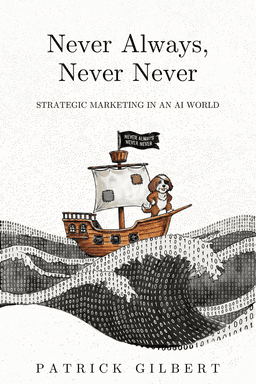
Enjoying this? Never Always, Never Never goes much deeper into the mental models and decision frameworks that shape how we think.
Why Satisficing Beats Optimization in Marketing
Understanding satisficing explains why showing up consistently often matters more than having the objectively best product. In Google's research, brands that maintained visibility throughout exploration and evaluation consistently outperformed competitors, even when those competitors had stronger initial brand preference. This aligns with the Kenmore appliances example from Never Always, Never Never. At Jay's Appliances, customers would ask for Kenmore specifically, unaware it was just a Whirlpool with different branding. When shown the identical Whirlpool model at 20% less cost, most customers satisficed by choosing the cheaper option that met their original criteria.
Satisficing consumers don't need the perfect product. They need enough confidence to move forward with a 'good enough' choice.
Implications for Marketing Strategy
Satisficing behavior has profound implications for how brands should approach marketing. Rather than trying to prove they're objectively superior, successful brands focus on appearing 'good enough' at the moment of decision. This is achieved through: Category heuristics: Creating simple rules of thumb that favor your brand ('more megapixels = better camera'). Social proof: Providing enough positive signals to satisfy consumers' need for validation. Consistent presence: Showing up repeatedly during exploration and evaluation phases. The data supports this approach. In Google's simulations, psychological nudges like free shipping or expert endorsements could shift brand loyalty from 75% to just 10%. These tactics work not because they make products objectively better, but because they satisfy consumers' need for 'good enough' reasons to choose.
Satisficing and Mental Availability
Satisficing connects directly to the concept of mental availability. When consumers satisfice, they typically choose from a limited consideration set of brands that come to mind in buying situations. This is why exposure matters so much in the messy middle framework. Brands that maintain continuous exposure, what Google describes as 'a continuously shifting backdrop that influences decisions at every moment,' position themselves to be satisficing choices. They don't need to convince consumers they're perfect. They just need to be present, accessible, and 'good enough' when decision time arrives.
Related Terms
Frequently Asked Questions
What is satisficing in consumer behavior?
Satisficing is when consumers choose products that meet their minimum acceptable standards rather than searching for the perfect option. According to Herbert Simon's research, people satisfice to save mental energy and avoid decision paralysis when faced with too many choices.
How does satisficing affect brand loyalty?
Satisficing makes brand loyalty more fragile than marketers assume. Google's research showed one-third of consumers switched brand preferences when presented with competing options that appeared 'good enough,' even within minutes of naming their original favorite.
Why do consumers satisfice instead of optimize?
Consumers satisfice because optimizing every decision would be mentally exhausting and time-consuming. With infinite options available online, satisficing allows people to make practical decisions quickly while conserving cognitive energy for more important choices.
How can brands leverage satisficing behavior?
Brands can leverage satisficing by maintaining consistent visibility during the buyer's journey, using social proof and category heuristics, and making their products appear 'good enough' rather than claiming superiority. The goal is being present when consumers are ready to satisfice.
What's the difference between satisficing and optimizing?
Optimizing means finding the absolute best choice after evaluating all options. Satisficing means choosing the first option that meets minimum acceptable criteria. Most consumers satisfice because the cost of finding the perfect choice exceeds the benefit.
How does satisficing work in Google's messy middle?
In the messy middle, consumers use satisficing to break out of endless loops between exploration and evaluation. Rather than comparing every possible option, they rely on cognitive shortcuts and choose brands that appear adequate based on limited information and mental cues.
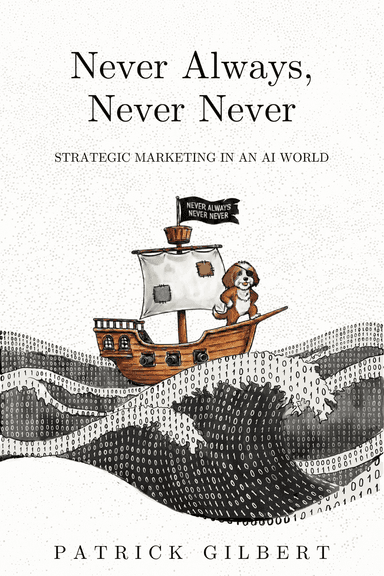
From the Book
Chapter 4 reveals how Google's messy middle research exposes the reality of modern consumer decision-making and why satisficing consumers often outweigh loyal customers.
This is just a glimpse. The book explores dozens of cognitive biases and decision-making frameworks that change how you think, decide, and act.
Want to go deeper on this topic?
Chat with the AI companion to explore these concepts with the full context of the book.
Chat about this topicRelated Reading
Mental Availability: The Marketing Concept Most Digital Marketers Ignore
Mental availability is the single most important driver of brand growth. Most digital marketers have never heard of it. Here's why that matters.
BlogWhy the Old Playbook Is Broken
The platform tricks and optimization shortcuts that built most digital marketing careers have been commoditized. Here's what actually changed and what to do about it.