ROAS (Return on Ad Spend)
Definition
ROAS is a marketing metric that measures the revenue generated for every dollar spent on advertising, calculated as Revenue ÷ Ad Spend. While useful for measuring campaign efficiency, ROAS can mislead marketers by encouraging short-term optimization at the expense of long-term brand building and sustainable growth.
Quick Answer: ROAS meaning
ROAS (Return on Ad Spend) is a marketing metric that measures the revenue generated for every dollar spent on advertising. The formula is simple: ROAS = Revenue ÷ Ad Spend. For example, a 5:1 ROAS means every $1 spent generates $5 in revenue. While ROAS provides immediate feedback on campaign efficiency, it can mislead marketers by prioritizing short-term gains over long-term brand building. According to marketing effectiveness research, campaigns optimized purely for ROAS often sacrifice sustainable growth for immediate returns. The metric encourages budget cuts and tactical restraint rather than investments in brand equity that compound over time. ROAS works best when balanced with other metrics that capture long-term value creation.
The ROAS Formula and Basic Calculation
The ROAS formula is deceptively simple: ROAS = Revenue ÷ Ad Spend. If you spend $1,000 on advertising and generate $5,000 in revenue, your ROAS is 5:1 or 500%. This straightforward calculation makes ROAS appealing to marketers who need to demonstrate immediate campaign value. Unlike more complex metrics that require attribution modeling or lifetime value calculations, ROAS provides instant feedback on advertising efficiency. However, this simplicity is both its strength and its weakness.
Why ROAS Became the Default Metric
As Patrick Gilbert argues in Never Always, Never Never, the rise of digital marketing created an obsession with measurable, short-term results. ROAS perfectly fits this need. It's clean, quantifiable, and can be calculated in real-time across platforms like Google Ads and Facebook. Marketing agencies love ROAS because it's easy to report and defend. Clients love it because it feels like concrete proof that their advertising dollars are working.
The problem emerges when ROAS becomes the primary or only success metric. Research from Les Binet and Peter Field in Marketing in the Era of Accountability shows that campaigns optimized purely for ROI and ROAS consistently underperform in long-term business outcomes. These campaigns encourage what Gilbert calls 'budget cuts that boost apparent ROI merely by reducing investment at the cost of long-term profitability.'
The Hidden Costs of ROAS Optimization
When marketers optimize exclusively for ROAS, they systematically bias their strategies toward immediate, measurable returns. This creates several problems. First, it encourages targeting only the lowest-funnel, highest-intent customers who were likely to purchase anyway. Second, it discourages investment in brand-building activities that may not show immediate returns but create sustainable competitive advantages.
ROI targets encourage budget cutting that boosts apparent ROI merely by reducing investment… at the cost of long-term profitability.
Ambler (2004), quoted in Marketing in the Era of Accountability
Gilbert illustrates this with a client example from AdVenture Media. During an annual planning exercise for a home goods brand, they set goals that went beyond immediate ROAS: increase total revenue by 30% year-over-year while maintaining 20% gross margins. Within that framework, they targeted three product categories to double in sales, accepting lower short-term margins on those products as long as overall profitability remained steady. This approach required patience and trust but delivered sustainable growth that pure ROAS optimization would have missed.
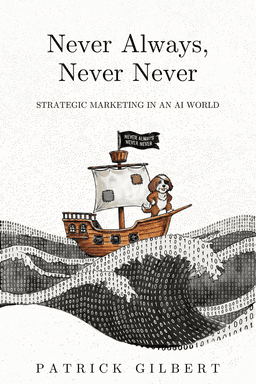
Enjoying this? Never Always, Never Never goes much deeper into the mental models and decision frameworks that shape how we think.
ROAS vs. Long-Term Brand Building
The tension between ROAS optimization and brand building reflects a deeper issue in modern marketing. Byron Sharp's research at the Ehrenberg-Bass Institute consistently shows that sustainable growth comes from increasing mental and physical availability among a broad audience. This requires consistent investment in reach and frequency, often with returns that compound over months or years rather than days or weeks.
ROAS, by contrast, rewards immediate conversions from people already close to purchasing. This creates what Gilbert calls 'efficiency at the expense of effectiveness.' Campaigns become increasingly narrow, targeting smaller audiences with more urgent intent, while missing opportunities to build lasting brand preference among future customers.
The most effective marketing doesn't always produce the highest immediate ROAS, but it creates compounding returns that dwarf short-term optimization gains.
When ROAS Works and When It Doesn't
ROAS isn't inherently problematic. It becomes dangerous when used in isolation or as the primary success metric. ROAS works well for measuring the efficiency of specific campaigns, comparing performance across channels, or optimizing tactical elements like ad creative or landing pages. It provides valuable feedback for direct response campaigns designed to generate immediate sales.
- When ROAS helps: Comparing campaign efficiency, optimizing tactical elements, measuring direct response performance
- When ROAS misleads: Setting overall marketing strategy, evaluating brand campaigns, making long-term budget decisions
- Better alternatives: Customer lifetime value, market share growth, brand equity metrics, profit contribution
The key is balance. Gilbert advocates for what he calls 'second-order logic' in marketing measurement. This means understanding that today's brand-building investments create tomorrow's performance marketing efficiency. High ROAS often depends on strong brand equity that was built through activities that may not show immediate returns.
Moving Beyond ROAS Tunnel Vision
Effective marketing measurement requires multiple metrics that capture different aspects of business performance. While ROAS measures immediate efficiency, other metrics capture effectiveness. Customer lifetime value shows long-term relationship profitability. Market share indicates competitive position. Brand tracking measures mental availability and preference.
As Gilbert explains in Chapter 20 of Never Always, Never Never, the goal isn't to eliminate measurement but to align it with true business objectives: profit, growth, and market share. This requires organizations to tolerate some ambiguity and invest in marketing activities whose full value may not be visible in quarterly ROAS reports.
Related Terms
Frequently Asked Questions
What does ROAS stand for and how is it calculated?
ROAS stands for Return on Ad Spend. It's calculated by dividing revenue by advertising spend (ROAS = Revenue ÷ Ad Spend). A 4:1 ROAS means every dollar spent on advertising generates four dollars in revenue.
What is considered a good ROAS?
A 'good' ROAS varies by industry, business model, and profit margins. According to Patrick Gilbert in Never Always, Never Never, focusing solely on ROAS benchmarks misses the point. The metric should support overall business objectives like profit growth and market share, not serve as the primary success measure.
Why is ROAS misleading for marketing strategy?
ROAS can mislead because it prioritizes short-term efficiency over long-term effectiveness. Research from Les Binet and Peter Field shows that campaigns optimized purely for ROAS often sacrifice brand building and sustainable growth for immediate returns, ultimately limiting business potential.
How is ROAS different from ROI?
ROAS measures revenue generated per advertising dollar, while ROI measures profit after accounting for all costs including cost of goods sold. ROAS = Revenue ÷ Ad Spend, while ROI = (Revenue - Total Costs) ÷ Total Costs. ROI provides a more complete picture of profitability.
When should marketers use ROAS vs other metrics?
ROAS works best for measuring campaign efficiency and optimizing tactical elements. For strategic decisions, Patrick Gilbert recommends balancing ROAS with metrics like customer lifetime value, market share growth, and brand equity that capture long-term business building rather than just immediate returns.
Can high ROAS campaigns hurt long-term growth?
Yes, according to marketing effectiveness research cited in Never Always, Never Never. Campaigns that maximize ROAS often target only high-intent customers who were likely to purchase anyway, while missing opportunities to build brand equity and mental availability among future customers.
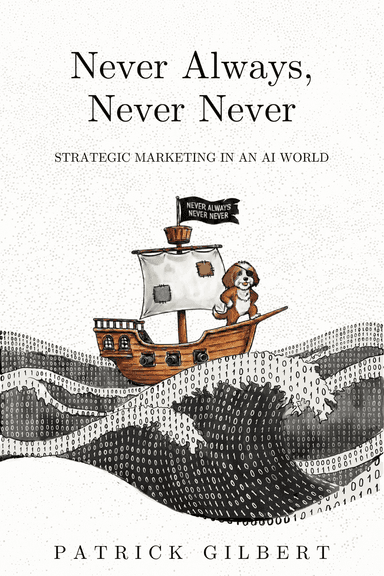
From the Book
Chapter 20 explores how our obsession with measurement and control creates the illusion of marketing mastery while systematically undermining long-term effectiveness. Gilbert reveals why the metrics that make us feel safe often hold us back.
This is just a glimpse. The book explores dozens of cognitive biases and decision-making frameworks that change how you think, decide, and act.
Want to go deeper on this topic?
Chat with the AI companion to explore these concepts with the full context of the book.
Chat about this topic