Broad Match vs Exact Match Keywords: How AI Changes Everything
Quick Answer: broad match vs exact match
Broad match keywords allow Google's AI to show ads for variations, synonyms, and related searches, maximizing reach through machine learning. Exact match restricts ads to specific terms and close variants. With modern AI bidding, broad match combined with smart bidding often outperforms exact match by giving algorithms more data and placement liquidity. However, exact match provides greater control and is better for highly specific campaigns with limited budgets or compliance requirements.
| Dimension | Broad Match Keywords | Exact Match Keywords |
|---|---|---|
| AI Learning Data | Maximum data volume for algorithm training | Limited data signals constrain machine learning |
| Budget Efficiency | Smart bidding optimizes across all query variations | Manual optimization required for each keyword |
| Campaign Control | Algorithm determines relevance and targeting | Advertiser maintains strict query control |
| Scaling Potential | Unlimited reach through query expansion | Growth limited to exact search volume |
| Creative Testing | Ads tested across diverse query contexts | Creative optimization limited to specific terms |
| Competitive Advantage | Access to long-tail and emerging queries | Direct competition on known high-value terms |
| Performance Volatility | Higher variance during learning phases | More predictable but potentially stagnant results |
| Budget Requirements | Needs sufficient budget for algorithm learning | Works with smaller, more focused budgets |
The AI Revolution in Keyword Strategy
The debate between broad match and exact match keywords has fundamentally changed. What once was a simple choice between control and reach is now a decision about how you want to work with machine learning algorithms. As Patrick Gilbert argues in Never Always, Never Never, the platforms have evolved from simple keyword matching systems into sophisticated AI engines that require different strategies to unlock their full potential.
Google's Smart Bidding algorithms use structured learning, processing historical conversions, ad placements, keywords, and audience demographics to predict which combinations will drive the best results. But these systems need data volume to function effectively. The more constraints you place on your campaigns, the less information the algorithm has to work with.
Every keyword match type restriction reduces what the Interactive Advertising Bureau calls 'audience liquidity' - the algorithm's ability to find valuable impressions across the full spectrum of relevant searches.
How Broad Match Feeds the Machine
Broad match keywords function as data collection mechanisms for Google's AI. When you use broad match with Smart Bidding, you're essentially telling the algorithm: 'Here's my goal, now figure out which queries, audiences, and contexts deliver the best results.' The system explores beyond your initial keyword list, testing synonyms, related terms, and even conceptually similar searches that humans might never consider.
This exploration happens during what Google calls the learning phase. Performance appears volatile because the algorithm is actively experimenting, gathering information about which query-audience-creative combinations work best. Many advertisers panic during this phase and switch back to exact match, but they're interrupting the very process that could unlock better performance.
In every case, allowing machine learning algorithms to process as much data as possible improves liquidity. By removing restrictions on a campaign, media teams can test more opportunities simultaneously and ensure budgets are applied to find the right people and produce the most cost-efficient results.
Interactive Advertising Bureau
The data volume that broad match provides isn't just about quantity. It's about signal diversity. Each query variation teaches the algorithm something different about user intent, context, and conversion likelihood. Exact match, by contrast, provides the same signal repeatedly, which limits the system's ability to discover new opportunities or adapt to changing search behavior.
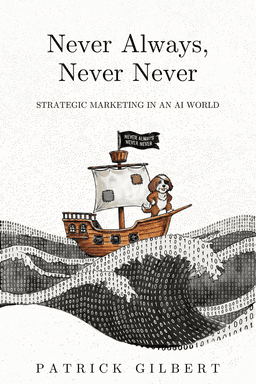
Enjoying this? Never Always, Never Never goes much deeper into the mental models and decision frameworks that shape how we think.
The Case for Exact Match Control
Exact match keywords still have their place, particularly when algorithmic exploration could be counterproductive. If you're in a highly regulated industry where ad relevance is legally mandated, exact match ensures compliance. If you have a limited budget and need every click to be highly qualified, exact match provides predictable cost control.
Exact match also performs better when you have deep knowledge about specific high-value search terms. If you know that 'enterprise project management software' converts at 12% while 'project management tools' converts at 3%, exact match lets you bid differently on each term rather than letting the algorithm average them together.
- Legal or compliance requirements demand strict query control
- Small budgets require maximum precision to avoid waste
- Specific high-value terms need individual bid management
- Brand protection campaigns targeting competitor names
- Seasonal or promotional campaigns with limited timeframes
But even these use cases are becoming less common as AI systems improve. Google's query matching has become sophisticated enough that broad match rarely triggers ads for completely irrelevant searches, especially when combined with conversion-based bidding strategies.
The Confidence vs. Accuracy Dynamic
Understanding how AI algorithms develop confidence helps explain why broad match often outperforms exact match over time. Algorithms need sufficient data to move from low-confidence guessing to high-confidence prediction. Exact match campaigns often get stuck in what the book describes as the 'shy AI' quadrant - high accuracy but low confidence that prevents scaling.
When an exact match campaign plateaus despite budget increases, it's usually because the algorithm has exhausted its learning opportunities. It knows those specific keywords work, but it hasn't gathered enough diverse signals to confidently expand into new auctions or higher bid ranges. The solution isn't more budget - it's more data variety through broader match types.
Broad match campaigns may show higher initial volatility, but they're more likely to reach the optimal AI quadrant: high confidence and high accuracy at scale.
This dynamic explains why many advertisers see improved performance when they consolidate exact match campaigns into broader structures. The algorithm gets access to more signals, more auction opportunities, and more conversion data. The result is often better performance at lower management overhead.
Implementation Strategy: Beyond the Binary Choice
The most sophisticated advertisers don't choose between broad match and exact match universally. They use match types strategically based on campaign goals, budget levels, and AI maturity. New campaigns often start with exact match to establish baseline performance, then graduate to broad match as conversion volume increases and Smart Bidding algorithms gain confidence.
The key insight from Never Always, Never Never is that these decisions should be driven by how well you want to work with machine learning systems. If you're committed to manual optimization and have the resources to manage complex keyword structures, exact match can work. But if you want to leverage platform AI effectively, broad match with Smart Bidding is usually the better long-term strategy.
Remember that platform optimization is always secondary to marketing strategy. Neither broad match nor exact match will overcome a weak value proposition or undifferentiated creative. Get the fundamentals right first, then choose the match type that best supports your campaign objectives and resource constraints.
Frequently Asked Questions
Should I use broad match or exact match for new Google Ads campaigns?
For new campaigns with sufficient budget, broad match with Smart Bidding typically performs better because it provides Google's AI with more data for optimization. However, exact match is better for limited budgets or when you need strict control over which searches trigger your ads.
Why do my broad match campaigns have higher costs initially?
Broad match campaigns often show volatile performance during Google's learning phase while the algorithm explores different query-audience combinations. This exploration is necessary for the AI to identify the most valuable opportunities and usually stabilizes within 2-3 weeks.
Can I mix broad match and exact match keywords in the same campaign?
Yes, but it can create keyword conflicts where exact match keywords compete with broad match variations. Most experts recommend keeping different match types in separate campaigns to maintain cleaner performance data and easier optimization.
How does Smart Bidding change the broad match vs exact match decision?
Smart Bidding algorithms need data volume to function effectively, making broad match more valuable than in manual bidding scenarios. The AI can optimize bids across all query variations simultaneously, often achieving better overall performance than manually managed exact match campaigns.
What's the minimum budget needed for broad match to work effectively?
According to Google, campaigns need at least 30 conversions in 30 days for Smart Bidding to exit the learning phase. For broad match to be effective, you typically need enough budget to generate this conversion volume while the algorithm explores different query variations.
When should I still use exact match instead of broad match?
Exact match is still preferable for brand protection campaigns, highly regulated industries requiring strict ad relevance, small budgets where every click must be precise, or when you have specific high-value keywords that need individual bid management.
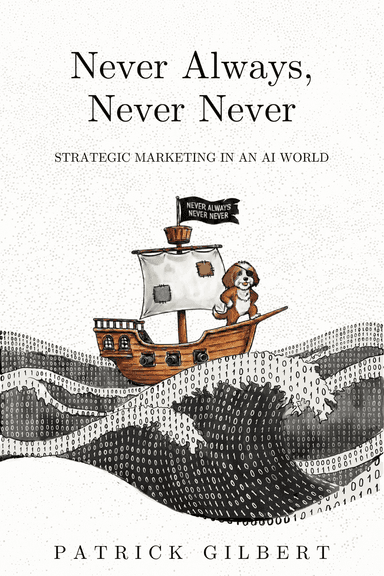
From the Book
Chapter 28 reveals how ad platform AI actually learns from your campaigns and why most advertisers are unknowingly sabotaging their own performance. Discover the four dimensions of campaign liquidity and why going back into the learning phase is sometimes exactly what your campaigns need.
This is just a glimpse. The book explores dozens of cognitive biases and decision-making frameworks that change how you think, decide, and act.
Want to go deeper on this topic?
Chat with the AI companion to explore these concepts with the full context of the book.
Chat about this topicRelated Reading
AI Amplifies Whatever You Bring to the Table
AI isn't a shortcut. It's an amplifier. If you have strong strategy, AI makes you dramatically more effective. If you don't, it helps you execute mediocrity faster.
BlogWhy the Old Playbook Is Broken
The platform tricks and optimization shortcuts that built most digital marketing careers have been commoditized. Here's what actually changed and what to do about it.