Brand Marketing vs Performance Marketing: Why the Split is Now a Liability
Quick Answer: brand marketing vs performance marketing
Brand marketing and performance marketing are traditionally viewed as separate disciplines—brand for long-term equity building, performance for immediate conversions. However, this division is now counterproductive. According to data from global marketing campaigns, brand campaigns drive direct sales while performance campaigns build brand equity. When separated, performance costs skyrocket and brand dollars lose effectiveness. Modern consumer behavior in the 'messy middle' of decision-making requires integrated approaches where both strategies work together, with brand investment making performance dollars more efficient through higher click-through rates and conversion rates.
| Dimension | Brand Marketing | Performance Marketing |
|---|---|---|
| Primary Goal | Build mental availability and brand equity over time | Drive immediate conversions and measurable ROAS |
| Time Horizon | Long-term investment (6+ months to years) | Short-term results (days to weeks) |
| Success Metrics | Brand recall, favorability, mental availability | ROAS, CPA, conversion rate, immediate sales |
| Creative Approach | Emotional storytelling, characters, brand building | Product-focused, promotional, direct response |
| Channel Strategy | Broad reach across TV, display, video | Targeted search, social, retargeting |
| Audience Targeting | Broad audiences including non-customers | Narrow audiences ready to purchase |
| Budget Allocation | Consistent investment regardless of immediate returns | Performance-based, scaled up/down by results |
| Measurement Challenge | Difficult to attribute direct sales impact | Easy to measure but ignores long-term brand building |
| Competitive Advantage | Creates sustainable differentiation and pricing power | Easily replicated by competitors with bigger budgets |
The False Division That's Costing You Money
For decades, marketing has been artificially split into two camps: brand marketing for building long-term equity and performance marketing for driving immediate sales. As Patrick Gilbert argues in Never Always, Never Never, this division has become a liability in today's messy middle of consumer decision-making. The reality revealed by modern data is far more nuanced and profitable than the traditional silos suggest.
The conventional wisdom positioned brand marketing as the patient money—building mental availability, shaping memories, winning hearts for future purchases. Performance marketing was the urgent money—capturing demand, driving conversions, winning wallets today. This clean separation made sense in a linear funnel world. But in today's chaotic discovery and decision-making environment, maintaining this split actively undermines both approaches.
When you try to keep brand and performance apart, you distort reality and weaken both. Without brand equity, your bottom-funnel dollars end up working harder for someone else.
The Data That Shattered the Model
A global apparel brand with separate brand and performance teams commissioned AdVenture Media to build a marketing mix model. What the data revealed challenged every assumption that justified those silos. The brand campaigns weren't just creating awareness—they were driving direct sales. Even lifestyle and awareness campaigns captured meaningful revenue shares on their own.
The inverse was equally surprising. Performance campaigns weren't just capturing sales—they were building brand equity. In markets without broad lifestyle campaigns, product-heavy ads still delivered measurable lifts in brand recall and positive sentiment. The neat division between 'upper funnel builds equity' and 'lower funnel drives sales' had completely collapsed.
The model won't work if you try to squeeze it into the current paradigm. If we ignore these facts, it'll completely skew the data. We might as well just make the entire thing up.
Nechama from AdVenture Media
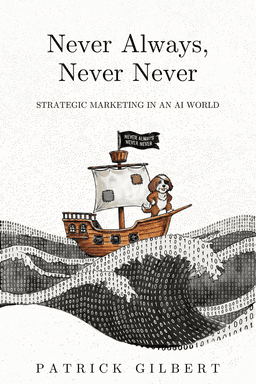
Enjoying this? Never Always, Never Never goes much deeper into the mental models and decision frameworks that shape how we think.
Why Performance-Only Strategies Fail
Consider launching a new insulated coffee mug company. The promise of search ads suggests you can compete with YETI or Stanley by bidding on 'insulated coffee mugs.' But reality is harsher. All else equal, consumers click on and convert with recognized brands at higher rates. YETI enjoys higher click-through rates, conversion rates, and profit margins from optimized operations.
This means established brands can pay more for the same keywords while making more money. Your clever ad copy or discount won't close that brand equity gap—it just squeezes margins further. This is the trap small and mid-sized brands fall into when treating performance as standalone without brand support.
- Performance costs have skyrocketed in channels like Google and Meta
- Brand recognition drives higher click-through and conversion rates
- Established brands can outbid competitors while maintaining better margins
- Discounting to compete erodes long-term brand value
The Wilt Chamberlain Effect in Marketing
In 1962, Wilt Chamberlain scored 100 points in a single game shooting free throws underhand—a technique that dramatically improved his success rate to 87.5%. Despite the proven effectiveness, he immediately abandoned the 'granny shot' because it felt silly and drew mockery. He chose pride over performance, walking away from data-proven success because it made him uncomfortable.
Marketers make the same mistake daily. We know emotional advertising works. We know building brand equity drives long-term profit. We know integrating brand and performance delivers stronger results than silos. Yet we default to what feels safer: optimizing for short-term metrics, maintaining rigid structures, ignoring evidence that challenges conventional approaches.
The question is not whether the evidence exists—it's whether you're willing to act on it when it challenges conventional wisdom.
The Emotional Advantage in Brand Building
Effective brand marketing isn't about tear-jerking Super Bowl spots. Sometimes emotion is as simple as the Safelite jingle: 'Safelite repair, Safelite replace.' The rising and falling cadence communicates reassurance better than any rational argument. That tiny feeling of relief becomes a memory shortcut when windshield problems arise.
Campbell's Soup discovered this with their Chunky Soup campaign targeting men. Focus groups revealed that soup reminded men of being cared for by their mothers when sick as children. Rather than positioning soup as medicine, creative director Marvin Waldman tapped into the deeper emotional truth: soup equals mom. The 'Mama's Boy' campaign featuring NFL players became one of the most enduring emotional campaigns of the last three decades.
- Characters like Jake from State Farm provide emotional consistency across campaigns
- Animals lower psychological defenses and improve brand recall
- Duolingo's owl mascot helped grow revenue from $70M to $750M in five years
- Emotional connections create sustainable competitive advantages
Integration as Competitive Advantage
The brands winning today don't choose between brand and performance—they integrate both approaches strategically. When you invest in brand, performance dollars work harder: click-through rates climb, conversion rates rise, and CPAs fall. When you run performance campaigns, you're also shaping long-term brand perceptions.
Legacy brands often can't adapt due to entrenched structures and rigid budgets. For challenger brands, this represents an invitation. You don't need to outspend incumbents—you need to out-adapt them. The playbook is proven, the barriers are lower than ever, yet most marketers choose familiar dysfunction over uncomfortable change.
Frequently Asked Questions
Can small brands compete with established players using only performance marketing?
No, performance-only strategies face escalating costs and lower conversion rates. Without brand equity, small brands end up paying more for keywords while converting less, creating an unsustainable competitive disadvantage against established brands.
How do brand campaigns directly drive sales?
Data from global marketing campaigns shows brand campaigns capture meaningful revenue shares independently. Lifestyle and awareness campaigns drive direct conversions, not just long-term equity building as traditionally believed.
What makes emotional advertising more effective than rational arguments?
Emotional content engages System 1 thinking, creating memory shortcuts and lowering psychological defenses. Research shows ads with emotional characters achieve 65-100% brand recall versus near-zero for generic executions.
Why do separate brand and performance teams hurt results?
Silos prevent recognition that both approaches mutually reinforce each other. Brand campaigns drive sales while performance campaigns build equity, but separate structures can't optimize for these overlapping benefits.
How can performance campaigns build brand equity?
Even product-focused, promotional ads shape long-term brand perceptions. In markets without lifestyle campaigns, performance ads still deliver measurable lifts in brand recall and positive sentiment.
What role do brand characters play in modern marketing?
Characters provide emotional consistency and memory shortcuts across campaigns. Unlike celebrities, brand characters exist solely to tell your story without outside baggage or scandal risk.
Is emotional advertising only for big budget campaigns?
No, emotional connection can be as simple as a memorable jingle or consistent character. Duolingo's owl mascot helped grow revenue 10x in five years through personality-driven content, not massive advertising budgets.
How should budgets be allocated between brand and performance?
According to marketing mix models, budgets should be liquid across campaign types rather than rigidly allocated. Integration requires flexibility to optimize based on how both approaches mutually reinforce results.
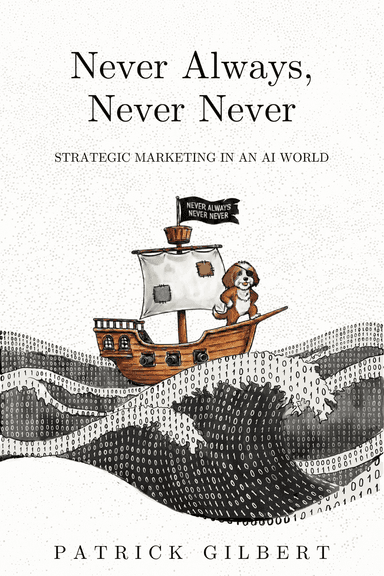
From the Book
Chapter 16 reveals how the traditional split between brand and performance marketing has become a competitive liability, featuring real case studies of brands that discovered their 'brand' campaigns were driving direct sales while their 'performance' campaigns were building equity.
This is just a glimpse. The book explores dozens of cognitive biases and decision-making frameworks that change how you think, decide, and act.
Want to go deeper on this topic?
Chat with the AI companion to explore these concepts with the full context of the book.
Chat about this topicRelated Reading
Mental Availability: The Marketing Concept Most Digital Marketers Ignore
Mental availability is the single most important driver of brand growth. Most digital marketers have never heard of it. Here's why that matters.
BlogWhy the Old Playbook Is Broken
The platform tricks and optimization shortcuts that built most digital marketing careers have been commoditized. Here's what actually changed and what to do about it.