Brand Building vs Direct Response: Why the Split Is Killing Your Marketing
Quick Answer: brand building vs direct response
Brand building and direct response marketing are not opposing strategies but complementary approaches that strengthen each other. Research shows brand campaigns drive direct sales while performance campaigns build brand equity. The traditional 60/40 split between long-term brand building and short-term activation creates artificial silos. Modern marketers succeed by integrating both approaches: brand equity makes performance ads more efficient through higher click-through rates and conversion rates, while performance campaigns shape brand perceptions. Companies maintaining separate teams and budgets for each approach miss the compounding effects that occur when brand and performance work together.
| Dimension | Brand Building | Direct Response |
|---|---|---|
| Primary Goal | Build mental availability and brand equity over time | Drive immediate conversions and measurable sales |
| Time Horizon | Long-term investment (6 months to years) | Short-term results (days to weeks) |
| Measurement Focus | Brand recall, awareness, sentiment, share of voice | ROAS, CPA, conversion rate, immediate revenue |
| Creative Approach | Emotional storytelling, characters, lifestyle imagery | Product features, offers, clear calls-to-action |
| Targeting Strategy | Broad reach to build category mental availability | Narrow targeting of high-intent prospects |
| Budget Allocation | Consistent spending regardless of immediate returns | Performance-driven scaling up and down |
| Channel Selection | Mass reach channels: TV, YouTube, display, social | High-intent channels: search, retargeting, email |
| Success Metrics | Market share growth, brand health scores, pricing power | Cost per acquisition, return on ad spend, conversion volume |
The False Division That's Weakening Your Marketing
For decades, marketing has been artificially split into two camps: brand marketing for the long game and performance marketing for immediate results. As Patrick Gilbert argues in Never Always, Never Never, this division has become a liability in today's messy middle of customer decision-making. When you try to keep brand and performance apart, you distort reality and weaken both approaches.
The biggest lie in modern marketing is that anyone can win with a few thousand dollars in Google Ads. That era is over.
Consider a new company selling insulated coffee mugs competing with YETI or Stanley. On paper, search ads promise you can buy traffic for "insulated coffee mugs" and compete. In reality, you can't. Consumers are more likely to click on and convert with recognized brands. YETI shows up with higher click-through rates, higher conversion rates, and higher profit margins. They can afford to pay more for the same keyword and still make more money. Your clever ad copy or discount won't close that gap.
What the Data Really Shows
AdVenture Media was hired by a global apparel brand to build a marketing mix model. The client had separate brand and performance teams with different Meta ad accounts and conflicting goals. But when analyzing four years of campaign data, two findings upended conventional wisdom entirely.
- Brand campaigns were driving direct sales: Lifestyle and awareness campaigns captured meaningful revenue even without product-driven ads
- Performance campaigns were building brand: Product and promotion-heavy ads delivered measurable lifts in brand equity, recall, and positive sentiment
This is more than a halo effect. It's proof that the neat division between 'upper funnel builds equity' and 'lower funnel drives sales' no longer holds.
Patrick Gilbert, Never Always, Never Never
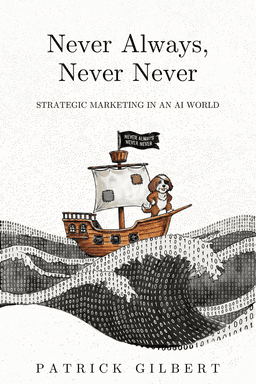
Enjoying this? Never Always, Never Never goes much deeper into the mental models and decision frameworks that shape how we think.
The Wilt Chamberlain Effect in Marketing
In 1962, Wilt Chamberlain scored 100 points using an underhand free throw technique that dramatically improved his success rate to 87.5%. Despite this proven effectiveness, he immediately abandoned the approach because it looked "silly." Chamberlain chose pride over performance, walking away from data that made him demonstrably better.
Marketers make the same mistake every day. We know emotional advertising works. We know building brand equity drives long-term profit. We know integrating brand and performance delivers stronger results. Yet we continue defaulting to what feels safer.
The Wilt Chamberlain Effect explains why marketers stick to rigid structures and optimize for short-term metrics even when evidence shows integrated approaches work better. Like Chamberlain, they have the data in their hands but abandon proven methods because they feel uncomfortable or unconventional.
How Emotional Advertising Drives Both Goals
Emotional advertising isn't just Super Bowl tearjerkers. It's making people feel something, anything, that ties back to your brand. Take Safelite's simple jingle: "Safelite repair, Safelite replace." The tone communicates reassurance better than the words themselves. That tiny sense of relief builds brand memory while driving immediate action.
Campbell's Chunky Soup "Mama's Boy" campaign perfectly illustrates integrated brand and performance benefits. Creative director Marvin Waldman discovered that men associated soup with mothers caring for them when sick. The campaign starred NFL players whose mothers delivered soup, creating both immediate appeal and deep emotional connection. It was funny and memorable on the surface while subconsciously reawakening powerful childhood memories.
Marvin didn't make an ad about soup. He made an ad about moms. And in doing so, he showed exactly what emotional advertising looks like when it's done right.
Patrick Gilbert on Campbell's Chunky Soup campaign
The Modern Integration Opportunity
While legacy brands remain stuck in siloed structures, smaller challenger brands have an advantage. They don't need separate teams, budgets, or ad accounts. They can build integrated campaigns from day one, using emotional storytelling that builds brand equity while driving immediate conversions.
The incumbents are too big to move, but you're not. You don't need to outspend them—you need to out-adapt them.
Modern success requires moving beyond the false choice between brand building and direct response. When you invest in brand, your performance dollars go further through improved click-through rates, conversion rates, and lower CPAs. When you run performance campaigns with emotional elements, you're simultaneously shaping long-term brand perceptions. The companies that recognize this integration opportunity will have a significant competitive advantage over those maintaining artificial divisions.
Frequently Asked Questions
What's the optimal budget split between brand building and direct response?
Research by Binet & Field suggests a 60/40 split favoring long-term brand building over short-term activation. However, the key insight is that these shouldn't be separate budgets. Integrated campaigns that build brand equity while driving immediate response are more effective than treating them as distinct activities.
How do you measure the success of integrated brand and performance campaigns?
Successful measurement requires tracking both immediate performance metrics (ROAS, CPA, conversions) and longer-term brand health indicators (recall, sentiment, market share). Marketing mix modeling can reveal how brand investments improve performance campaign efficiency and how performance campaigns contribute to brand building.
Can small businesses afford to do brand building, or should they focus on direct response?
Small businesses can't afford NOT to build brand equity. Without brand recognition, performance marketing becomes increasingly expensive as competitors with stronger brands achieve better click-through and conversion rates. Smart small businesses integrate emotional storytelling into their performance campaigns from the start.
Why do emotional ads work better than rational product-focused ads?
Emotional advertising works because feelings stick while rational arguments fade. Emotions create stronger memory encoding and bypass skeptical thinking. When people feel something positive about your brand, they're more likely to remember and choose you during purchase decisions.
How has the rise of digital advertising affected the brand vs performance debate?
Digital advertising initially seemed to favor direct response due to precise targeting and measurement capabilities. However, rising costs in performance channels like Google and Meta have made brand equity more valuable than ever. Brands with strong recognition achieve better performance metrics and can afford higher bids.
What's the biggest mistake companies make when trying to integrate brand and performance?
The biggest mistake is maintaining separate teams, budgets, and measurement systems while expecting integration to happen naturally. True integration requires structural changes: unified teams, flexible budget allocation, and measurement systems that capture both immediate and long-term effects of marketing investments.
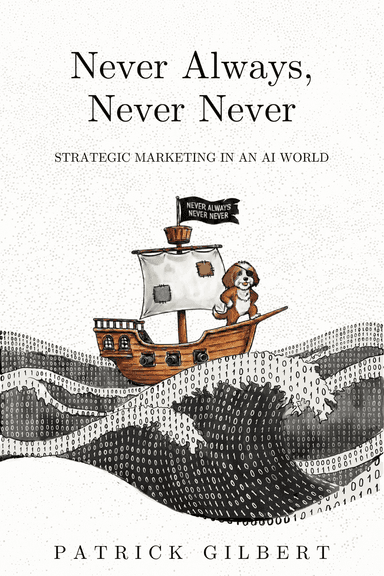
From the Book
Chapter 16 reveals why the traditional split between brand and performance marketing has become a liability and provides a blueprint for integration that most companies are too entrenched to implement.
This is just a glimpse. The book explores dozens of cognitive biases and decision-making frameworks that change how you think, decide, and act.
Want to go deeper on this topic?
Chat with the AI companion to explore these concepts with the full context of the book.
Chat about this topicRelated Reading
Why the Old Playbook Is Broken
The platform tricks and optimization shortcuts that built most digital marketing careers have been commoditized. Here's what actually changed and what to do about it.
BlogMental Availability: The Marketing Concept Most Digital Marketers Ignore
Mental availability is the single most important driver of brand growth. Most digital marketers have never heard of it. Here's why that matters.