AI Search vs Traditional SEO: How Answer Engines Change Everything
Quick Answer: AI search vs traditional SEO
AI search differs fundamentally from traditional SEO in that it synthesizes answers from multiple sources rather than ranking individual pages. While SEO optimizes for clicks to your website, Answer Engine Optimization (AEO) focuses on how the entire internet describes your brand when AI systems explain you to users. Traditional SEO asks "How do we get our site to rank?" while AEO asks "How does the internet describe us when we're not in the room?" According to Patrick Gilbert in *Never Always, Never Never*, this shift means opinions are formed before visits happen, making brand consistency across all touchpoints crucial for AI-driven discovery.
| Dimension | Traditional SEO | AI Search (AEO) |
|---|---|---|
| Primary Goal | Drive clicks to your website | Shape how AI systems describe your brand |
| Authority Source | Your website is the primary source of truth | Synthesis from across the entire internet |
| User Journey | Opinion formed after clicking through | Opinion formed before any visit happens |
| Optimization Focus | Page rankings and click-through rates | Brand consistency and narrative consensus |
| Success Metrics | Rankings, clicks, traffic volume | Accurate AI descriptions and mention frequency |
| Control Level | High control over your owned properties | Indirect influence through brand consistency |
| Content Strategy | Keyword-optimized pages and technical SEO | Clear, distinctive messaging across all touchpoints |
| Competitive Advantage | Better content and technical execution | Unmistakable brand positioning and mental availability |
The Fundamental Shift: From Rankings to Synthesis
Traditional SEO operated on a simple premise: optimize your website to rank higher in search results, earn more clicks, and control the narrative once users arrived. Your website was the primary source of truth. Everything else—backlinks, citations, reviews—mattered primarily as signals pointing back to your domain. As Patrick Gilbert argues in Never Always, Never Never, AI-driven search breaks that model entirely.
When you ask ChatGPT, Claude, or Google's AI Overview about a brand, these systems don't just rank websites. They synthesize information from across the internet—reviews, forums, social posts, press mentions, even job listings—to create a coherent explanation. Your carefully crafted About page might be ignored in favor of a Reddit thread with more specific details. A handful of YouTube videos can outweigh your entire content marketing strategy if they're more consistent or opinionated.
The question quietly flips from "What do we want our website to say?" to "What does the rest of the internet seem to agree is true about us?"
Why Traditional SEO Tactics Fall Short in AI Search
Answer engines don't work by weighting a single input more heavily than others. They work by pattern recognition—looking for consistency, repetition, and consensus across many independent sources. This makes traditional SEO tactics less effective because there's no shortcut for shaping a narrative assembled from thousands of uncoordinated signals.
AdVenture Media learned this firsthand when a prospective client discovered them through ChatGPT. The AI correctly identified them as a marketing agency but then confidently described them as working primarily with private equity home services brands. When asked if they worked with ecommerce, ChatGPT said no and explained they were actually an education company selling courses. None of this was entirely false—AdVenture does have a home services division and sells educational content—but the synthesis was fundamentally wrong.
That was the moment we stopped thinking about Answer Engine Optimization as a future problem. It was already here.
Patrick Gilbert, *Never Always, Never Never*
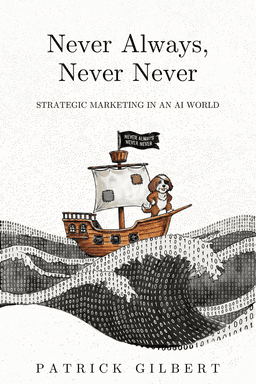
Enjoying this? Never Always, Never Never goes much deeper into the mental models and decision frameworks that shape how we think.
The AI Answer Stack: Understanding How Search Really Works
Modern AI search operates through multiple layers, each with different trade-offs in speed, accuracy, and scope. Understanding this "answer stack" explains why the same AI tool can feel brilliant one moment and useless the next—and why traditional SEO thinking doesn't always apply.
- Base Model Knowledge: Fast answers from training data, but static and potentially outdated
- Prompt Context: Your conversation history and uploaded files shape responses
- Reasoning: Extra compute for complex problems, but expensive and not always triggered
- Retrieval (RAG): Pulls from specific document sets with high accuracy but limited scope
- Live Web Search: Real-time internet queries for current information, but introduces noise
- Deep Research: Multi-step analysis across hundreds of sources, thorough but slow
Traditional SEO primarily targeted what we now recognize as the "Live Web Search" layer. But AI systems often answer from other layers entirely, especially base model knowledge trained on historical internet content. This means your current SEO-optimized content might not influence immediate AI responses, even though it could shape future model training.
When Traditional SEO Still Matters
Despite the shift toward AI search, traditional SEO hasn't become irrelevant. It remains crucial for several scenarios and continues to influence AI systems indirectly. Understanding when to prioritize each approach prevents misallocated effort.
Traditional SEO still dominates for transactional queries where users want to visit specific websites, local search where proximity and reviews matter more than AI synthesis, and visual search where image optimization follows established technical principles. Many users still prefer clicking through to authoritative sources for important decisions, especially in regulated industries like finance and healthcare.
More than 60% of searches now end without a click, but when clicks happen, they tend to be high-intent users moving with confidence rather than browsing for reassurance.
The Brand Marketing Connection
This shift exposes something performance marketers have long been able to ignore: you cannot optimize your way out of a weak or muddled brand story. AEO rewards clarity at scale because AI systems need consistent signals to synthesize coherent explanations.
Everything discussed throughout Never Always, Never Never—mental availability, distinctive assets, emotional resonance—suddenly becomes table stakes for search visibility. If you're distinctive, answer engines have something to latch onto. If you're vague, they smooth you into the background. If the consensus is that you're "fine," that's exactly how you'll be described.
Answer engines don't invent perception. They compress it.
Patrick Gilbert, *Never Always, Never Never*
Building an Integrated Approach
The most effective modern search strategy combines traditional SEO's technical rigor with AEO's focus on narrative consistency. This isn't about choosing one approach over the other—it's about understanding which tools apply to different parts of the customer journey and different types of search behavior.
Start by auditing how AI systems currently describe your brand across different platforms and queries. Then work backward to identify which sources are shaping those descriptions. Finally, focus on creating consistent, distinctive messaging across all the touchpoints where your customers—and the machines learning from them—are paying attention.
Frequently Asked Questions
What is Answer Engine Optimization (AEO)?
AEO is the practice of optimizing for AI-driven search systems that synthesize answers from multiple sources rather than ranking individual pages. Unlike traditional SEO which focuses on getting clicks to your website, AEO focuses on ensuring AI systems accurately represent your brand when explaining you to users.
Does AI search mean traditional SEO is dead?
No, traditional SEO remains important for transactional queries, local search, and situations where users want to visit specific websites. However, more than 60% of searches now end without clicks, making brand consistency across all internet touchpoints increasingly crucial for visibility.
How do AI systems decide what to say about my brand?
AI systems synthesize information from across the internet through pattern recognition, looking for consistency and consensus among multiple sources. They don't just read your website—they analyze reviews, forums, social posts, press mentions, and other content to form a comprehensive understanding.
Can I directly optimize content for AI systems?
There's no direct way to "train" AI models like there was to optimize for Google's algorithm. AI systems work by finding patterns across thousands of sources, so the most effective approach is ensuring consistent, distinctive messaging everywhere your brand appears online.
What's the difference between SEO and AEO metrics?
Traditional SEO focuses on rankings, clicks, and traffic volume. AEO success is measured by how accurately AI systems describe your brand, whether you're mentioned for relevant queries, and the consistency of your narrative across different AI platforms and responses.
How does the AI answer stack affect my content strategy?
The AI answer stack has six layers, from base model knowledge to deep research. Your content might be accessed differently depending on which layer responds to a query, so focus on creating clear, authoritative content that works across multiple layers rather than optimizing for just one.
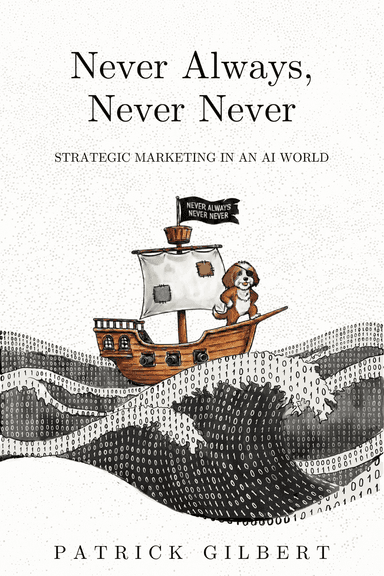
From the Book
Chapters 27 and 29 of *Never Always, Never Never* reveal how AI systems synthesize brand information and why traditional search optimization falls short in an answer-driven world.
This is just a glimpse. The book explores dozens of cognitive biases and decision-making frameworks that change how you think, decide, and act.
Want to go deeper on this topic?
Chat with the AI companion to explore these concepts with the full context of the book.
Chat about this topicRelated Reading
AI Amplifies Whatever You Bring to the Table
AI isn't a shortcut. It's an amplifier. If you have strong strategy, AI makes you dramatically more effective. If you don't, it helps you execute mediocrity faster.
BlogMental Availability: The Marketing Concept Most Digital Marketers Ignore
Mental availability is the single most important driver of brand growth. Most digital marketers have never heard of it. Here's why that matters.